
News
Who should pay for Greater Jakarta’s public transit
Tenggara Strategics June 23, 2026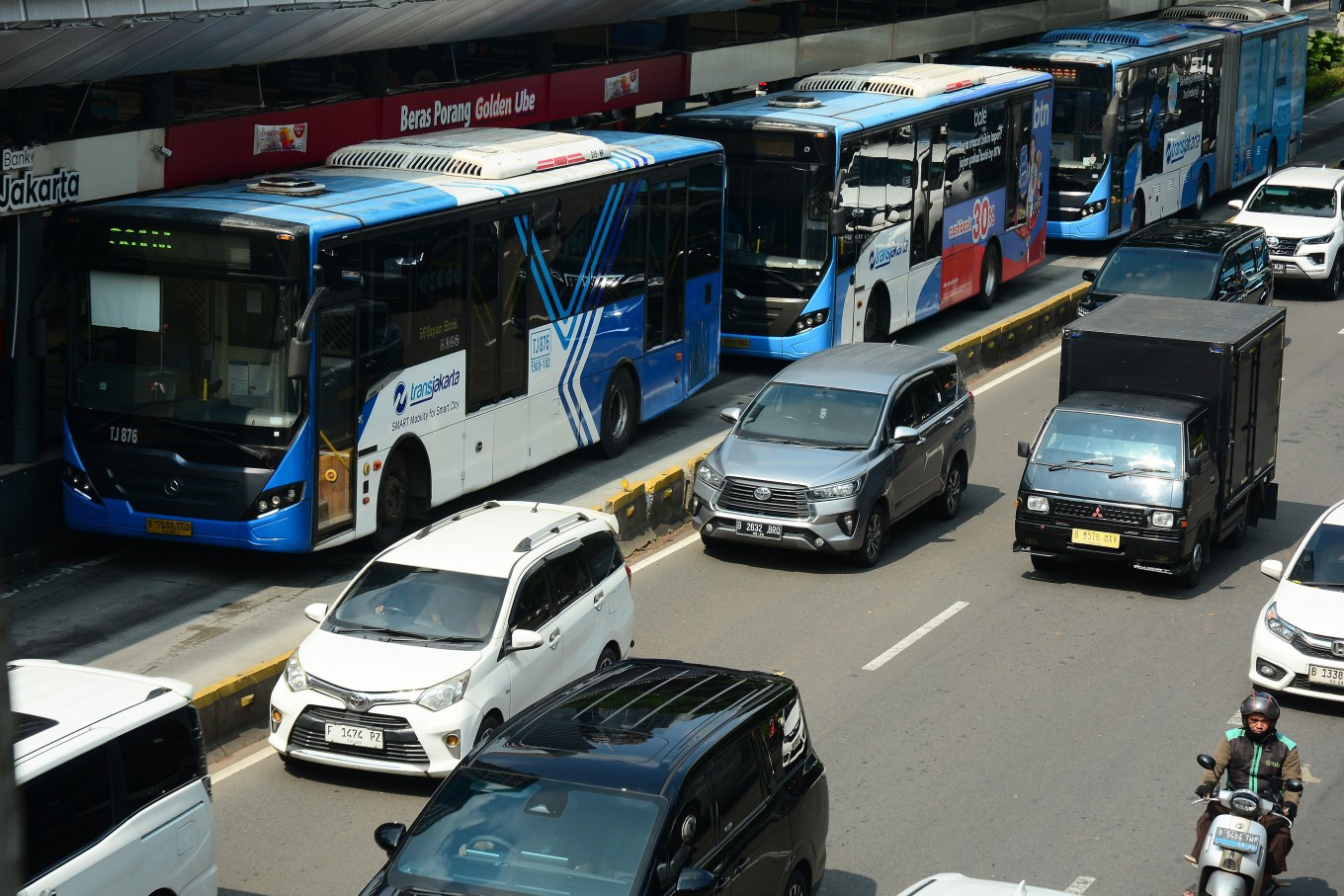 An image shows a Transjakarta bus stopping at the Senayan Bank Jakarta bus stop in the Senayan area of South Jakarta, on April 16, 2026. (JP/Iqro Rinaldi)
After more than two decades without a fare increase, the Jakarta administration is once again debating whether it is time to raise Transjakarta ticket prices. As passenger numbers continue to surge and operating costs outpace revenue growth, maintaining the current flat fare of Rp 3,500 (20 US cents) is becoming increasingly difficult. Yet the debate extends beyond whether passengers should pay more. It also raises a broader question: Should Jakarta alone continue subsidizing a service that increasingly benefits commuters from across Greater Jakarta?
The numbers help explain why the debate has resurfaced. The Rp 3,500 fare has remained unchanged since 2004, even as annual ridership surged from fewer than 99 million trips in 2021 to 413 million in 2025. Over the same period, operating costs consistently outpaced revenue growth, placing increasing pressure on the system’s finances. Governor Pramono Anung has acknowledged that the Rp 3,500 fare is no longer realistic for longer Transjabodetabek routes, while Deputy Governor Rano Karno has suggested fares of Rp 10,000 to Rp 15,000 for selected services.
The fiscal strain is becoming increasingly evident. Transjakarta’s public service subsidy reached Rp 4.03 trillion in 2025, with each passenger receiving an average subsidy of Rp 12,258 for a Rp 3,500 trip. Such a model may have been sustainable when Transjakarta primarily served Jakarta residents. It is becoming far more difficult to sustain now that the system functions as the backbone of mobility for the wider Greater Jakarta region.
This is the paradox worth considering. Transjabodetabek exists because Jakarta’s labor market extends far beyond its administrative boundaries, while affordable housing increasingly does not. As rising housing costs push more workers to settle in Bekasi, Depok and Bogor, in West Java and Tangerang, Banten, daily commuting into the capital has become less a matter of choice than an economic necessity.
In response, Transjakarta has evolved from a city bus network into critical infrastructure for a metropolitan economy. Yet the way it is financed has barely changed. The system continues to rely overwhelmingly on Jakarta’s provincial budget, even though its benefits extend far beyond the capital and there is no formal cost-sharing arrangement with neighboring administrations. This imbalance is becoming increasingly difficult to sustain as Jakarta’s fiscal space tightens amid declining transfers from the central government, including reduced revenue-sharing funds. In effect, Jakarta is financing metropolitan mobility with a provincial budget.
None of this suggests that Transjakarta should move toward full cost recovery. Public transportation is a public good, and Law No. 22/2009 on road traffic and transportation recognizes its provision as a government responsibility. Affordable fares generate benefits that extend well beyond individual passengers by reducing congestion, lowering emissions and improving access to jobs, making subsidies a sound public investment.
This principle is hardly unique to Jakarta. During recent fuel-price and cost-of-living shocks, several Australian states expanded transportation subsidies or temporarily introduced free or discounted public transportation. The question for Jakarta, therefore, is not whether Transjakarta deserves subsidies, but whether a metropolitan transportation system should continue to rely almost exclusively on the budget of a single province.
If Greater Jakarta now functions as a single metropolitan economy, its approach to financing public transportation should evolve accordingly. Rather than relying primarily on fare increases or expecting Jakarta to shoulder an ever-growing subsidy burden, policymakers should begin exploring a metropolitan financing framework that better reflects who benefits from the system. This could include cost-sharing arrangements among provincial and local administrations, greater support from the central government, or dedicated regional funding mechanisms that recognize public transportation as shared infrastructure rather than a local service.
What we've heard
According to a source familiar with the matter, the public transport subsidy has reached Rp 401 billion this year to date. Jakarta’s provincial administration also covers other expenses, such as bus stop shelter maintenance and operational costs. “Jakarta has been shouldering the burden on its own,” the source said. The Jakarta administration is thus seeking to share operational costs, according to the same source, encouraging contributions from the administrations of neighboring regions. “Some local administrations have committed to maintaining and developing bus shelters,” the source said.