
News
Why transmission matters more than ever
Tenggara Strategics June 17, 2026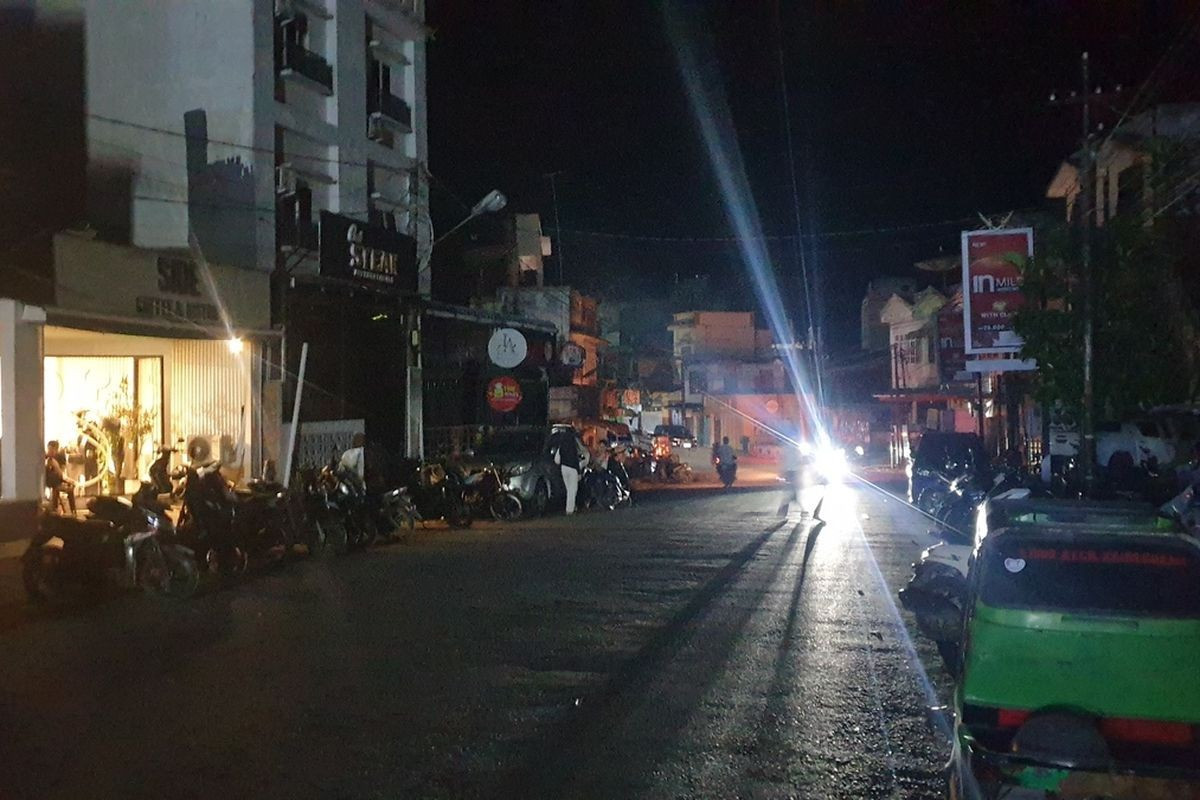 Image
Image
A single lightning strike on a 275 kV transmission line in Jambi on May 22, 2026, triggered a cascading blackout that left millions across Sumatra without power and reportedly cost lives. The incident exposed a critical weakness in Indonesia’s transmission network, highlighting that grid resilience may be just as important as generation capacity as the country pursues industrialization, digitalization and renewable energy deployment.
The conversation that followed the blackout has rightly focused on state electricity company PLN’s accountability. But accountability without structural change produces apologies, not solutions. PLN’s transmission challenge is not a consequence of inadequate technical capability. Rather, it stems from asking a single institution to plan, finance and operate generation, transmission and distribution across one of the world’s largest archipelagos.
When capital is scarce, transmission often loses out because it does not generate direct revenue in the way power plants do. Moreover, with significant financial resources tied up in take-or-pay commitments from earlier capacity expansion programs, transmission investment frequently struggles to compete for limited capital. The question worth asking is not how to make PLN better at transmission, but whether transmission should remain PLN’s responsibility at all.
The problem is not that PLN has failed. It is that PLN has been asked to do too much. As Indonesia expands renewable energy, digital infrastructure and industrial activity, the demands placed on the electricity system are becoming increasingly complex. The latest Electricity Supply Business Plan (RUPTL) projects demand rising from 306 terawatt-hours (TWh) in 2024 to 511 TWh by 2034, alongside the addition of 42.6 gigawatts (GW) of renewable energy capacity.
Yet many renewable energy resources are located far from major demand centers, making transmission infrastructure increasingly critical. Under the current model, transmission investment must compete with generation, distribution and other priorities for limited capital. The result is a growing risk that the networks needed to connect future supply and demand will not expand at the pace required by Indonesia’s economic and energy ambitions.
Addressing this challenge does not require dismantling PLN or reducing the state’s role in the electricity sector. What it requires is a more deliberate separation of functions. Countries that have successfully expanded their grids to support rapid industrialization and large-scale renewable energy deployment generally provide transmission with a dedicated mandate, clear planning authority and financing mechanisms insulated from competing priorities elsewhere in the power sector.
China’s experience, in particular, demonstrates how transmission can be treated as a strategic asset backed by long-term planning and financing support. Indonesia does not need to replicate any specific model, but it is worth asking whether the current arrangement gives transmission the attention and investment it requires.
The urgency is already reflected in the RUPTL 2025–2034, which calls for the development of a green enabling super grid comprising approximately 47,758 circuit-kilometers of transmission infrastructure to connect renewable energy resources. If transmission is too important to be left underfunded and too capital-intensive to be financed solely through PLN’s balance sheet, then what institutional arrangement would give it the priority it deserves?
A dedicated transmission entity, structured as a stand-alone state-owned enterprise or as a separate subsidiary within PLN, with an open-access mandate, could fundamentally change the economics of Indonesia’s energy transition. By separating transmission from PLN’s balance sheet, it could unlock financing sources better suited to long-lived infrastructure assets.
More importantly, a transparent grid modernization framework would allow renewable energy producers and large consumers to access the network on equal terms, laying the foundation for a functioning electricity market. This would enable renewable power generated in resource-rich regions such as Sumatra, Kalimantan and Sulawesi to be delivered directly to industrial and commercial users elsewhere.
Without a transmission system designed to facilitate these flows, Indonesia risks constraining its renewable energy potential, not because of a lack of resources, but because of a lack of connectivity.
Electricity systems are often taken for granted until they fail. The Sumatra blackout served as a reminder that the most important infrastructure is often the least visible. While attention is frequently directed toward power plants, renewable energy targets and new industrial investments, the networks that connect them rarely receive the same scrutiny.
Yet Indonesia’s energy transition will ultimately depend not only on how much electricity it can generate, but also on how effectively that electricity can be moved across islands, regions and economic centers. The RUPTL 2025–2034 already recognizes the need for a green enabling super grid. The challenge now is ensuring that transmission infrastructure is supported by the institutions, financing mechanisms and policy attention needed to turn that vision into reality.