
News
Danantara’s growing mandate raises governance questions
Tenggara Strategics June 23, 2026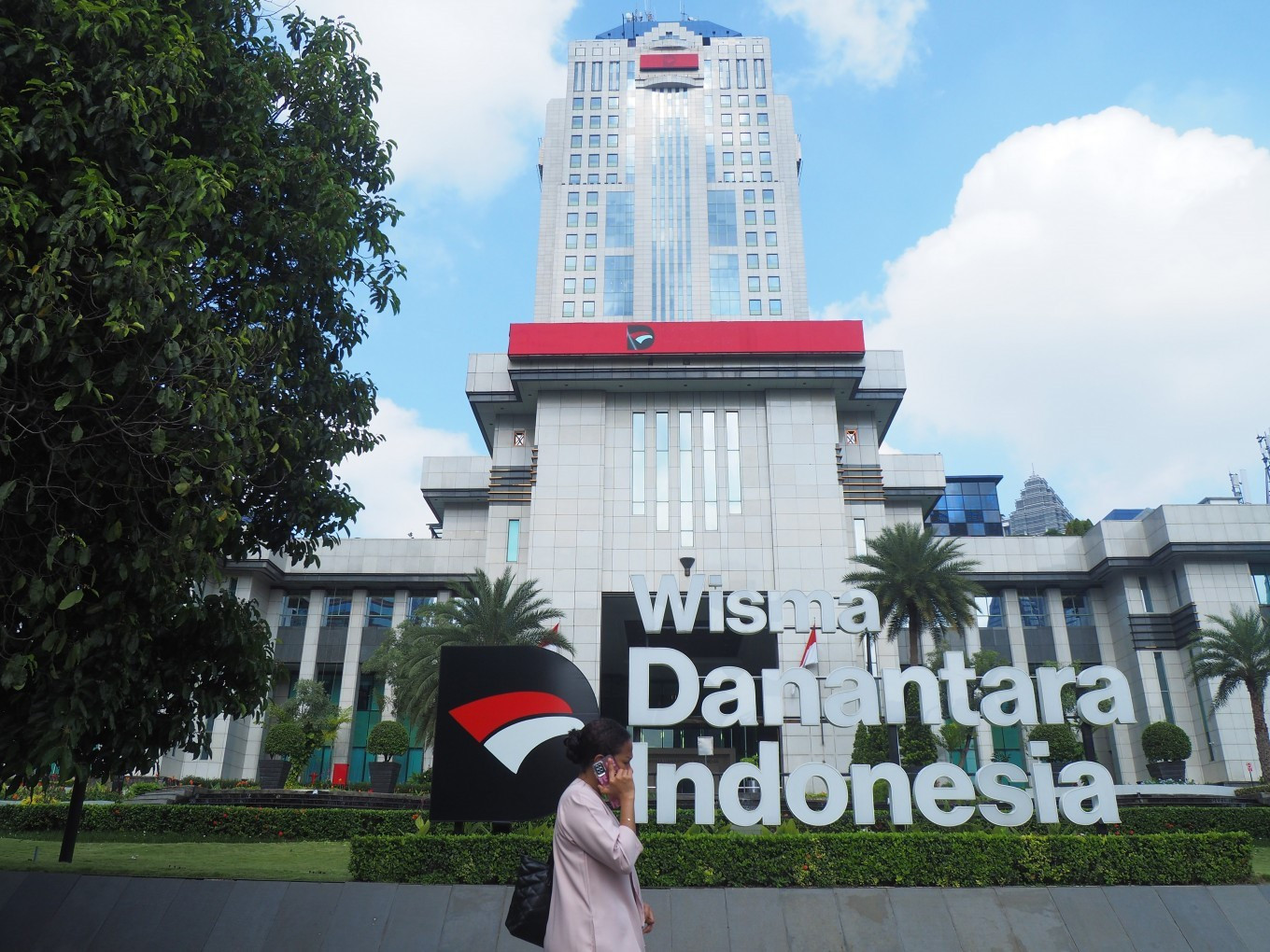 A woman walks past the Wisma Danantara Indonesia building on May 6 on Jl. Jend. Gatot Subroto in South Jakarta. (JP/Iqro Rinaldi)
The government has issued Government Regulation (PP) No. 19/2026 on state asset fund Danantara, allowing entities under Danantara Investment Management (DIM) to receive state capital injections from the state budget for purposes of national development and public service. While Danantara recently secured investment grade credit ratings, the new regulation raises concerns about moral hazard, particularly as questions on the fund’s governance, transparency and financial disclosures remain unresolved.
Under the new regulation, Danantara is authorized to establish multiple investment and operational holdings with presidential approval. These holdings may be used for various purposes, including commercial activities, development programs and other strategic objectives as determined by the president. Importantly, holdings established for national development aims are eligible to receive state capital injections.
This provision creates greater flexibility for Danantara to support national development priorities, particularly infrastructure projects. It can also provide a vehicle for state-owned enterprises (SOEs) in carrying out public service mandates and infrastructure projects through dedicated holdings that focus on fulfilling national development goals. In principle, this mechanism allows for more effective mobilization of state capital injections and SOE dividends to support public welfare.
These objectives come with significant risks, however. The success of this model depends heavily on credibility, transparency and accountability. Public funds must be managed prudently and supported by robust governance mechanisms and effective oversight. Without adequate safeguards, a policy designed to accelerate development could instead create inefficiencies, fiscal risks and governance failures.
Moreover, the new regulation further strengthens Danantara’s authority in managing SOEs, as the SOEs Regulatory Agency (BP BUMN), formerly the SOEs Ministry, no longer shares the authority to approve certain strategic matters with Danantara. For example, Danantara now has sole authority to approve the proposed write-off of SOE assets.
Given this context, Danantara’s governance framework warrants greater scrutiny. Danantara has described itself as a sui generis institution: a special entity established by law that operates outside the conventional government structure. Based on this interpretation, Danantara argues that it is only required to submit annual financial reports to the Supreme Audit Agency (BPK).
This position has attracted criticism, considering the scale of the assets under Danantara’s management, projected to reach approximately US$900 billion, including SOE assets and future dividend streams. Governance concerns have become even more pronounced following the government's decision to place Danantara at the center of new strategic initiatives.
The fund has been recently tasked with managing natural resource exports through Danantara Sumberdaya Indonesia (DSI), the creation of which has sparked controversy among industry players. On the one hand, the initiative could help Indonesia recapture revenues lost through under-invoicing and strengthen state control over strategic commodities, but on the other, it risks damaging both Danantara’s credibility and Indonesia’s image as an investment hub if it evolves into a vehicle for rent seeking rather than a mechanism for improving governance and market transparency.
Questions of credibility become even more important as Danantara prepares to access international capital markets. Recently, global rating agencies Moody’s, Standard & Poor’s (S&P) and Fitch Ratings aligned the credit rating for Danantara Investment Management (DIM) with the sovereign rating for Indonesia, reflecting the firms’ assessment that Danantara benefits from strong and reliable government support. DIM was given investment grade ratings of BBB/Baa2.This assessment helped support investor confidence, enabling DIM to successfully raise US$1.5 billion through its inaugural US dollar-denominated global bond issuance, exceeding its initial target of US$1 billion.
However, the details behind those ratings deserve closer attention. Moody’s and Fitch issued negative outlooks, while only S&P maintained a stable outlook. Fitch further noted that the rating for DIM could be downgraded if Indonesia’s sovereign rating weakened or if government support became less certain. In other words, Danantara’s investment grade rests largely on the strength of the country’s sovereign credit rating rather than on a proven track record of governance, transparency or operational performance.
A downgrade therefore remains a real possibility, so improvements in governance and transparency are vital. Doubts continue to loom over whether Danantara’s accountability and disclosure mechanisms are sufficient for an institution of such scale and significance. Unlike top sovereign wealth funds such as the Government Pension Fund of Norway and Singapore’s Temasek Holdings, Danantara has yet to demonstrate comparable standards of public disclosure, market accountability and independent oversight.
Strengthening transparency and governance is therefore critical, not only to maintain investor confidence but also to ensure that Danantara can effectively fulfill its mandate as a steward of national strategic assets.
As Danantara’s authority and responsibilities continue to expand, so too must the standards by which it is held accountable. Otherwise, a vehicle intended to accelerate development risks becoming a source of fiscal and governance vulnerabilities rather than a catalyst for long-term national growth.