
News
Resource export monopoly: Prabowo’s risky solution to under-invoicing
Tenggara Strategics May 25, 2026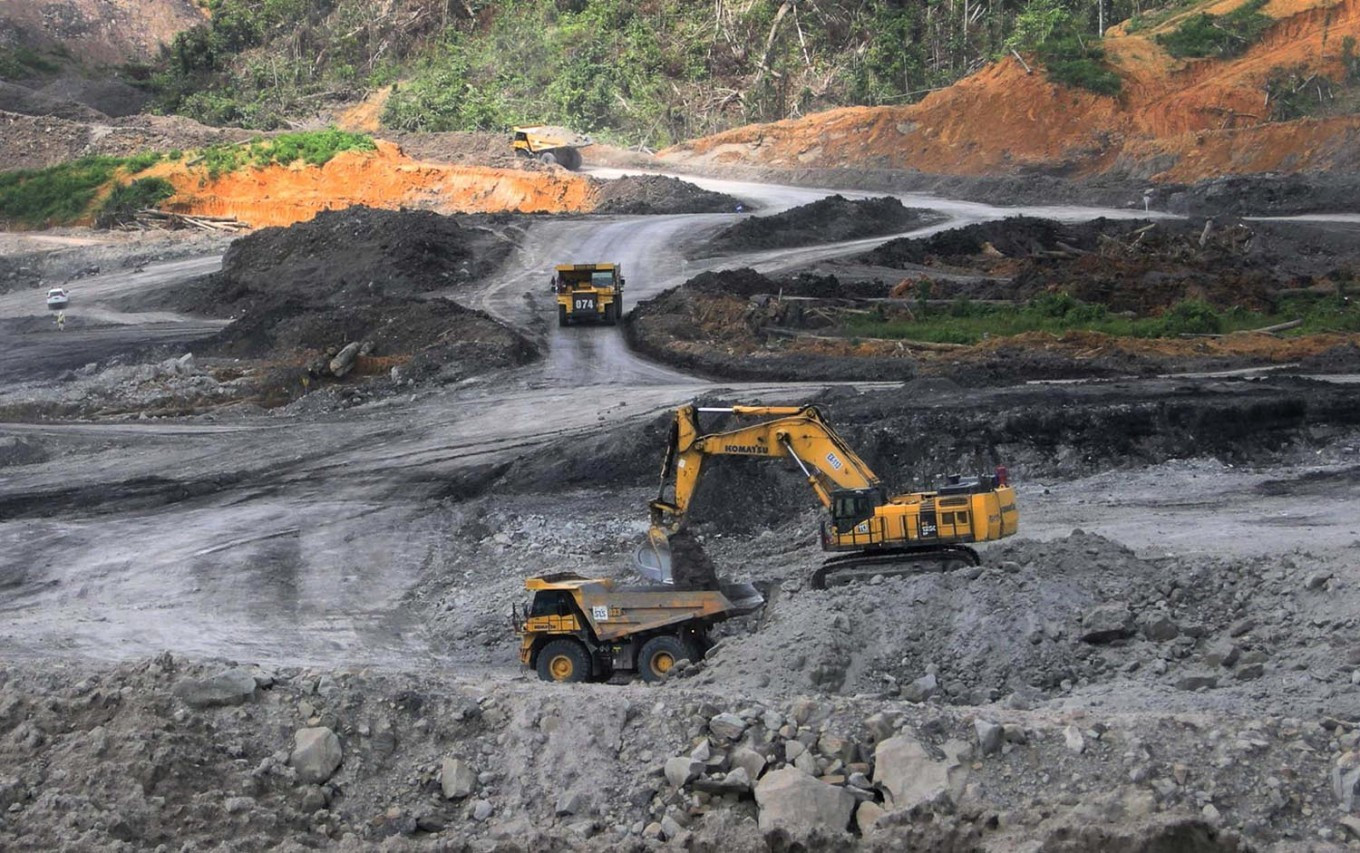 Heavy equipment is operated at a coal mine in East Kalimantan owned by PT Berau Coal in this undated photograph. (JP/Indra Harsaputra)
President Prabowo Subianto recently delivered a striking announcement: his administration plans to gradually place exports of Indonesia’s natural resources under state control to combat alleged under-invoicing by resource exporters. While the proposal could help address persistent under-invoicing, it has also raised concerns among businesses and economists, who warn that it risks becoming a misguided solution that opens the door to rent-seeking and ultimately harms the economy and public welfare.
Prabowo introduced the policy during his address to the House of Representatives on May 20. Referring to data from the United Nations Commodity Trade Statistics Database (UN Comtrade) processed by NEXT Indonesia Center, he claimed that accumulated under-invoicing of natural resource exports reached US$908 billion, or Rp 15.98 quadrillion (at Rp 17,600 per US$1), between 1991 and 2024. According to the President, Indonesian exporters conducted the under-invoicing through foreign subsidiaries.
Under-invoicing occurs when exporters manipulate trade data, including the value, volume, or quality of exported goods, so reported export revenue appears lower than its actual value. NEXT Indonesia calculated the alleged under-invoicing using the gross excluding reversals (GER) formula, a methodology also employed by the US-based Global Financial Integrity to detect trade mis-invoicing.
To implement the policy, the government would establish PT Danantara Sumberdaya Indonesia (DSI), a subsidiary of the state asset fund Danantara, to oversee the trade monopoly. Coal, crude palm oil (CPO) and ferroalloys would become the first commodities required to be exported through the SOE. The president said the policy drew inspiration from practices in Saudi Arabia, Qatar, Russia, Kuwait, Morocco, Ghana, Malaysia and Vietnam.
Danantara has appointed Australian citizen Luke Thomas Mahony, previously a senior executive vice president at Danantara, as president director of PT DSI. Mahony worked in the metals and mining sector at Xstrata Coal, BHP Billiton, and Vale between 2004 and 2025.
In the policy’s first phase, from June to December 2026, Danantara would initially function as an inspector of strategic natural resource exports. It would compare mandatory transaction reporting data for the three commodities against international market indices to assess export prices. PT DSI would also manage export documentation as the legally authorized representative for exporters. Beginning in September 2026 and continuing through December, exporters would be required to transfer export dealings with overseas buyers to PT DSI, which would then secure export contracts with foreign importers.
Business groups, including the Indonesian Palm Oil Association (Gapki), the Indonesia Mining Association (API-IMA), the Indonesian Coal Mining Association (APBI) and the Indonesian Exporters Association (GPEI), said they were not consulted before the policy was announced. Industry representatives urged the government to reconsider the policy, stressing the importance of regulatory certainty and noting that many mining companies operate under long-term contracts with foreign buyers. They warned that hasty implementation could disrupt the broader coal ecosystem, affecting not only producers and buyers, but also banks, surveyors, shipping companies and ports.
Critics further warned that a state-controlled export monopoly could encourage rent-seeking by politically connected groups, repeating the mistakes of the Clove Buffer and Marketing Agency (BPPC). Former president Suharto established BPPC in 1992, officially to stabilize clove prices and protect farmers’ welfare. Under the scheme, farmers were required to sell cloves to Village Unit Cooperatives (KUDs), which in turn sold them to BPPC. The agency, led by Suharto’s son Hutomo Mandala Putra, then sold the cloves to large traders and cigarette manufacturers. To support the policy, Suharto instructed Bank Indonesia to provide financing supports to BPPC and the KUDs.
The results were disastrous for farmers. Clove prices at the farm level collapsed from Rp 7,500-Rp 20,000 per kilogram before the BPPC monopoly to around Rp 2,000 per kg, or even lower when BPPC classified the cloves as low quality. While BPPC could reportedly sell cloves for as much as Rp 120,000 per kilogram, the agency itself neared bankruptcy because of excessive stockpiles and mounting debt. Amid the Asian financial crisis, BPPC was formally dissolved in January 1998 through Keppres No. 21/1998.
The proposed monopoly over exports of coal, CPO, ferroalloys and potentially other natural resources risks repeating BPPC’s failures by suppressing prices received by producers. It could also trigger widespread closures among exporters without upstream operations. Most concerning, however, is the risk that it becomes a new source of rent-seeking practices. Improving regulation and strengthening enforcement would likely be safer and more effective approaches to reducing under-invoicing than creating a state-controlled export monopoly.
What we've heard
Sources within the government said the idea of forming a new export agency emerged as the budget deficit continued to pose a threat and the rupiah kept weakening. Initially, the government had planned to raise export duties on several commodities to boost state revenue. According to an official at the Finance Ministry, discussions on increasing export levies had already been on the president’s desk before the Idul Fitri holidays.