
News
Tightening food imports, expanding state control
Tenggara Strategics May 18, 2026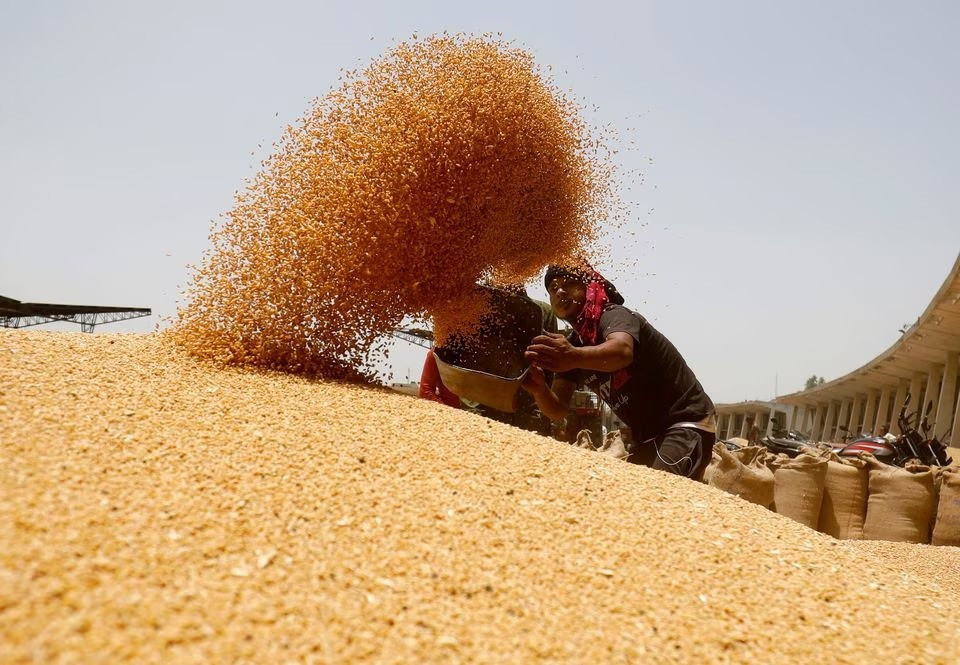 Golden grains: A worker sifts wheat before filling sacks at the market yard of the Agriculture Product Marketing Committee (APMC) on the outskirts of Ahmedabad, India, on May 16, 2022. (Reuters/Amit Dave)
Indonesia is tightening its grip on food trade. Through Trade Ministerial Regulation No. 11/2026, the government has imposed stricter import controls on a range of agricultural commodities while expanding the authority of the Agriculture Ministry across the food supply chain. Framed as a push toward food self-sufficiency, the policy signals a broader shift toward a more centralized and interventionist food regime, but it also raises concerns that tighter restrictions could drive up food prices before domestic production is ready to fill the gap.
Under the new regulation, importers of feed wheat, soybean meal, mung beans and peanuts must now obtain an import approval (PI) from the Trade Ministry based on technical recommendations from the Agriculture Ministry, effectively giving the government tighter control over the flow of food commodities. Feed rice imports face additional layers of bureaucracy through mandatory commodity balance sheets and surveyor reports, while pear importers must prove ownership or operation of cold storage facilities and submit extensive horticultural documentation.
While the government argues these measures are necessary to protect local farmers and enhance food security, the stricter licensing regime risks increasing costs, slowing supply chains and creating greater uncertainty for businesses that rely on imported agricultural inputs.
The case for intervention is not without merit. Years of relatively unrestricted imports have quietly undercut domestic farmers, with mung beans, peanuts and feed wheat flowing in freely and eroding incentives to cultivate them locally. Feed wheat has drawn particular concern for providing the livestock industry with a cheaper alternative to locally grown corn, putting continuous downward pressure on farm gate prices.
The country imported roughly 103,000 tonnes of mung beans and more than 306,000 tonnes of peanuts in 2025 alone, and volumes have remained persistently high over the past three years. Yet that level of dependence cannot be reversed through licensing requirements alone. Without serious investment in agricultural productivity, cold chain infrastructure and regional supply chains, tighter import controls risk creating shortages and spiking prices.
The more consequential shift, however, might be political rather than commercial. Under Presidential Instruction No. 2/2026, Agriculture Minister Amran Sulaiman has the authority to assign tasks to key state-owned enterprises (SOEs) in the food sector, including the State Logistics Agency (Bulog), PT Agrinas Pangan Nusantara, PT Perkebunan Nusantara III, PT Rajawali Nusantara Indonesia and PT Pupuk Indonesia, as well as issue written recommendations regarding performance targets and the appointment or dismissal of top executives. Amran concurrently heads the National Food Agency (Bapanas), which gives him control over food reserves, price benchmarks and supply stabilization.
Policymakers insist the measures are necessary to shield Indonesian farmers and reduce import dependency. While this is a reasonable, if ambitious, objective, the growing reliance on licensing requirements and administrative controls risks creating more red tape than resilience, slowing supply chains, raising input costs and increasing uncertainty for businesses reliant on imported commodities.
More concerning is the expansion of the Agriculture Ministry’s authority across the food ecosystem, consolidating control of production, procurement, distribution, commodity pricing and SOEs’ leadership appointments under a single institution.
The government describes this as a rational consolidation of a fragmented system. Critics, however, see it as an extraordinary concentration of power with limited accountability mechanisms. Concentrating such broad authority in a single institution inevitably raises questions over checks and balances, regulatory neutrality and potential conflicts of interest. When an institution simultaneously regulates imports, oversees food reserves, influences SOEs’ leadership and helps shape market prices, the line between coordination and excessive power is increasingly blurred.
Indonesia’s food self-sufficiency goal is not in question. What is questionable is the assumption that restricting imports and concentrating authority alone will achieve this. Fragmented landholdings, chronically low yields and weak logistics infrastructure are not problems that ministerial regulations can simply paper over.
They require sustained investment, structural reform and the kind of institutional accountability that a centralized food system might make harder to enforce, not easier.
The country does not need a more powerful institution gatekeeping imports; it needs a more competitive agricultural sector. Until that gap is addressed, the government risks building an increasingly complex regulatory architecture around problems that this alone cannot solve.