
News
A house today, a lifetime of debt
Tenggara Strategics May 18, 2026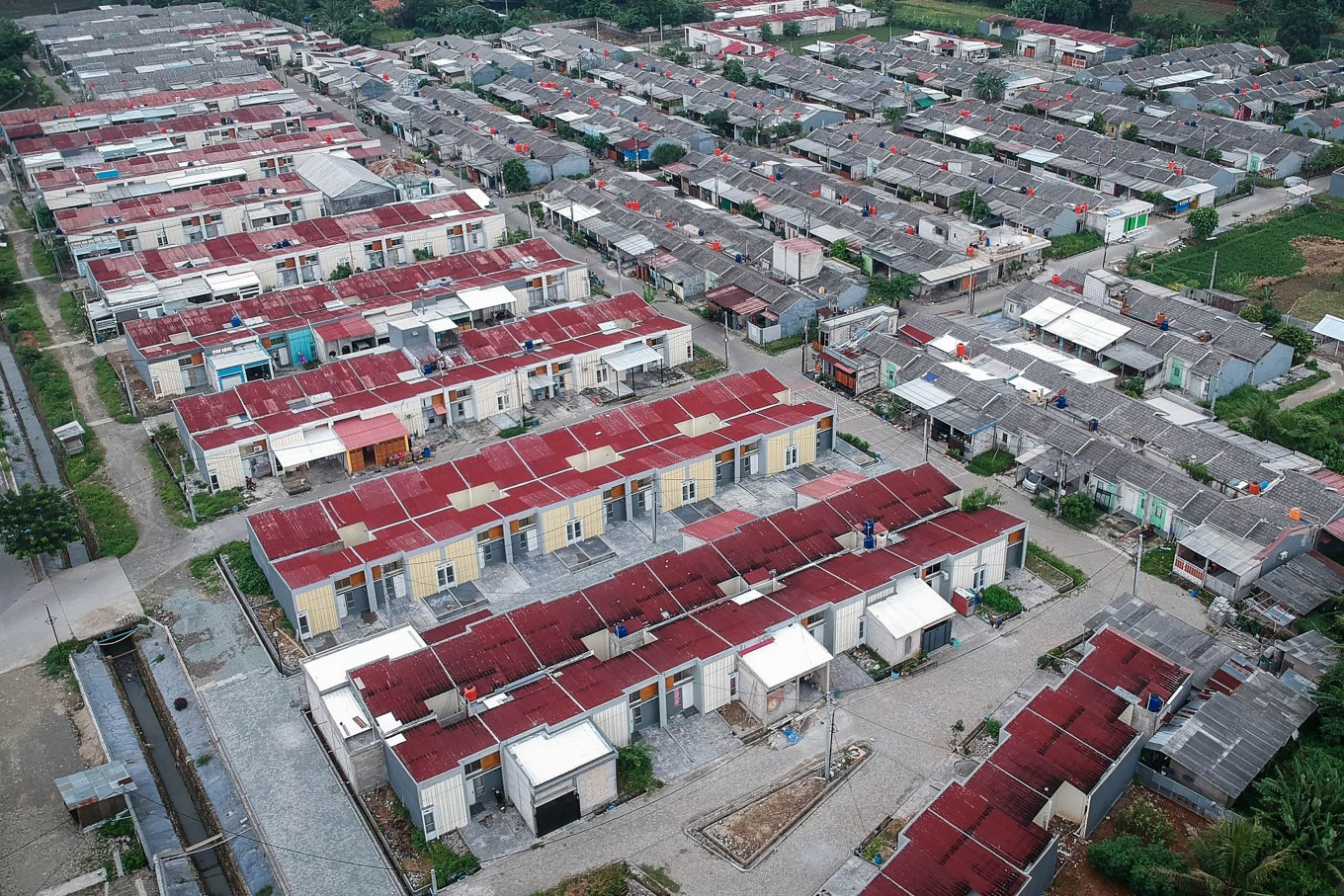 Rows of subsidized housing units are seen on Jan. 7, 2026, in Rajeg, Tangerang, Banten. (Antara/Putra M. Akbar)
Housing is shifting inexorably from a milestone to a mirage in Indonesia. With a national backlog of 15 million houses, housing affordability has turned into a crisis spanning income groups, pushing many families to rent rather than buy. The government’s proposed 40-year mortgage scheme might ease monthly payments but raises a harder question: Does extending debt across most of a person’s productive life solve the housing crisis or merely redefine what desperation looks like?
Speaking at the Labor Day commemorations on May 1, President Prabowo Subianto pledged to make homeownership more accessible for workers by extending mortgage loan tenors up to 40 years and offering an interest rate subsidy capped at 5 percent.
The appeal of the policy is easy to understand. A subsidized home priced at Rp 185 million (US$10,565) that is financed over 40 years at a fixed rate of 5 percent requires monthly installments of around Rp 890,000. That is roughly Rp 330,000 less per month than the same house with a tenor of 20 years. In that sense, the proposed scheme might genuinely help a narrow but important group of formal workers earning lower incomes who have been locked out of homeownership by rising prices and strict banking requirements.
Real Estate Indonesia (REI) chairman Joko Suranto has argued that repayment plan that carries lower monthly installments will also reduce default risk, as it affords households more room to manage their daily expenses. For a factory worker in Karawang, West Java, or a fisherman on the outskirts of Tangerang, Banten, the question is often not whether 40 years is too long but whether homeownership would otherwise remain permanently out of reach.
Yet the very factors that make the policy appealing in the short term also expose its deeper vulnerabilities over the long term. A mortgage spanning 40 years may bring monthly payments down to a more manageable level, but it does so by stretching debt across almost the entirety of an individual’s active working life. For private sector workers who typically retire at 55, they would need to take out a 40-year mortgage plan before they are 20 if they aim to repay it fully before reaching retirement. This is both legally and practically unrealistic for most Indonesians.
The proposed scheme also overlooks the possibility of structural risks becoming harder to manage over such a long repayment timescale. Informal and lower-wage workers often face unstable incomes, limited social protections and weak retirement security, while banks still apply strict lending requirements based on formal work, stable incomes and debt-service ratios. In practice, the policy therefore risks extending rather than resolving financial vulnerability for the very households it aims to help.
The policy also runs into a supply problem that a longer mortgage term cannot solve. Even if the government fully achieves this year’s Housing Financing Liquidity Facility (FLPP) target of 350,000 units, supply would still struggle to keep pace with growing demand and an expanding backlog. At the same time, the proposed scheme is likely to benefit only a narrow segment of lower-income formal workers, whereas many informal workers will remain excluded by banking requirements and rising long-term costs, including mandatory insurance premiums.
More fundamentally, a 40-year mortgage does nothing to address the rising cost of land. Subsidized homes remain affordable largely because they are built in locations far from major employment centers where land is cheaper. In Greater Jakarta, many first-time buyers are being pushed to peripheral areas such as Cisauk, Cikupa, Balaraja and Tenjo in Tangerang. For many workers, this simply replaces rent with another burden: a long-term mortgage combined with high daily transportation costs. This means a factory worker living 40 kilometers away from their workplace might end up spending more per month than if they had continued renting closer to work.
Ultimately, the real problem is not simply mortgage access but housing affordability. Extending loan tenors might temporarily reduce monthly payments but does little to address the structural roots of the crisis: high urban land prices, inadequate housing supply, poor public transport and increasingly longer commutes.
Countries that have succeeded in expanding homeownership did so not by normalizing lifelong debt but through the provision of large-scale public housing, land reform and integrated urban planning.
President Prabowo Subianto is right to frame housing as a workers’ issue. But if the only way ordinary Indonesians can afford a home is by carrying debt until old age, then the country is not solving the housing crisis but merely postponing it.
What we've heard
Several banking sources have expressed concern over the government’s plan to encourage banks to offer home ownership loans with tenors of up to 40 years. Although monthly mortgage installments would become lower, banking analysts are not convinced that the policy would solve the difficulties faced by low-income communities in owning homes.