News
Two years of Prabowo: The cost of presidential ambition
Tenggara Strategics November 3, 2026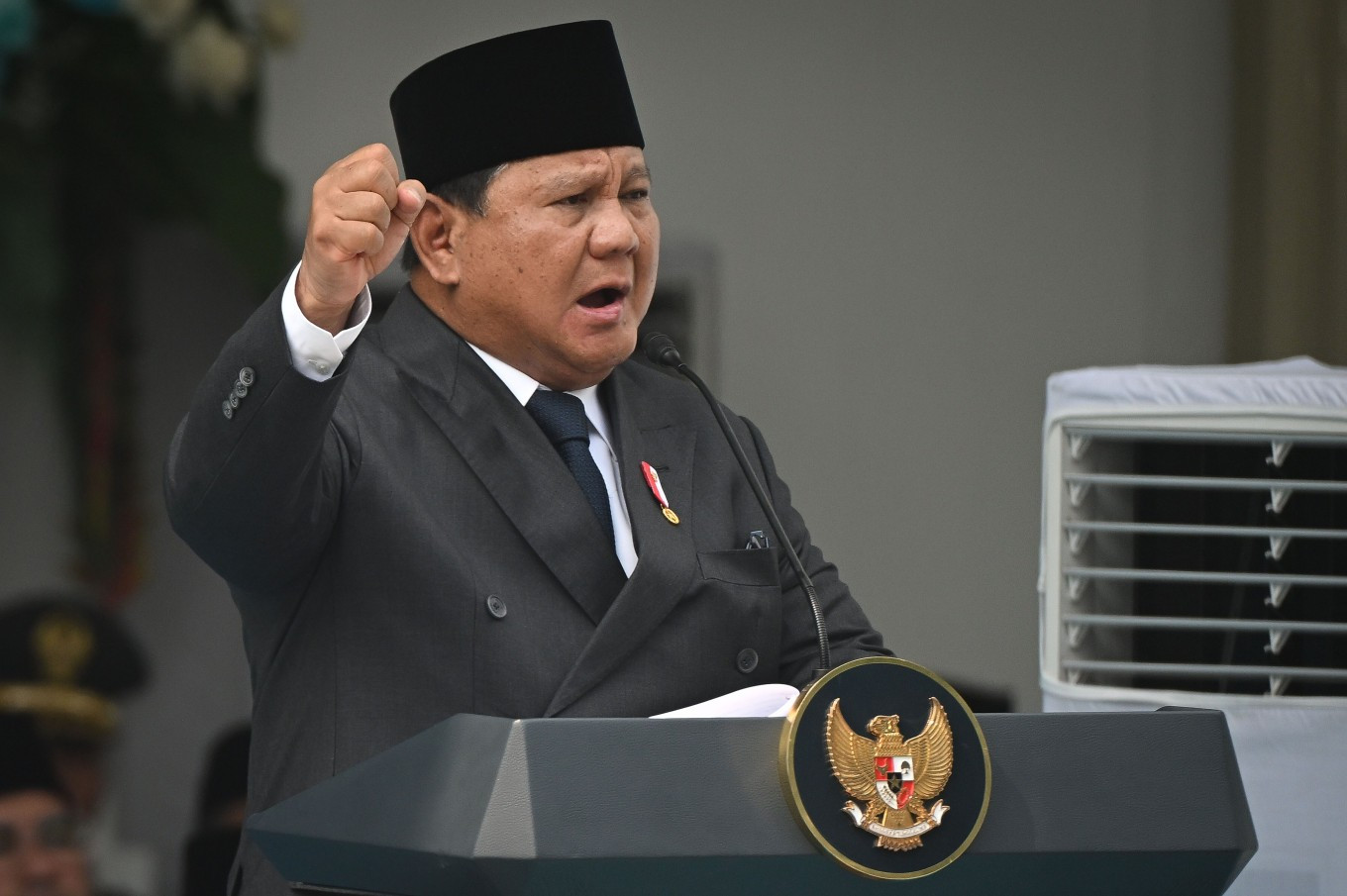 President Prabowo Subianto delivers a speech during a ceremony on June 1 at the Foreign Ministry’s Pancasila building to celebrate the birth of Pancasila 81 years ago, in Jakarta. ( Antara/Bayu Pratama S)
Two years into his presidency, President Prabowo Subianto is pursuing an ambitious agenda of state-led programs, from the free nutritious meal program to the Red and White Cooperatives. But as billions of dollars flow into these flagship initiatives, pressing needs in education, health care and disaster preparedness remain underfunded. The question is no longer whether Prabowo can fulfill his political ambitions, but whether Indonesians can afford the costs of pursuing them.
During the election campaign, Prabowo promised decent jobs, affordable homes and well-fed children. He pledged 8 percent economic growth and a country that could feed and power itself. These promises addressed anxieties about livelihoods and security. However, the urgency of delivering flagship programs has raised a harder question: Are political commitments taking priority over evidence of what works and what the country needs most?
By September 2026, the free meals program had spent Rp 204.7 trillion since its launch in 2025 and was serving around 57 million people. Yet figures cited in Parliament showed that 50,059 people had suffered food poisoning after consuming free meals through September. Concerns about oversight date back to the program's preparation. In February 2025, the Center for Indonesia's Strategic Development Initiatives (CISDI) reported that impact assessments and cost-benefit studies from the 2024 trials were not publicly accessible. Indonesia Corruption Watch (ICW) also identified political affiliations among 28 of the 102 partner foundations examined, raising concerns about potential conflicts of interest. Recipient numbers demonstrate the program's reach, but they cannot establish food safety or improved nutrition.
The Red and White Cooperatives present another test. Agrinas estimated that Rp 106 trillion in bank loans had been used to build and equip village cooperatives. This borrowing is distinct from the free meals program direct government expenditure. In late September, the government was still working to resolve management appointments and secure supplies for completed cooperatives. Construction is only one part of a business model. Demand, reliable distribution and competent management determine whether it can survive. Without those foundations, expansion risks giving waste a bigger budget and leaving taxpayers to pay for failures and corrective measures.
The opportunity cost is substantial. Using government cost benchmarks, roughly Rp 20 trillion could revitalize 10,000 schools, upgrade 20 regional hospitals to Class C standards and fund four-year scholarships for 50,000 undergraduates. The scholarship estimate assumes tuition of Rp 8 million per semester and living expenses of Rp 1 million per month. Add another Rp 20 trillion, matching the additional support approved for BPJS Kesehatan, and the total remains roughly one-fifth of cumulative spending on the free meals program. These estimates exclude additional hospital land, staffing and operating costs. They illustrate the scale of competing needs against which further expansion must be justified. Winning an election does not give every campaign promise a blank check.
Disasters make those choices more urgent. In February 2025, the National Disaster Mitigation Agency (BNPB) warned that budget cuts would reduce planned purchases of disaster-response equipment and vehicles from 1,850 units to 235. Its 2026 budget was then set at just Rp 491 billion, down from Rp 2.01 trillion the year before, a tiny fraction of the budgets allocated to the free meals program and Red and White Cooperatives. Emergency funding is provided separately, but preparedness still depends on equipment being available before catastrophe strikes. Recovery also demands sustained attention. By Oct. 5 only 2,085 of the 57,027 planned permanent homes had been completed across Aceh, North Sumatra and West Sumatra. September's Anak Krakatau eruption added further disruption to a country already confronting repeated emergencies.
Meanwhile, forest and peatland fires across Sumatra and Kalimantan exposed the consequences of prolonged crises. Communities endured hazardous smoke for months as fires continued into October. Hundreds of thousands suffered respiratory problems, while foreign assistance was still being discussed in mid-October, weeks after Malaysia offered firefighting aircraft and personnel. Presidential visits and instructions must translate into protection. For families awaiting homes and children breathing smoke, empathy means timely assistance and public institutions capable of delivering it.
Prabowo is entitled to dream big, but taxpayers should not have to finance ambitions without convincing evidence that they work. Pilot projects must establish what works, how costs differ across regions and what needs correcting before expansion creates expensive commitments. Findings should be made public and inform decisions, with funding redirected when results fall short. Wasted resources leave households more exposed to medical bills, interrupted schooling, lost income and, even worse, debt. This is how poorly designed spending can deepen the insecurity it promises to resolve. Listening to communities and revising unsuccessful policies are obligations of governing.
Prabowo has fulfilled his dream of becoming president. He has three years left to prove that Indonesians' sacrifices will buy them a better life, rather than merely a place in his legacy. That requires the courage to abandon cherished plans when their costs outweigh their benefits, before today's mistakes become tomorrow's inheritance. The presidency may be his dream, but Indonesia's future is not his to gamble with.
Related Articles