
News
The hidden costs of Indonesia’s data center gold rush
Tenggara Strategics October 12, 2026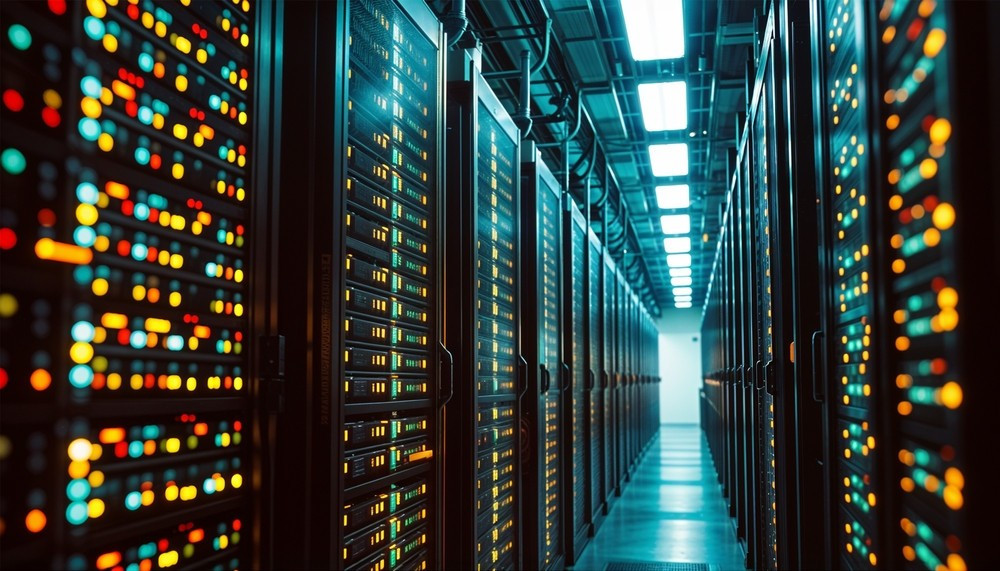 Illustration of servers in a data center. (Shutterstock/Caureem)
Indonesia wants to ride the global data center boom, betting that investment, skilled jobs and computing power for artificial intelligence will drive economic growth. But the cloud leaves its imprint on the ground: Data centers consume vast amounts of electricity and water and can expose surrounding communities to heat and noise. The question is whether the government will make this boom work for the public or leave communities to pay for it.
The rush is already underway. In June 2025, the Communications and Digital Ministry put Indonesia’s data center capacity at 650 megawatts and projected a need for 1.5–2 gigawatts by 2026. By July, state utility PLN had connected 159 data center customers with nearly 2,000 megavolt-amperes of electrical capacity, almost all of it concentrated in the Java-Madura-Bali grid.
Another nearly 2 GW of projects were under construction or planned. The numbers capture different parts of the industry, but they point to the same policy challenge. Indonesia may be able to attract data centers faster than it can prepare the power networks, water supplies and surrounding communities expected to accommodate them.
There is a compelling economic case for getting this right. In the first half of 2026, Indonesia recorded Rp 114 trillion (US$6.5 billion) in realized investment in a services category that the investment minister said was dominated by data centers. Coordinating Economy Minister Airlangga Hartarto has also said Nvidia is considering a $4.5 billion investment in Batam, Riau Islands.
Beyond construction spending, local computing capacity could help Indonesian businesses develop AI without relying entirely on infrastructure abroad. But those gains will depend on whether Indonesia builds local expertise and businesses around these facilities, rather than simply providing the land and resources to host them.
The imprint extends to electricity, land and water. Their power demand may require PLN to strengthen the grid and secure new generation capacity. Operators should pay for the capacity they need, and that additional demand should be met with clean power. Otherwise, Indonesia risks adding to fossil fuel emissions while leaving PLN or the state budget to absorb infrastructure costs that the investment figures never show.
Large campuses also need space for buildings, cooling equipment, substations and access roads, potentially displacing farmland or green space. Their demand for water can be substantial. A mid-sized data center in the United States can consume as much water as a small town, while a large facility can use as much as a city of 50,000 people.
Jatiluhur in West Java shows why that distinction matters. BDx is developing a 640 MW AI campus near a reservoir that irrigates farmland and supplies raw water to Jakarta. On the reservoir’s shores, about 200 families in one village have needed emergency water deliveries after months of drought.
The data center has not begun operating and did not cause their water shortage. Yet figures disclosed by the West Java governor suggest its water needs could rise from 6 million liters a day initially to 384 liters per second, or about 33 million liters a day, as the data center campus expands. BDx would buy that water from a local utility, but its source would still be Jatiluhur. With the environmental assessment unfinished, the government owes the public a clear account of how existing water users will be protected.
Indonesia can learn from places where data centers have operated for longer. In Virginia in the US, noise near facilities that drew complaints was estimated at 40–59 decibels. This is generally too quiet to damage hearing, yet the steady hum of cooling equipment can follow residents into the night, disturbing sleep and causing stress.
Heat, too, can travel beyond the fence. In Arizona, also in the US, researchers found that air in neighborhoods downwind of four data centers was, on average, 0.7–0.9 degrees Celsius warmer than upwind. Such concerns have contributed to protests against data centers across the US.
Protests against data centers have also emerged closer to home, in Thailand, prompting the government to pause 166 data center projects, including 49 under construction and 117 awaiting approval.
Data centers are a double-edged sword, and the government will help determine which edge the public feels. Before granting permits, it should require developers to disclose their projected water and power use, assess noise and heat impacts on nearby homes and spell out who will pay for the necessary infrastructure and environmental safeguards. Those obligations must be monitored as facilities expand, with consequences when operators fall short.
Indonesia has good reason to seek the investment and expertise this industry can bring. But if the government’s appetite for growth outruns its duty to protect the public, investors will reap the gains while communities bear the costs.