
News
Final warning to customs office: Reform or be replaced
Tenggara Strategics December 12, 2025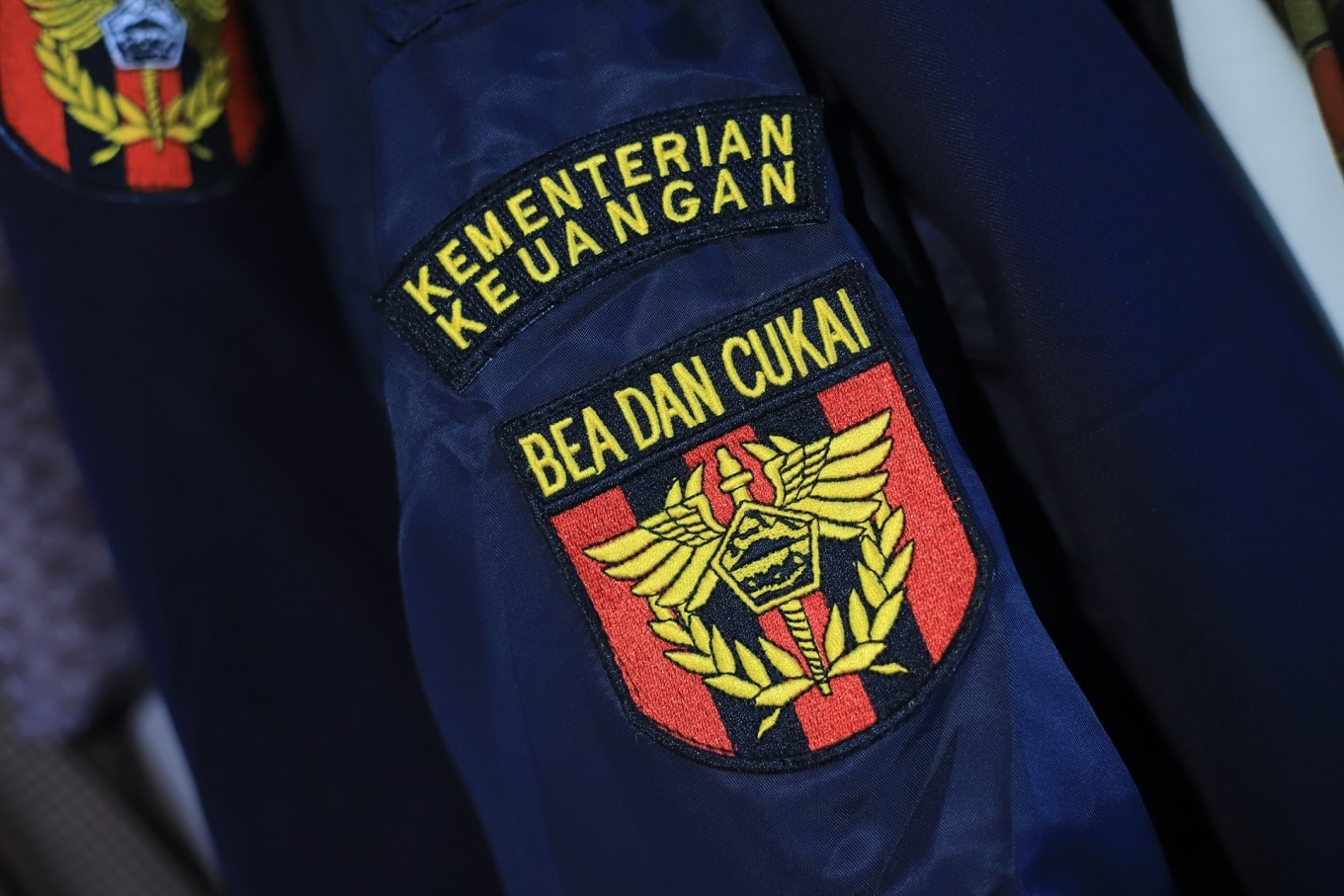 A sleeve patch featuring the logo of the Finance Ministry's customs and excise directorate general is seen in this stock photo taken on March 13, 2023. (Shutterstock/Wulandari Wulandari)
Finance Minister Purbaya Yudhi Sadewa has issued a stark ultimatum to the Customs and Excise Directorate General (DJBC): repair its battered reputation within a year or face the possibility of another institutional freeze. The warning puts the future of roughly 16,000 employees on the line. But the deeper question is whether the DJBC can truly rebuild itself or whether this threat simply postpones the next cycle of breakdown and intervention.
The DJBC has long suffered from low public trust, a perception reinforced by persistent failures in supervision and service delivery. Purbaya's suspension threat, delivered directly to customs and excise officials, reflects concerns over unresolved problems that continue to erode the institution's credibility. Chief among them is chronic under-invoicing across multiple supervision and service offices. In this practice, the declared value of goods is deliberately lowered to reduce import or export duties, depriving the state of significant revenue.
The porous entry of illegal goods has further fueled allegations of collusion involving customs officials. During an unannounced inspection of the Tanjung Perak customs office and the Surabaya class II customs laboratory, Purbaya uncovered clear evidence of under-invoicing. One import declaration listed a submersible pump at only Rp 117,000 (US$7) per unit, far below the actual market price of Rp 40 million to 50 million. Such discrepancies are unlikely to occur without some degree of collusion between importers and customs officials. In any normal procedure, officers would immediately identify and flag such glaring inconsistencies.
The finance minister also cited reports from business owners who said they were charged Rp 550 million to illegally slip a container of thrift clothing through customs, implying cooperation between smugglers and insiders. These revelations illustrate how deeply the institution has strayed from its core responsibilities: enforcing customs and excise laws, ensuring fair and legal trade, safeguarding state revenue and providing reliable oversight. Instead, the very abuses it is meant to prevent appear to be occurring within its own ranks.
Law enforcement against corrupt customs officials, however, has often materialized only after public pressure intensified. The cases of Yogyakarta customs office head Eko Darmanto and Makassar customs office head Andhi Pramono illustrate this pattern: both were prosecuted only after their ostentatious displays of wealth went viral on social media. Eko was ultimately sentenced to six years in prison for accepting bribes totaling Rp 23.5 billion, while Andhi received a 10-year sentence.
Such dysfunction of the customs office is not new. During then-president Soeharto's New Order, the customs office was plagued by corruption and embezzlement, a reality acknowledged publicly by then finance minister Ali Wardhana. He noted that customs officers routinely failed to perform their duties, weakened by a permissive work culture and rampant smuggling, even after receiving a ninefold salary increase that briefly made them among the highest-paid civil servants. The problems were so severe that the government shut down the agency entirely and handed its functions to the Swiss inspection firm Société Générale de Surveillance (SGS) in 1985.
The overhaul produced immediate gains. SGS streamlined trade procedures, lowered logistics costs and significantly increased customs and excise revenue. Importers and exporters at the time welcomed the new system, saying it offered greater predictability in both costs and delivery schedules, and provided a level of certainty that had long been missing under the old customs regime.
After six years, however, the government did not renew SGS' contract, appointing state-owned PT Surveyor Indonesia (SI) to take over its functions. SI, in turn, subcontracted many inspection tasks, especially overseas inspections of Indonesian imports, back to SGS. The passage of Customs Law No. 10/1995 eventually restored import-export inspection authority to the customs office in 1997.
Today, history threatens to repeat itself. The continued failures of the customs and excise office have revived debate over stripping the agency of its responsibilities and once again outsourcing them to an external operator such as SGS.
With its reputation in tatters, the DJBC now stands at a critical crossroads. Purbaya's warning should be taken as a mandate for deep reform, both in performance and institutional integrity. If meaningful improvements fail to emerge, the prospect of replacing corrupt or ineffective personnel with competent third-party professionals is no longer unthinkable. At this stage, reform is not merely a policy option; it is the agency's final chance to prove it deserves to remain in place.