
News
Everything but the rate: BI balances growth, rupiah stability
Tenggara Strategics September 29, 2026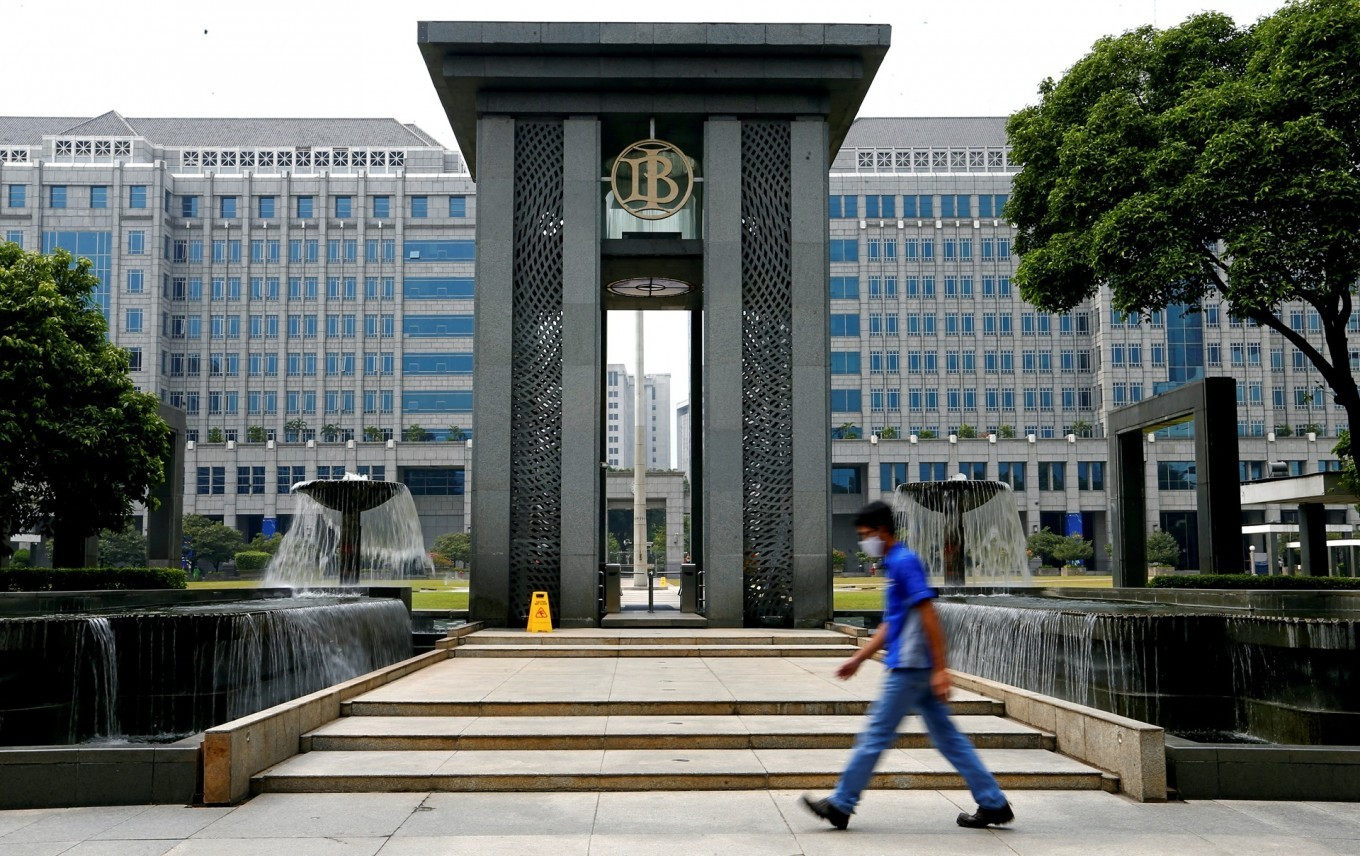 A man walks past the Bank Indonesia (BI) headquarters on Sept. 2, 2024, in Jakarta. ) (Reuters/Ajeng Dinar Ulfiana)
Bank Indonesia (BI) opted to keep monetary policy supportive of growth on Sept. 23, holding its benchmark rate at 5.75 percent despite the United States Federal Reserve’s rate hike a week earlier. The decision, Governor Destry Damayanti’s second consecutive hold, reflects BI’s expanded mandate to support economic growth and job creation. Rather than raising rates to defend the rupiah, BI strengthened incentives for investors to hedge their currency exposure, seeking to balance growth with exchange-rate stability.
The Fed raised its target range for the first time since 2023, to 3.75-4.00 percent on Sept. 16, in a unanimous decision, as inflation remained elevated amid geopolitical uncertainty. Fed officials’ projections also indicated that monetary policy could remain relatively tight, while BI noted that global investor appetite for emerging-market portfolio assets remained constrained as the dollar stayed strong.
Ahead of BI’s decision, the rupiah weakened to Rp 17,855 per US dollar on Sept. 22, from around Rp 17,600 in mid-September. Foreign portfolio money has also been leaving: BI reported cumulative third-quarter net inflows of US$1.8 billion as of Aug. 14, falling to US$0.4 billion as of Sept. 21, implying roughly US$1.4 billion in net outflows over the five weeks between. Inflation, meanwhile, provided little pressure for a rate move. Headline inflation stood at 3.19 percent in August, driven by volatile food prices and up from July, but remained within BI’s target range of 2.5 percent plus/minus 1 percent.
In responding to the Fed’s decision, BI once again relied on instruments other than its policy rate. Its September response rested on three measures.
First, BI strengthened its monetary operations to stabilize the rupiah, control inflation and manage liquidity by optimizing foreign exchange intervention in offshore non-deliverable forwards (NDF), the domestic spot market and domestic NDF (DNDF), while managing money-market rates in line with the BI Rate. Second, it increased incentives through lower premiums on hedging swaps and DNDF transactions with BI, with reductions roughly doubled and tiered by tenor, alongside continued incentives for local-currency transactions. Third, it maintained accommodative macroprudential policy to encourage lending to the real sector.
Since June, when the rupiah breached Rp 18,000 per dollar and BI raised its benchmark rate by 25 basis points, completing three increases totalling 100 basis points, the central bank has kept rates unchanged. Its other policy instruments have since been used to defend the rupiah without further raising the cost of credit.
Raising the BI Rate would increase bank funding costs, feed through into lending rates and potentially slow investment and economic growth. That trade-off now has greater statutory significance following the enactment of Law No. 4/2026 on the Amendment to the Financial Sector Development and Strengthening (P2SK) Law.
The revised law gives BI additional responsibilities alongside its traditional objectives of maintaining the stability of the rupiah, payment system and financial system. Law No. 4/2026 requires BI to implement its policies and policy mix in a way that creates an economic environment conducive to real-sector growth and job creation. This expanded responsibility has been reflected in BI’s decision to hold rates in recent months while relying more heavily on other instruments to maintain stability.
Bank credit grew 13.65 percent year-on-year in August, up from 13.58 percent in July and above BI’s projected 8-12 percent range for the year. Investment loans expanded particularly strongly, by 25.11 percent, compared with 5.07 percent growth in consumer loans.
However, the revised law asks BI to help create conditions conducive not merely to credit growth but also to real-sector expansion and job creation. Whether the rapid growth in investment lending ultimately translates into stronger household incomes and, particularly, more jobs is something the credit data alone cannot answer.
What is reaching households, on BI’s own account, has come partly through government spending rather than bank lending. BI has attributed stronger household consumption in part to government stimulus. It also pointed to fiscal measures, including the 13th-month salary payment and spending on the free nutritious meals program, as factors supporting economic growth.
BI’s decision to hold rates, combined with its broader policy mix, has so far allowed it to pursue both stability and growth. Inflation remains within target, while the rupiah has been managed, albeit at a weaker level, and credit growth remains strong. BI itself described the Sept. 23 decision as consistent with rupiah stabilization, its inflation target and support for sustainable economic growth.
But those objectives may not always align so comfortably. When the rupiah comes under severe pressure, as it has over the past year, raising interest rates remains one of BI’s most powerful tools for supporting the currency, but it can also raise borrowing costs and restrain credit and investment. The revised P2SK Law gives BI a greater role in supporting growth. So far, its broader policy toolkit has allowed it to pursue that objective without sacrificing stability. The harder test will come if defending the rupiah and supporting growth begin to pull monetary policy in opposite directions.