News
Whoosh or noose: Uncertain future of high-speed rail project
Tenggara Strategics September 28, 2026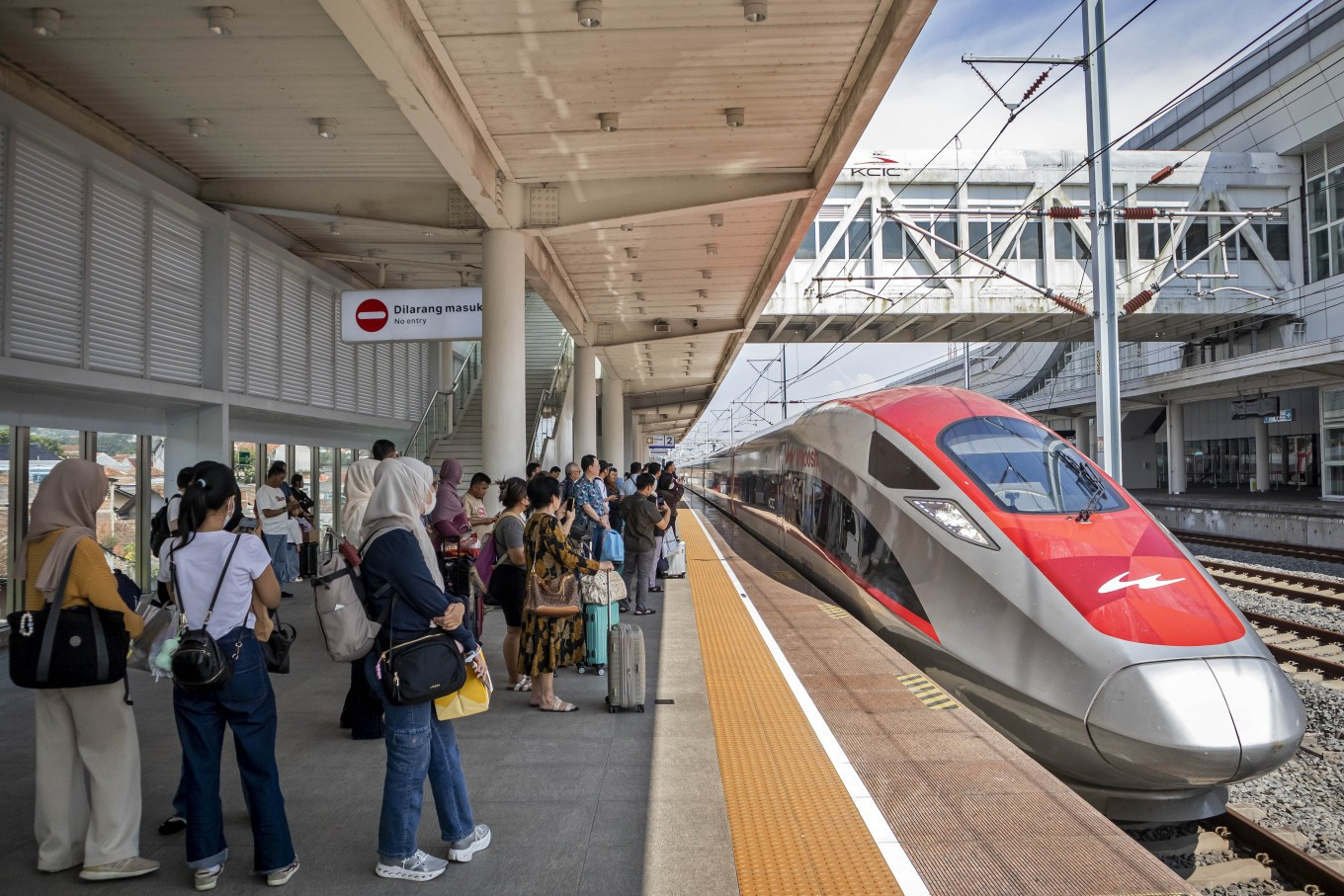 A train of the Jakarta-Bandung High-Speed Rail (HSR) service, which operates as Whoosh, arrives at a platform on March 15, 2026, at Padalarang Station in West Bandung regency, West Java. (Antara/Abdan Syakura)
Indonesia’s long-standing ambition to build a high-speed rail network has evolved from a national prestige project into a potential fiscal burden. Whoosh’s continuing losses and mounting debt have already drawn the Finance Ministry closer to backstopping the project. Given its history of delays, cost overruns and overly optimistic projections, the question is whether Whoosh can deliver sufficient economic benefits or become a noose around Indonesia’s already stretched fiscal capacity.
Jakarta-Bandung high speed rail Whoosh, Southeast Asia’s first high-speed railway, has gone from a source of national pride to a growing financial burden. A decade after promising that the project would not rely on the state budget, the government has been forced to step in, marking a significant departure from what was initially conceived as one of Indonesia’s largest business-to-business (B2B) infrastructure projects.
The government has injected Rp 3.2 trillion (US$183 million) in state capital into PT Kereta Api Indonesia (KAI), which leads the Indonesian consortium of state-owned enterprises, PT Pilar Sinergi BUMN Indonesia (PSBI). PSBI holds a 60 percent stake in PT Kereta Cepat Indonesia China (KCIC), which owns and operates Whoosh. Beijing Yawan HSR Co., Ltd. owns the remaining 40 percent. In addition, the project has received approximately Rp 16 trillion in refinancing support through additional loans from China Development Bank (CDB). Despite these measures, its financial position has continued to deteriorate.
PSBI recorded losses of Rp 5.13 trillion in the first half of 2026 alone, exceeding its Rp 4.99 trillion loss for all of 2025. As the majority shareholder in PSBI, KAI absorbed around Rp 3 trillion of those losses. Although KAI’s revenue increased by 6.6 percent during the period, its net profit plunged by 73.5 percent, from Rp 1.18 trillion to just Rp 314 billion. State-owned construction company PT Wijaya Karya (WIKA), the former leader of the PSBI consortium, faces an equally difficult situation. After posting losses of Rp 1.67 trillion in 2025, the company recognized an additional Rp 1.77 trillion loss from its investment in PSBI during the first half of 2026, further weakening its already fragile financial position.
At the core of Whoosh’s problems are weak revenue and mounting debt. Ridership remains far below the assumptions used in the original financial feasibility projections, averaging 16,000 to 21,000 passengers a day compared with the projected 60,000. Lower-than-expected passenger numbers also complicate the transit-oriented development (TOD) strategy surrounding the railway.
Whoosh’s mounting debt poses another challenge. Total debt has reached approximately Rp 79 trillion (US$4.5 billion), carrying an initial annual interest rate of 3.4 percent, equivalent to roughly US$121 million in annual interest payments. The debt partly reflects the project’s cost overruns, with its price tag rising from an initial estimate of US$5.5 billion to US$7.27 billion, around 75 percent of which was financed through loans from CDB. Equally concerning, PSBI’s total liabilities of Rp 21.55 trillion have now exceeded its total assets of Rp 21.53 trillion, leaving the company with negative equity. This marks a sharp deterioration from the end of 2025, when PSBI still reported positive equity of around Rp 5.1 trillion.
With the Indonesian SOEs in the PSBI consortium now under Danantara, the state asset fund entered negotiations with the Finance Ministry over how to manage the project’s debt. President Prabowo Subianto has also publicly pledged that the government will resolve Whoosh’s financial problems, bringing the issue increasingly within the government’s fiscal domain.
Under then-finance minister Purbaya Yudhi Sadewa, the ministry considered a mechanism designed to prevent the debt from directly burdening the state budget. One option was to place the obligations with a special mission vehicle (SMV) under the ministry, effectively ring-fencing the debt and allowing it to be serviced through profits generated by the designated entity.
Purbaya said the debt had been restructured over 80 years, reducing annual repayments to around Rp 1 trillion or slightly less. He also argued that an SMV under the ministry could generate Rp 3 trillion to Rp 4 trillion in annual profits, potentially providing sufficient resources to meet Whoosh’s debt obligations. But those assumptions may themselves prove optimistic. What happens if the designated SMV generates less profit than anticipated? Like other businesses, SMVs remain exposed to market conditions and fluctuations in earnings, which could affect their ability to service Whoosh’s debt without eventually requiring additional government support.
The question has become more pressing following Purbaya’s replacement by Suahasil Nazara as finance minister on Sept. 14. The planned transfer of responsibility for Whoosh’s debt had been scheduled for Sept. 15, but the change in leadership has left the status of that arrangement uncertain. Suahasil therefore inherits not only Whoosh’s financial problems but also the task of determining whether his predecessor’s proposed solution remains viable.
What we've heard
A source said that plans to take over the debt of the Whoosh high-speed railway had been discussed at a joint meeting of the Coordinating Infrastructure and Regional Development Ministry in early 2026. At the meeting, Danantara presented a proposal outlining a debt repayment scheme. Broadly, Danantara proposed that the debt would be jointly borne by KCIC and the government. Under the proposal, Danantara would transfer part of its share in the high-speed railway to the Finance Ministry.