
News
Crisis, what crisis? Indonesia banks on minimum response
Tenggara Strategics April 6, 2026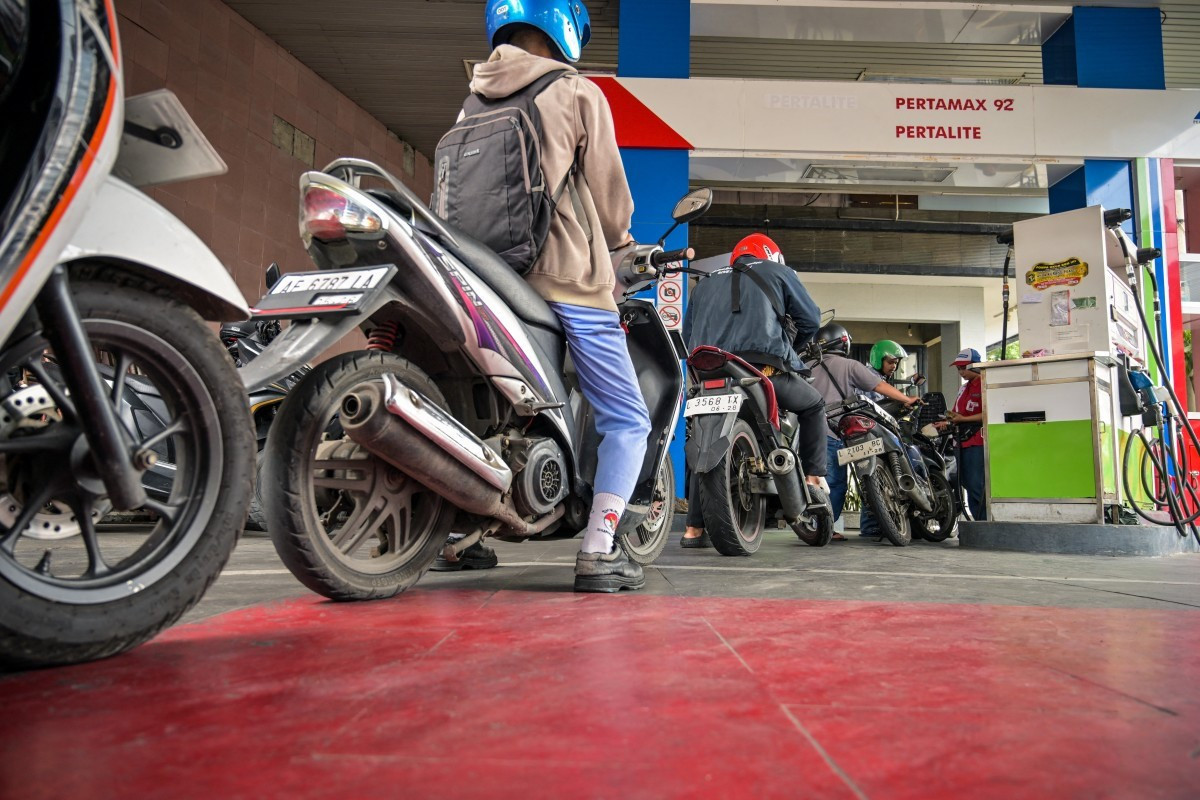 Motorcycle riders line up at a gas station on March 9 in Surabaya, East Java. (AFP/Juni Kriswanto)
The government has beaten speculators and hoarders by announcing that it will not increase domestic gasoline prices, a move that has made Indonesia a regional outlier when neighboring countries have hiked theirs in response to soaring global oil prices.
The announcement on March 31 dashed rumors that gasoline prices would go up as of April 1. It also immediately eliminated the long lines of motorists that formed at many gas stations in the penultimate week of March.
Instead, the government has simply limited the maximum daily volume of fuel purchases to 50 liters per vehicle, a generous amount for the average motorist that it would hardly make a dent in how much oil the country burns. At most, it will deter people from hoarding, a crime punishable with up to three months in jail.
It appears President Prabowo Subianto’s administration is going for the bare minimum in response to what is increasingly looking like a major global oil shortage and beyond that, a potentially imminent economic crisis.
Another measure announced at the same time is a mandatory policy for civil servants to work from home (WFH) or work from anywhere (WFA) one day per week, preferably on Fridays, ostensibly to cut fuel consumption by reducing commuter numbers. The private sector has been encouraged to adopt this policy also.
Implicit in these minimum measures is an assumption that the United States-Israeli war on Iran will end soon and that oil shipments through the contentious Strait of Hormuz will return to normal. While most countries are hoping for the best and preparing for the worst, Indonesia might end up paying a heavy price for lacking a sense of crisis.
Historically, domestic fuel price hikes have been followed by massive protests, which could be politically destabilizing. Strongman Soeharto, for example, was forced to quit the presidency in 1998 due to a massive people’s power movement that erupted a few weeks after he hiked gasoline prices at the peak of the Asian financial crisis.
The fuel subsidy policy still looms large six presidencies later, despite critics calling it out as a huge waste of money that could be better spent on critical social programs. Prabowo may have bought momentary peace, but he may have to pay heavy political and economic costs if world crude prices stay above $100 a barrel. There is a limit on how much and how long the government can maintain its fuel subsidies.
Publicly, officials have made assurances that the country has sufficient fuel reserves and state finances are strong enough to keep subsidizing motorists’ thirst for fuel.
When global oil prices started to increase in early March, the government announced that nationwide reserves were sufficient for 21 days. The long Idul Fitri holiday must have depleted a significant chunk of this stock, given the mass mobilization of people from cities to villages and back during mudik (exodus).
In an apparent sign of desperation, Energy and Mineral Resources Minister Bahlil Lahadalia said he had been instructed by the President to seek alternative oil supplies beyond the Middle East.
Finance Minister Purbaya Yudhi Sadewa said current global oil prices, which remain stubbornly high at above $100 a barrel, had added another Rp 100 trillion (US$5.9 billion) to this year’s fuel subsidy expenditure, bringing it to a total of Rp 481 trillion.
The 2026 state budget assumes global oil prices averaging $70 per barrel and a rupiah exchange rate of 16,500 to the US dollar. The national currency has been hovering at around Rp 17,000 to the dollar since early March.
Purbaya has said that despite the increase in subsidy spending, the budget deficit would be maintained below the legal 3 percent limit.
Even so, the government must recalculate this year’s spending plans and some deep cuts will be inevitable. The pressure is on the finance minister to come up with the money to plug the widening budget deficit, though Purbaya is yet to reveal which spending items will be slashed.
Besides the fuel subsidy, another big spending item that cannot be touched is the free nutritious meal (MBG) program, Prabowo’s pet project that he insists must meet its 2026 goal of 82 million beneficiaries. Rolled out in January 2024, the program is currently providing meals to 55 million children nationwide.
In a recent conversation with select journalists and scholars, Prabowo said he believed the government could plug the leak by squeezing significant funding through efficiency measures rather than by cutting essential spending items.
The coming weeks or months will show if the administration’s minimum response to the global energy shortfall, along with its efficiency measures, are sufficient to avoid an economic crisis.
What we've heard
Officials and sources in the oil trading sector report that Pertamina tankers in the Strait of Hormuz have yet to leave the area, despite initial expectations that the vessels would arrive in Indonesia by early April.