
News
Can Icomex make Indonesia a commodity price maker?
Tenggara Strategics September 4, 2026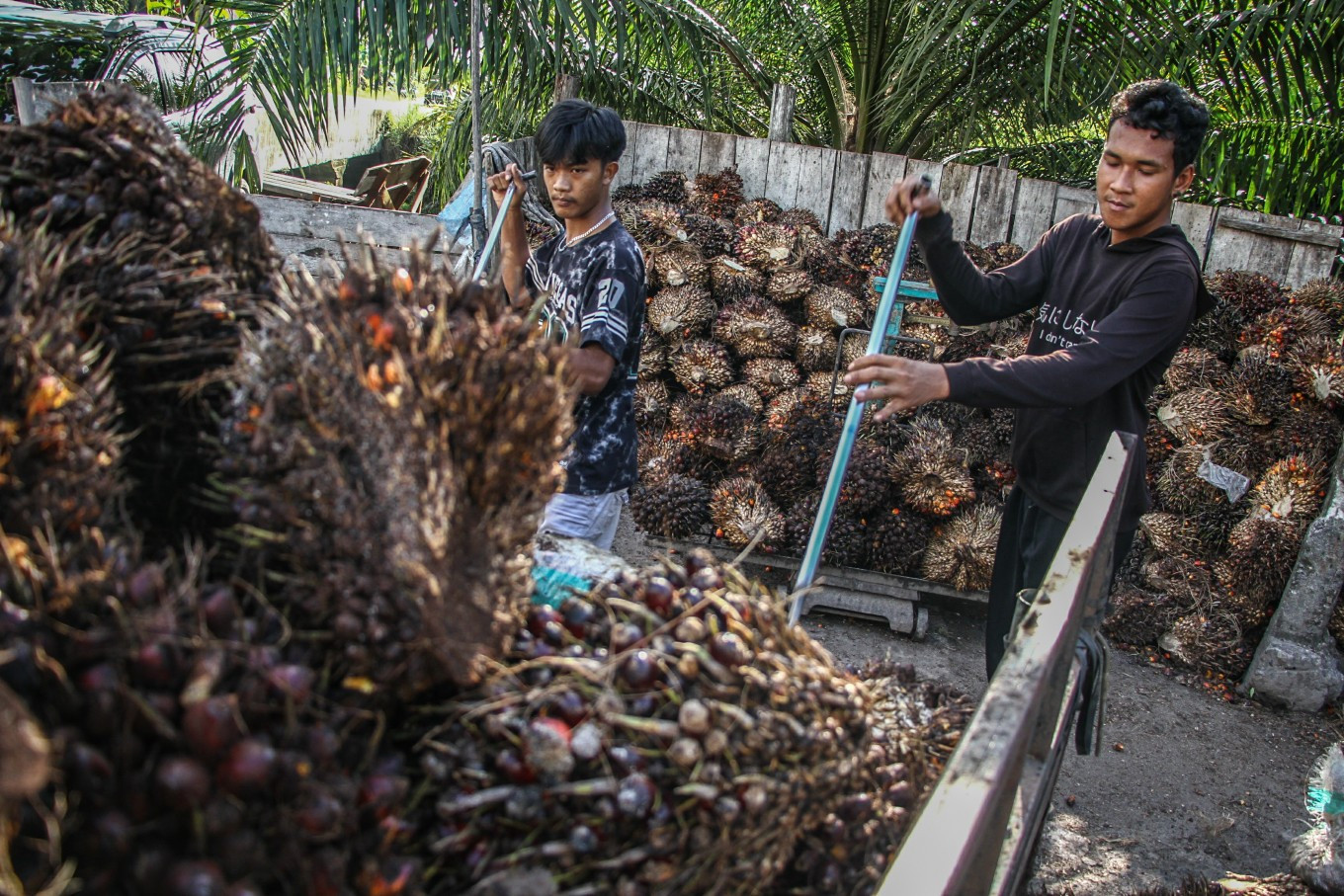 Workers unload fresh fruit bunches (FFB) from an open-back truck at a collector in Palangka Raya, Central Kalimantan, on Oct. 29, 2025. (Antara/Auliya Rahman)
The country is seeking to move from being a major commodity producer and global price taker to becoming a price maker through the planned Indonesian Commodity Exchange (Icomex). Yet a similar platform, the Indonesia Commodity & Derivatives Exchange (ICDX), has operated for nearly two decades without gaining significant influence over global markets.
Against this backdrop, questions remain over how the two exchanges will coexist and whether Icomex can attract sufficient trading volume and market participation to establish credible reference prices that can challenge established international benchmarks.
Icomex is slated to begin operating on Jan. 1, 2027, with the aim of establishing an Indonesia Reference Price for major commodities such as crude palm oil (CPO), nickel, tin and coal. President Prabowo Subianto has argued that Indonesia, despite being a major global producer of several commodities, should not remain dependent on overseas exchanges for price benchmarks. Supervised by the Financial Services Authority (OJK), the exchange is expected to deepen domestic markets, improve price transparency and strengthen governance, while helping curb practices such as transfer pricing and under-invoicing.
Icomex is developed in coordination with institutions including the OJK, state asset fund Danantara and the Mineral Industry Agency (BIM), with clearing arrangements modeled on those used in capital markets. Danantara believes the exchange could improve transparency and accountability, complementing the export monitoring role of PT Danantara Sumberdaya Indonesia (DSI), established in May.
DSI has clarified, however, that it is not directly involved in either the operations or trading activities of Icomex. According to DSI president director Luke Thomas Mahony, the two institutions will have distinct roles: Icomex is expected to establish commodity reference prices through market mechanisms, while DSI monitors exports and verifies prices for coal, CPO and ferroalloys.
The distinction between Icomex and the existing commodity trading infrastructure is particularly important, given the presence of ICDX. The Indonesian Palm Oil Association (GAPKI) has noted that CPO trading volumes on ICDX remain limited, with transactions still dominated by business-to-business arrangements. This suggests that the success of Icomex will depend not only on its regulatory framework but also on the incentives it offers, the depth of market participation, its transaction mechanisms and how its reference prices interact with existing international benchmarks.
Meanwhile, ICDX has expressed support for the plan to establish Icomex, describing the government initiative as a step toward strengthening the country’s commodity sovereignty and developing national reference prices for strategic commodities. ICDX said it would comply with the new regulatory framework while continuing its existing role as a commodity and derivatives exchange.
The new exchange is a central element of the Strategic Commodities Bill, which is designed to strengthen Indonesia’s control over pricing and export governance of commodities such as palm oil and coal. Under the proposed framework, Icomex would establish base, reference and selling prices before exports with the aim of promoting transparent pricing, protecting producers and providing greater market certainty, operating alongside a National Strategic Commodity Council.
However, legislators have stressed the need to clearly define what constitutes a strategic commodity as well as to determine measures to prevent excessive state intervention or monopolization.
As the institutional framework takes shape, the government has also moved to strengthen Icomex’s supervisory structure, with the House of Representatives unanimously approving M. Sarjito as OJK chief executive for Icomex supervision for the 2026-2031 period, following his successful fit and proper test before House Commission XI.
Sarjito brings extensive regulatory experience through senior positions at the Capital Market and Financial Institutions Supervisory Agency (Bapepam-LK) and the OJK, covering capital market supervision, investigation, consumer protection and efforts to combat illegal financial activities.
He has outlined eight strategic policies aimed at building a liquid, trustworthy and credible Icomex with the long-term goal of transforming Indonesia from a price taker into a price influencer and eventually, a price maker. His strategy focuses on strengthening infrastructure, markets, products, data, regulation and an integrated ecosystem, alongside increasing market depth and establishing Icomex-based reference prices.
Sarjito has also emphasized the need to prevent economic leakage through practices such as under-invoicing and transfer pricing, ensuring that Indonesia’s abundant mineral resources generate greater benefits for the state and the public.
Business groups generally view the proposed exchange as an opportunity to strengthen the country’s bargaining power and improve commodity trading governance. Economists, however, warn that establishing a credible global price benchmark will be difficult.
Established international exchanges derive their influence from deep liquidity, broad market participation and prices that reflect underlying supply and demand conditions. If Indonesia were to impose prices above market equilibrium or require transactions to be conducted exclusively through the domestic exchange, producers and buyers could face losses and shift their transactions elsewhere.
Icomex is therefore closely aligned with President Prabowo’s broader vision of national self-sufficiency and greater sovereignty over strategic natural resources as well as his administration’s efforts to increase fiscal revenues to support ambitious spending programs. Yet the initiative risks becoming redundant if it does not clearly complement or integrate with ICDX. At the same time, Icomex will face competition from established international benchmarks and exchanges, including the London Metal Exchange and Bursa Malaysia Derivatives.
The government will need to strike a careful balance between strengthening domestic control and allowing market forces to determine prices. Measures that artificially raise prices or discourage buyers could ultimately lead to transaction flight, undermining the very commodity sovereignty Icomex is intended to strengthen.