
News
Scandal closes in on Djaka, customs outsource gains traction
Tenggara Strategics June 8, 2026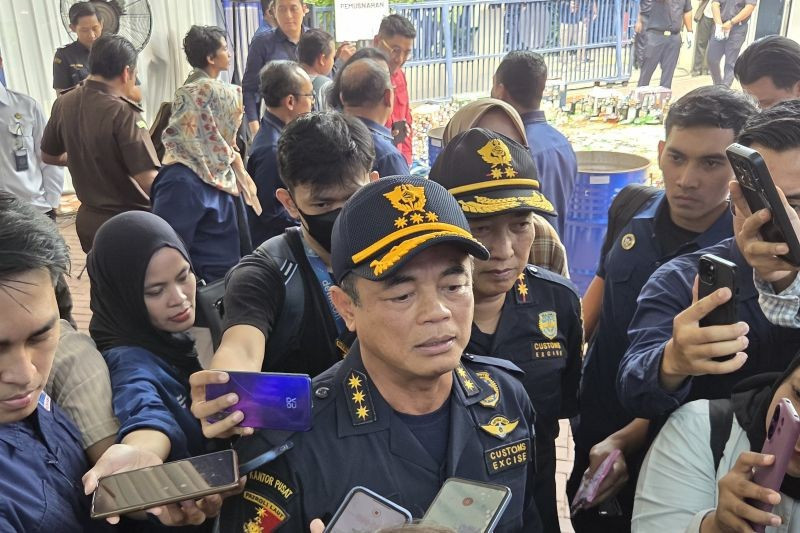 Customs and Excise Director General Djaka Budhi Utama attends a press conference on the destruction of smuggled goods at the Jakarta Customs and Excise Office on Dec. 3, 2025. (Antara/Bayu Saputra)
Customs and excise director general Djaka Budhi Utama’s name has finally surfaced in court proceedings linked to the PT Blueray Cargo import bribery case, prompting President Prabowo Subianto to call for sweeping institutional reform. Finance Minister Purbaya Yudhi Sadewa later said the government would respect the legal process while signaling that Djaka could be removed from office if his involvement is proven in court. However, he emphasized that the case remains at an early stage and that the government would not suspend Djaka until there is clearer evidence of his involvement.
The case originated from a series of major Corruption Eradication Commission (KPK) sting operations conducted in multiple locations on Feb. 4 in connection with alleged import bribery. Investigators secured 17 individuals, consisting of 12 customs employees and five people logistics firm PT Blueray Cargo.
KPK later named six suspects, including three senior customs enforcement officials and three Blueray Cargo executives. The customs officials were Rizal, director of enforcement and investigation; Sisprian Subiaksono, the directorate’s head of intelligence; and Orlando Hamonangan, head of the directorate-general’s intelligence section. From Blueray Cargo, the suspects were owner John Field, head of import documentation Andri, and operational manager Dedy Kurniawan. At that stage, Djaka had not been named as a suspect or formally implicated in the case.
However, in an indictment document read by KPK prosecutors, Djaka was mentioned as one of several customs officials, alongside Rizal, Sisprian and Orlando, who attended a meeting with cargo business players at Hotel Borobudur in July 2025, including John Field. Prosecutors alleged that the meeting marked the beginning of coordination in which officials received money, entertainment facilities and luxury goods in exchange for expediting import clearance by diverting shipments away from the red channel, thereby reducing dwelling time.
Investigators later searched several houses allegedly linked to the officials and the company in Jakarta and Banten, seizing Rp 40.5 billion (US$2.45 million) in cash across multiple currencies as well as gold bars. According to investigators, Blueray Cargo paid a total of Rp 91.3 billion between July 2025 and January 2026, while other companies were also suspected of paying similar amounts in bribes.
The case extends beyond a conventional bribery scheme because it allegedly involved deliberate manipulation of the customs risk management system. Under standard procedures, imported goods are routed either through the green channel for low-risk shipments requiring minimal inspection or the red channel for cargo subject to stricter scrutiny. Investigators allege that one of the suspects ordered adjustments to the scanning system’s parameters so that Blueray Cargo shipments could consistently bypass higher-risk inspections and enter through the green channel, including shipments containing restricted goods.
The allegations have proven particularly damaging for Djaka, who had previously been positioned as the face of the government’s customs reform efforts. Since taking over the Customs and Excise Directorate General, he had become closely associated with crackdowns on illegal cigarette factories, illicit excise stamps and smuggling networks, with authorities frequently publicizing raids and seizures as evidence of tougher enforcement under the new administration.
Despite mounting scrutiny, Djaka may not be easily removed from office, partly because his appointment had already been politically contentious from the beginning. When he was appointed customs chief last year, Djaka was still an active military officer and only formally retired after assuming the civilian position. The sequence drew criticism from legal observers and civil society groups, who argued that it blurred the boundary between military and civilian institutions.
The issue also carries broader political implications because of Prabowo’s longstanding ties to military circles. Djaka, a former senior military intelligence officer, is widely seen as part of networks close to the President, fueling speculation that any move against him would involve political sensitivities extending beyond the corruption case itself.
As the scandal widens, the crisis has reignited debate over how far the government should go in restructuring Indonesia’s customs system. With repeated reform efforts failing to fully address corruption within customs, proposals to outsource parts of customs supervision and inspection to private-sector entities have begun gaining traction among policymakers. The discussion has revived comparisons to the pre-reform era, when foreign inspection firms played a larger role in monitoring Indonesian imports.
Prabowo himself has signaled openness to the idea, stating publicly that the government would consider involving external parties to help overhaul customs oversight if internal reforms prove insufficient. The President also referred to Indonesia’s previous use of foreign inspection companies during the New Order era, when pre-shipment inspection mechanisms were employed to monitor imports and reduce leakages in customs administration.
Supporters of the proposal argue that external supervision could help dismantle entrenched patronage networks within customs. Critics, however, warn that outsourcing core state functions could create new governance and accountability risks.
What we've heard
News of the alleged involvement of Djaka in the import bribery case has reportedly reached the Presidential Palace. According to several sources familiar with the matter, Prabowo has already signaled support for pursuing the case within the Finance Ministry.