
News
Weakening competitiveness highlights structural challenges
Tenggara Strategics July 24, 2026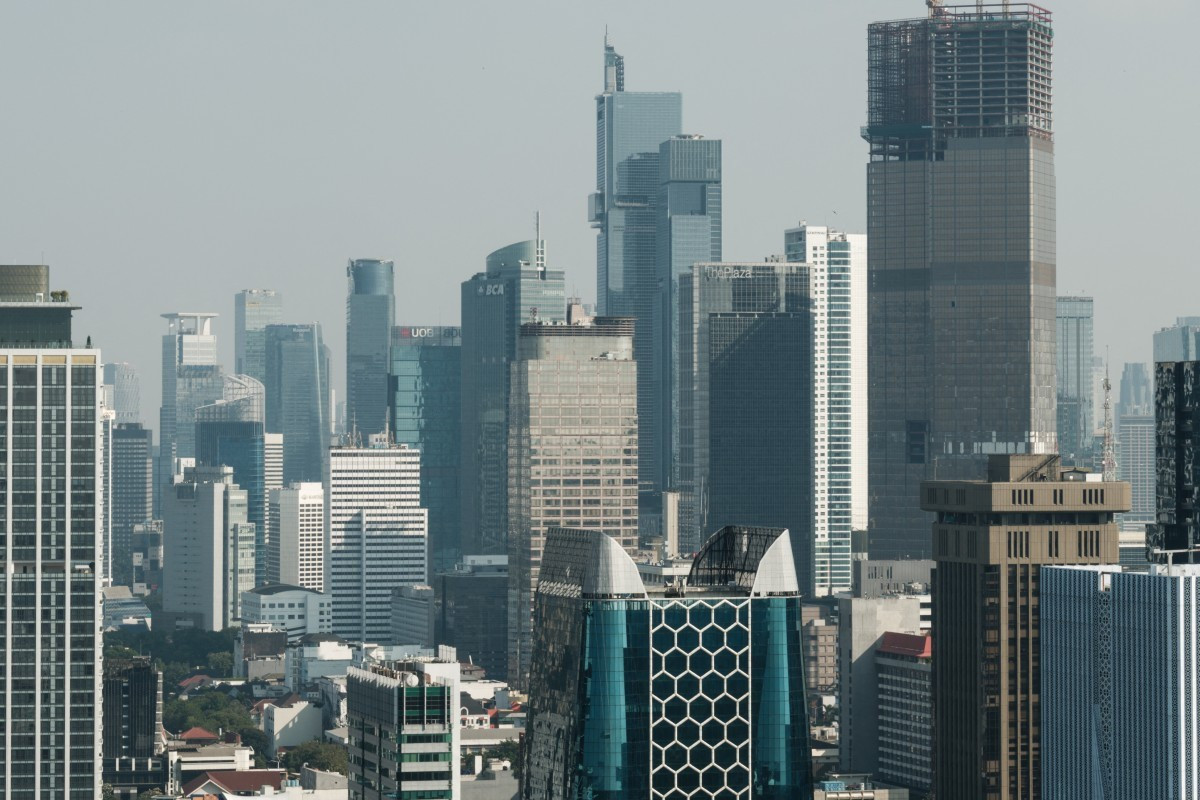 Skyscrapers are seen from the observation deck of the National Monument (Monas), a 132-meter landmark commemorating Indonesia's independence, in Jakarta on June 7, 2026. ( AFP/Yasuyoshi Chiba)
Indonesia's position in the World Competitiveness Ranking (WCR) continued its downward trend in 2026, falling eight places to 48th out of 70 economies, according to the World Competitiveness Yearbook (WCY) 2026 published by the International Institute for Management Development (IMD) in June. The ranking evaluates 70 economies using global, regional and national data, alongside surveys of senior executives. Indonesia's latest decline highlights persistent structural weaknesses and growing fiscal pressures.
In terms of peer-group rankings, Indonesia dropped to 14th out of 15 Asia Pacific economies. Its ranking among countries with populations exceeding 20 million declined to 21st out of 32, while its position among economies with GDP per capita below US$20,000 fell sharply from fifth out of 24 countries to 11th out of 25.
The latest decline followed an even steeper deterioration in 2025, when Indonesia fell 13 places to 40th out of 69 economies. Its ranking among Asia Pacific economies slipped from eighth to 11th out of 14, while its position among countries with populations above 20 million dropped by 6 places to 16th out of 32. The decline coincided with weakening manufacturing activity, as Indonesia's manufacturing purchasing managers' index (PMI) remained in contraction territory at 46.7 in April 2025 before improving only slightly to 47.5 in May.
Among the WCR's four pillars of competitiveness, economic performance, government efficiency, business efficiency and infrastructure, infrastructure remained Indonesia's weakest area. Its ranking slipped from 57th out of 69 economies in 2025 to 58th out of 70 in 2026. Basic infrastructure recorded the largest deterioration, falling nine places to 42nd. Health and environment declined two places to 65th, marking the lowest rank among all infrastructure components, while technological infrastructure and education each slipped one place to 47th and 63rd, respectively. Scientific infrastructure was the only indicator to improve, rising two places to 48th.
Business efficiency experienced the sharpest deterioration among the four pillars, plunging 24 places from 26th in 2025 to 50th in 2026. Every component weakened. Attitudes and values fell 27 places to 53rd, management practices dropped 25 places to 55th, finance declined 14 places to 51st, the labor market fell 11 places to 21st, and productivity and efficiency slipped nine places to 53rd.
Government efficiency also weakened, with Indonesia's ranking falling from 34th to 38th. Business legislation improved six places to 43rd, while the institutional framework rose one place to 50th. However, societal framework fell seven places to 54th, tax policy declined two places to 12th, and public finance slipped one place to 25th.
Economic performance was the only pillar to maintain its overall ranking at 24th despite the addition of Vietnam, which increased the number of ranked economies from 69 to 70. Prices improved six places to 10th, while international investment climbed five places to 37th. However, the domestic economy fell 15 places to 24th, employment declined 11 places to 28th, and international trade slipped four places to 50th.
The 2026 WCR also surveyed 6,900 senior executives worldwide on the economic pressures that most undermined business confidence in their respective economies, allowing respondents to select multiple factors. Among Asia Pacific executives, exchange rate volatility was cited most frequently at 45 percent, compared with the global average of 25 percent. Indonesia ranked second among the 10 economies with the highest share of executives citing exchange rate volatility, at 86.7 percent, falling only behind Venezuela at 98 percent.
The report also highlighted global geopolitical tensions as a threat to Indonesia's energy security, referring to the disruption of energy supplies following disruption at the Strait of Hormuz. The shock prompted state-owned energy company Pertamina to raise prices for Pertamax Turbo, Dex and Dexlite in May 2026, followed by increases in Pertamax and Pertamax Green in June. As supply conditions improved, prices for Dex, Dexlite and Pertamax Turbo were reduced in July.
Another challenge identified by the WCR is Indonesia's relatively stagnant economic growth, likely reflecting the country's 5.11 percent year-on-year expansion in 2025. Although GDP growth accelerated to 5.61 percent year-on-year in the first quarter of 2026, marking the strongest first-quarter growth since 2013, the performance was largely driven by seasonal factors. The Ramadan-Idul Fitri holiday period, which typically falls in the second quarter, shifted to the first quarter in 2026 and coincided with the New Year and Chinese New Year holidays, boosting consumption. The expansion was further supported by a 21.81 percent year-on-year increase in government spending. However, the shift in seasonal demand from the second quarter to the first raises concerns that economic growth could lose momentum in the second quarter of 2026.
The report also identified inadequate infrastructure and limited human capital development as key structural constraints. These challenges may have been exacerbated by changes in state budget allocations under President Prabowo Subianto. Article 31 of the 1945 Constitution requires at least 20 percent of the state budget to be allocated to education. However, of the Rp 769 trillion education budget, Rp 268 trillion was allocated to the free nutritious meals program, reducing effective spending on education-related activities to roughly 12 percent of the state budget.
Meanwhile, S&P Global reported that Indonesia's manufacturing PMI fell from 50 in May to 46.9 in June 2026, marking the sector's sharpest contraction in the past year. The downturn was driven by weakening demand, with new orders declining for the first time in three months. Manufacturers responded by reducing employment, purchasing activity and inventories, while outstanding business also declined as firms worked through existing backlogs amid softer incoming demand.
The continued deterioration in Indonesia's WCR ranking, together with the structural challenges identified in the 2026 report and the renewed contraction in manufacturing activity, underscores the need for a policy realignment. Reversing the decline will require a reassessment of government spending priorities alongside broader structural reforms, particularly to strengthen energy security, improve infrastructure and human capital, and revive manufacturing before Indonesia's demographic dividend begins to fade.