
News
Proposed renewable rule change spark concerns of coal expansion
Tenggara Strategics December 13, 2025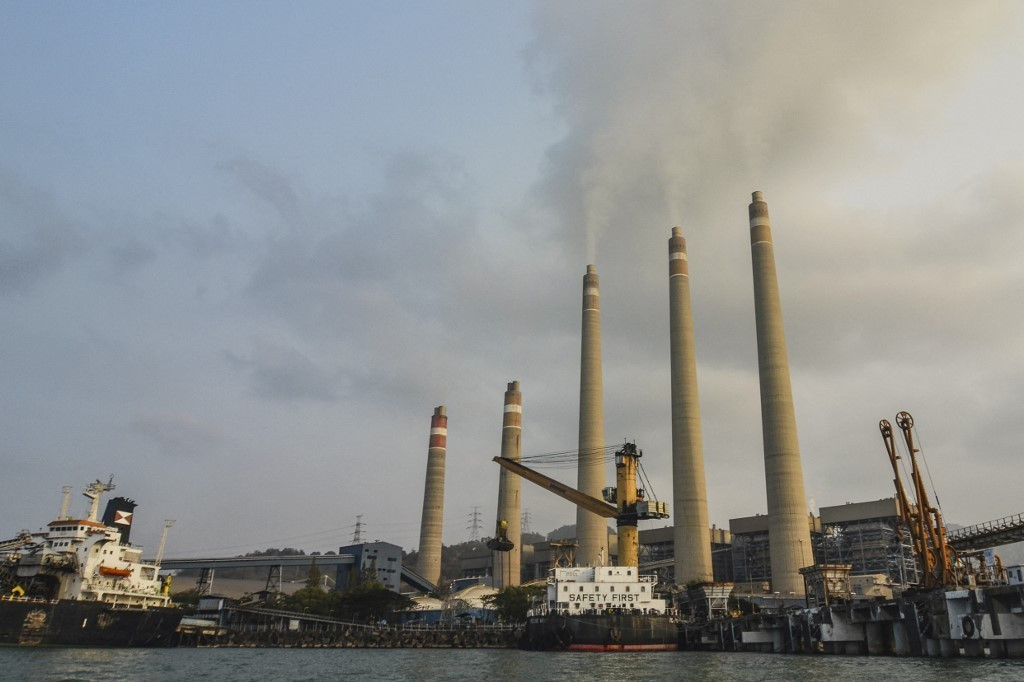 The Suralaya coal-fired power plant is pictured on Oct. 31, 2023, in Cilegon, Banten. (AFP/Ronald Siagian)
Indonesia's draft revision of its renewable energy regulation has raised concern that the government is backtracking on its energy transition commitments. Rather than accelerating the shift to clean energy, critics say the revision to Presidential Regulation (Perpres) No. 112/2022 on Accelerating the Development of Renewable Energy for Electricity Procurement would open the door to more coal-fired power plants (CFPPs). The move risks derailing Indonesia's net-zero emissions (NZE) target and reinforces perceptions that the Prabowo Subianto administration prioritizes energy security over transition efforts.
Perpres No. 112/2022 is grounded in Law No. 30/2007 on Energy, Government Regulation (PP) No. 23/2014—which amended PP No. 14/2012 on Electricity Procurement Business Activities, Perpres No. 79/2014 on the National Energy Policy and Perpres No. 14/2017—a revision of Perpres No. 4/2016 on Accelerating Electrical Infrastructure Development. Previously, several groups had urged revisions to Article 4(b1) of Perpres No. 112/2022, arguing that its allowance for CFPPs integrated with "downstreaming" programs or national strategic projects (PSN) created loopholes for new captive coal plants.
The Energy and Mineral Resources Ministry revealed the draft revision during a public consultation on Nov. 6. The document triggered public outcry because it failed to close the existing loophole permitting new CFPP construction despite Indonesia's stated plan to accelerate coal retirement. Instead, the revision introduces another exemption under Article 3, allowing new CFPPs deemed necessary for system reliability and energy self-sufficiency. The draft also adds new provisions on hybrid power plants.
Energy experts criticized the two provisions as incompatible with Indonesia's targets of raising new and renewable energy (NRE) to 34 percent of the energy mix by 2030 under the Just Energy Transition Partnership (JETP), achieving a fully renewable energy mix by 2035, reaching NZE by 2060 and meeting the draft's own goal of reducing greenhouse gas emissions by at least 35 percent within a decade. The hybrid power plant clause is also under scrutiny, with observers warning it could become another loophole enabling continued fossil fuel use alongside NRE.
The National Energy Council (DEN), however, denied that the draft represents a relaxation of the coal ban. DEN argued that any new CFPP allowed under the revised Article 3 would be subject to stringent criteria, including demonstrable significant economic benefits. It also maintained that hybrid power plants could boost NRE deployment and expand electricity access in remote regions.
The 2026 state budget draft allocated Rp 402.4 trillion (US$24.15 billion) for energy security. However, only Rp 37.5 trillion of the energy security budget was assigned for NRE development, while Rp 210.1 trillion was assigned to subsidies for oil fuel, liquefied petroleum gas and electricity. Meanwhile, electricity state-owned enterprise PT PLN's 2025–2034 Electricity Procurement Business Plan (RUPTL) allows 16.6 gigawatts of new fossil fuel power plants. (See also: Prabowo's energy sovereignty faces contradictions in transition plans)
A study by Institute for Essential Services Reform (IESR) analyzing power demand flexibility scenarios indicates that PLN could eliminate the need for additional CFPPs while cutting production costs by 3–17 percent. A joint study by the Centre for Research on Energy and Clean Air (CREA), the Center for Economic and Law Studies (CELIOS) and Trend Asia on 38 Indonesian CFPPs projected that they could cause 156,000 premature deaths and saddle the economy with Rp 1.81 quadrillion in losses between 2026 and their planned retirement in 2050. The same plants could also lead to 1.45 million job losses, directly undermining Prabowo's goal of creating 19 million new jobs.
Between 2019 and 2023, total investment in Indonesia's power sector reached US$38.02 billion according to the Climate Policy Initiative, including an estimated US$10.63 billion in unreported investments likely directed toward fossil-fuel power plants. NRE accounted for only 33 percent of reported investments, or roughly US$1.79 billion annually, far below the US$9.1 billion per year required to meet climate targets. By comparison, Vietnam reported US$41.3 billion in NRE investment from 2017 to 2022, representing 64.54 percent of its total power-sector investments.
If enacted, the controversial provisions in the Perpres No. 112/2022 draft revision would likely derail Indonesia's climate ambitions. Beyond the direct economic and human costs, the environmental impact could increase the carbon footprint of Indonesian exports and weaken their competitiveness in markets with stringent environmental standards, such as the European Union. Instead of expanding loopholes for coal, the government should reinforce the ban on new CFPPs and ensure hybrid systems serve strictly as temporary transition solutions.