
News
Army undergoes massive expansion despite absence of real external threats
Tenggara Strategics December 15, 2025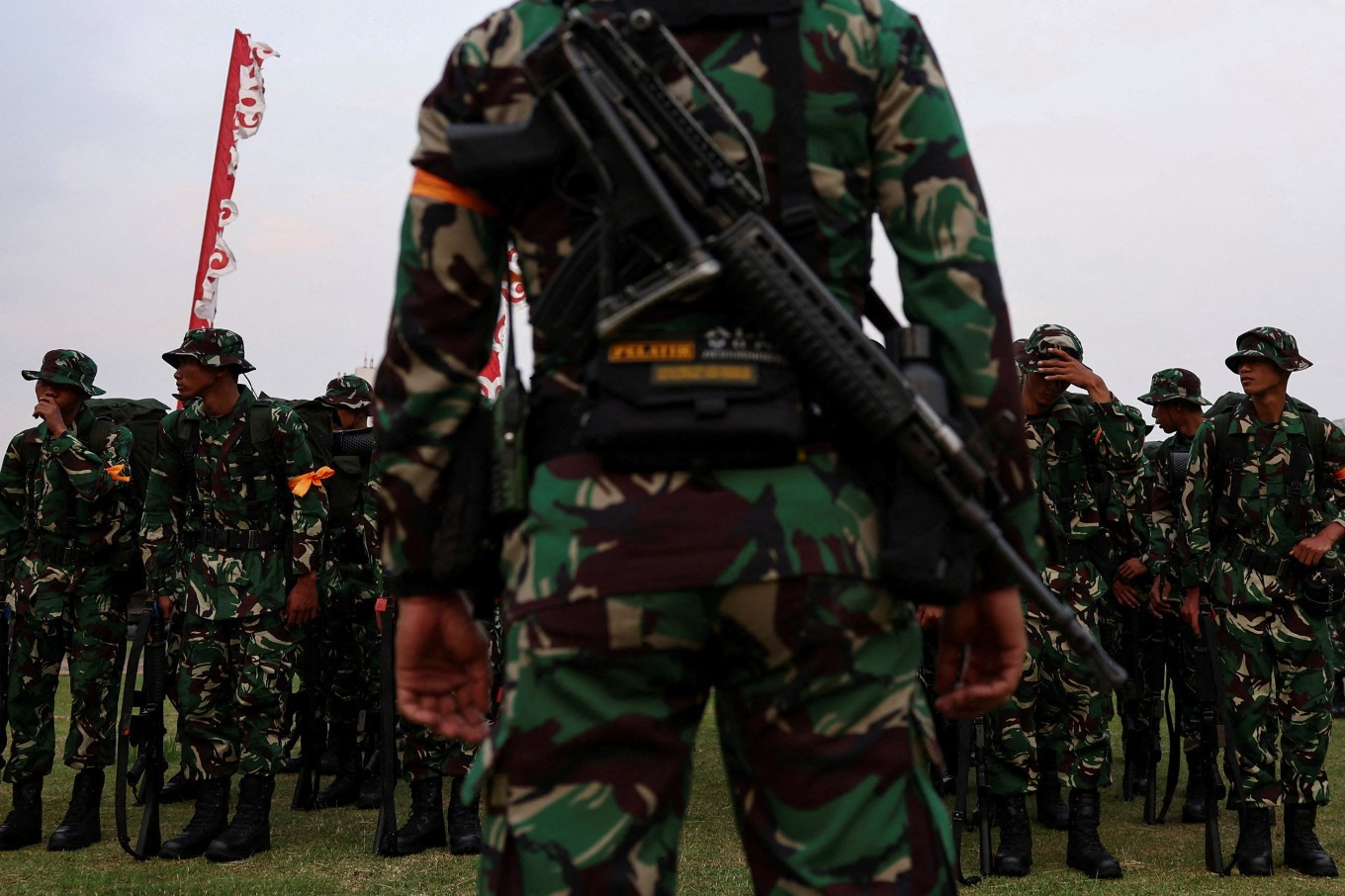 Indonesian military (TNI) troops prepare at the National Monument (Monas) complex for deployment on Aug. 31, amid the widespread anti-government protests and rioting over issues such as extra pay for lawmakers, in Jakarta. (Reuters/Willy Kurniawan)
The Army is creating 750 new battalions of combat troops in the next four years to ensure presence in every district nationwide, but in the absence of a credible explanation of where the new external threats are coming from, the plan raises speculations about the real motive.
It reinforces the notion of creeping militarization of the country under the government of President Prabowo Subianto. Since taking charge in October 2024, the former Army general has brought in more military types, active or retired, to help him run the administration, including assigning jobs normally reserved for civilians.
Defense Minister Sjafrie Sjamsoeddin recently gave more details of the plan to strengthen the Army from the existing 120 battalions of infantrymen. A battalion, whose size varies between 300 and 1,300 depending on its mission, would be deployed in each of the 514 regencies and municipalities in the country. The new recruits would be trained in both military disciplines and some civic skills, including farming.
Sjafrie, who was Prabowo's peer during their military years, said the Army expansion is consistent with the 2025-2029 National Mid-Term Development Plan (RPJMN). Neither he nor anyone else in the Indonesian Military (TNI) had bothered to spell out what kind of threats to the national defense the massive deployment will deal with, raising the specter of the military intruding further into national security, which by law is the domain of the police.
The Army expansion does not appear to be affected by the current austerity measures imposed by the Finance Ministry on most other government agencies to release more funds for Prabowo's signature policy of feeding all of Indonesia’s nearly 83 million children with free nutritious lunches daily. The National Nutrition Agency, created to manage the Free Nutritious Meal (MBG) program, is run mostly by military officers. The military is also helping to run some MBG kitchens and distribute the free meals to schools.
The Army territorial expansion is consistent with the ongoing TNI plan to set up an Army regional command (Kodam) in every single province in the country. Prabowo inaugurated six Kodam in August, bringing the total to 21. TNI still has 17 more to go.
A new TNI Law enacted in March also extended TNI’s mandatory retirement age to 55 years, 58 for mid-ranking officers, and up to 67 for senior rankings.
Under Prabowo, TNI development is being reoriented towards strengthening the Army. Previously, the focus had been on building the Navy and the Air Force under the Minimum Essential Force (MFE) concept to strengthen TNI's capability to deal with external threats. When the 15-year MFE program ended last year, TNI only reached less than 80 percent of the target. Prabowo was defense minister in 2019–2024.
A defense white paper, which was last updated in 2015, took note of the growing tension over territorial disputes in the South China Sea between China and some Southeast Asian countries. Indonesia publicly claims it has no dispute with China, although its Navy must frequently deal with trespassing Chinese fishing boats accompanied by fully armed China Coast Guard vessels in the Natuna Sea, an area Beijing regards as a traditional fishing ground.
The massive Army territorial development also runs counter to the demand for TNI to return to the barracks, widely echoed during the massive nationwide street protests in late August that turned violent. It was one of the more than two dozen demands, including ending police brutality and police reforms to make them publicly accountable. Prabowo, at the time, said these demands could be discussed.
The violence ended only after Prabowo ordered the military to intervene when police were clearly overwhelmed as they became the target of the protesters.
The current law allows the TNI to take part in internal security to assist the National Police. The TNI is already effectively in charge of security in the six Papuan provinces, where there have been clashes with armed rebels seeking independence from Jakarta.
When the Army territorial expansion plan is completed in 2029, Indonesia will look more like what it was 26 years ago under dictator Soeharto, who ruled the country for over three decades with the support of the military. The dual-function policy of the Armed Forces (ABRI), which then included the National Police, allowed it to play an active role in politics and deploy members to take up many civilian jobs.
The military presence, which was also widely felt then, will likely be more pronounced in 2029 with the deployment of a battalion of combat troops in every single regency and municipality.
What we've heard
According to a source within the Palace, Prabowo is anticipating the threat of future warfare. He projects that conflicts may erupt due to increasingly volatile geopolitical conditions.