
News
Odd price movements and Haji Isam’s rumored Bayan acquisition
Tenggara Strategics August 31, 2026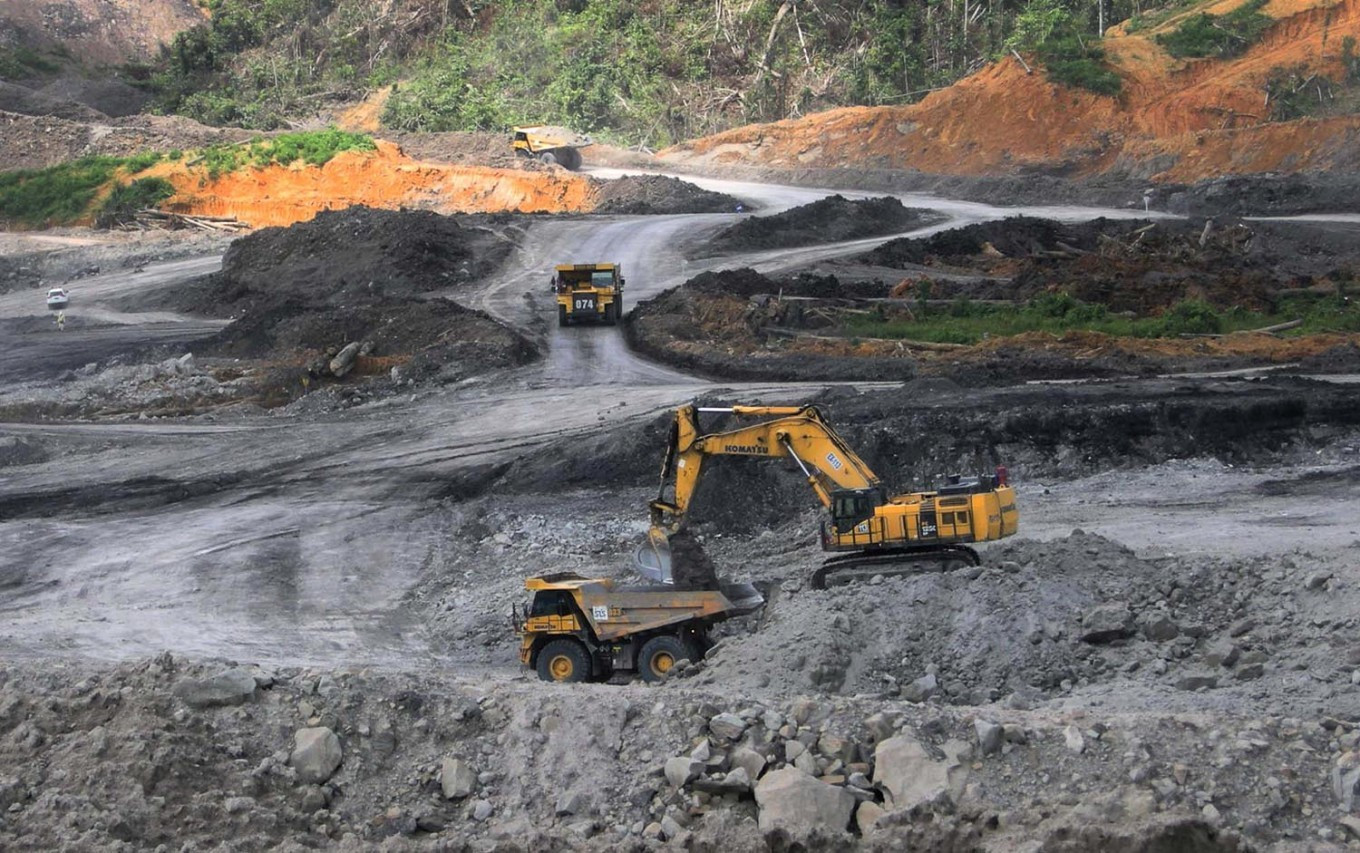 Heavy equipment is operated at a coal mine in East Kalimantan in this undated photograph. ( JP/Indra Harsaputra)
On Aug. 15 three prominent businessmen toured a site in Kutai Kartanegara, East Kalimantan, reportedly to scout potential mining sites. They were tycoon Haji Isam, PT Bayan Resources owner Dato’ Low Tuck Kwong and defense entrepreneur Norman Joesoef. The meeting quickly sparked speculation that Haji Isam was interested in acquiring a 62 percent majority stake in Bayan Resources.
The speculation triggered a rally in the shares of companies linked to Haji Isam, as well as Bayan Resources, with the latter surging 19.97 percent to Rp 17,125 (96 US cents) per share at the close of trading on Aug. 18. Both Bayan Resources and PT Jhonlin Agro Raya, Haji Isam’s palm oil company, subsequently denied knowledge of such a deal, sending Bayan Resources shares tumbling 14.9 percent to Rp 14,700 at the start of trading on Aug. 19.
What is particularly interesting about the episode is how the share prices of Haji Isam-linked companies appeared to move in tandem with Bayan Resources, contrary to the conventional pattern in which the shares of an acquiring company and its acquisition target tend to move in opposite directions.
Normally, the prospective acquirer’s share price may fall because it is expected to pay a premium to persuade the target company’s shareholders to accept the deal, while the target company’s shares rise in anticipation of that premium.
In this case, however, Haji Isam-linked coal logistics company PT Dana Brata Luhur gained 21.09 percent to Rp 1,665 per share on Aug. 18 in response to speculation surrounding the deal. More interestingly, the rally was not limited to companies operating in related businesses. On the same day, fast-food operator PT Fast Food Indonesia, palm oil company Jhonlin Agro Raya and nickel mining company PT Abadi Nusantara Hijau Investama surged 6.69 percent, 24.88 percent and 5.41 percent, respectively. Their common denominator was their association with Haji Isam.
What, then, could explain this unusual pattern? It is unlikely to reflect expectations that one company would rescue another from financial distress. Bayan Resources has maintained a relatively healthy financial position, with Moody’s upgrading its corporate family rating from Ba2 to Ba1 on June 19, 2025, while the company continued to report a stable financial performance through the first quarter of 2026.
One possible explanation is that investors anticipated synergies between Haji Isam’s businesses and Bayan Resources. After all, Bayan Resources is engaged in coal mining, while Haji Isam’s Dana Brata Luhur operates in coal logistics and distribution. That explanation, however, does not account for why the rally spread to Haji Isam-linked companies operating in businesses as diverse as fast food, palm oil and nickel. Based on historical precedent, the answer may lie instead in the highly concentrated ownership structures that characterize parts of Indonesia’s capital market.
The latest episode involving Bayan Resources and Haji Isam-linked companies appears to raise a similar question. When shares across unrelated sectors move sharply on speculation surrounding a single controlling shareholder or business group, investors may be responding not simply to the fundamentals of individual companies, but to expectations surrounding the group as a whole.
Both Haji Isam and Dato’ Low Tuck Kwong also have connections to senior figures in government. Haji Isam is known to be close to President Prabowo Subianto and Defense Minister Sjafrie Sjamsoeddin, while presidential adviser Purnomo Yusgiantoro serves as chairman of Bayan Resources.
How the rumored transaction develops remains to be seen. But the unusual market reaction surrounding it highlights a broader characteristic of Indonesia’s stock market: corporate ownership and perceptions surrounding controlling shareholders can exert considerable influence over share-price movements, even across companies with very different businesses. A deeper and more diversified capital market would ideally allow company fundamentals to play a greater role in determining valuations.
What we've heard
A financial sector player said one of the factors prompting Low Tuck Kwong to consider exiting the coal business in Indonesia was his belief that the Indonesian government had treated him unfairly.