News
NU struggles for independence by changing chairs
Tenggara Strategics September 10, 2026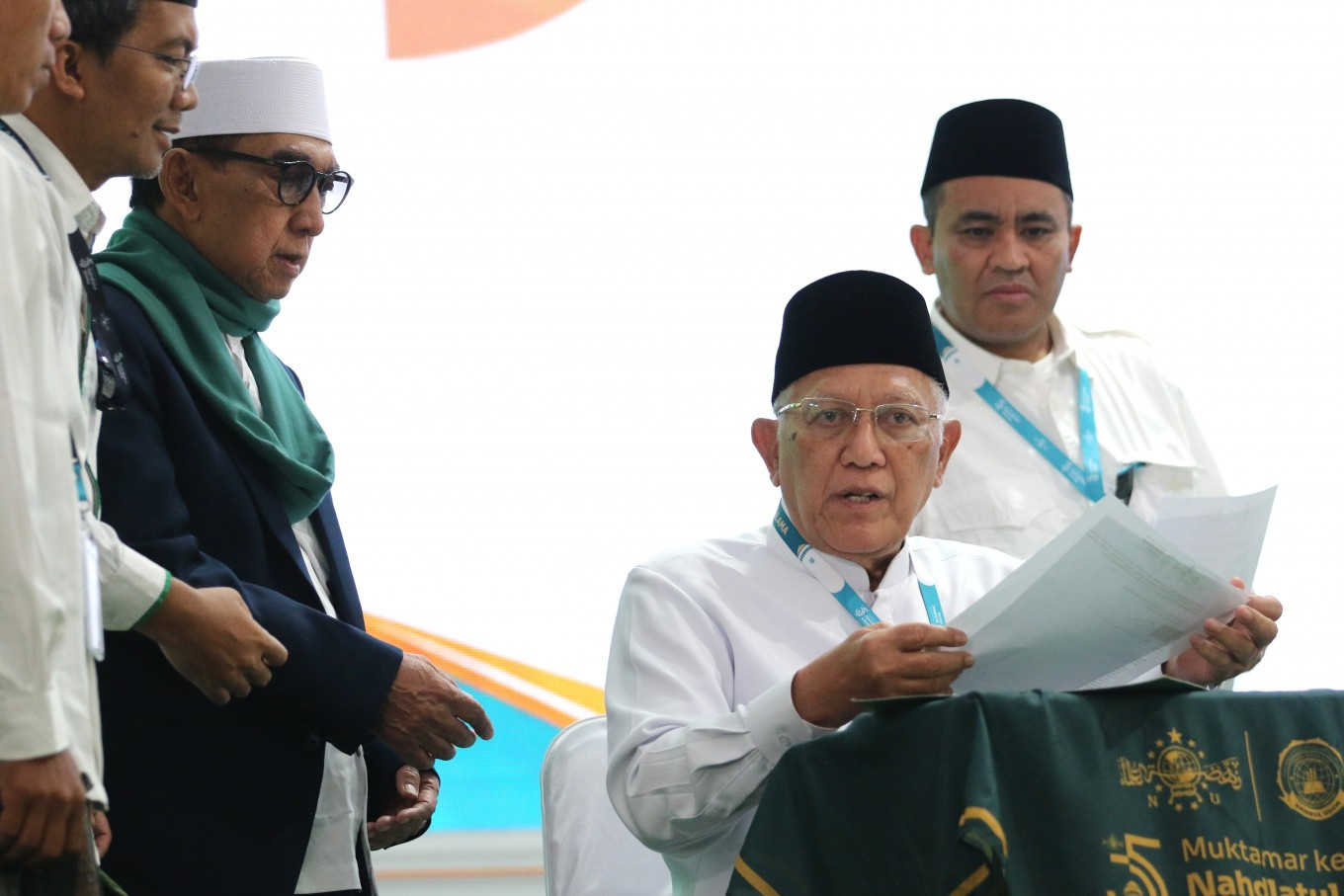 Abdul Hakim Mahfudz, better known as Gus Kikin, (at podium) addresses the audience as the new chairman of Nahdlatul Ulama (NU) on Aug. 31, 2026, the final day of the 35th NU National Congress (Muktamar) at Pondok Pesantren Bahrul Ulum Tambakberas, an Islamic boarding school in Jombang, East Java. (Antara/Syaiful Arif)
The search for independence for Nahdlatul Ulama (NU),Indonesia’s largest Islamic social organization, has always been fought at its congress (Muktamar). The 35th Muktamar at Bahrul Ulum Tambakberas, Jombang, East Java, which closed on Aug. 26, was no exception.
By consensus of the nine-member Ahlul Halli wal Aqdi (AHWA), the council entrusted with selecting the NU leadership, KH Abdul Hakim Mahfudz, known as Gus Kikin, was elected chairman of the Executive Board (PBNU) for 2026-2031. He secured 472 votes, well ahead of KH Zulfa Mustofa (262) and incumbent KH Yahya Cholil Staquf (258).
On paper, it is a return to their roots. Gus Kikin is a great-grandson of NU founder Hadratussyekh KH Hasyim Asy'ari, caretaker of Tebuireng pesantren (Islamic boarding school), and former head of NU East Java. His platform was deliberately inward-looking: revitalizing NU's foundational constitution (Qanun Asasi), preserving traditional scholarly lineage and strengthening economic development for NU's tens of millions of members.
That inward turn is the point. Yahya's five-year chairmanship was defined by an outward, progressive project, continuing Abdurrahman Wahid's pluralist vision through the G20 Religion Forum and the Humanitarian Islam movement, which won praise abroad but created distance at home. His tenure was also marked by a top-down style and entanglement with the state: in 2024 he accepted a 26,000-hectare coal concession, which critics saw as a symbol of NU's co-option by the state.
That symbolism became a legal liability. In March, Yahya's brother and former religious affairs minister Yaqut Cholil Qoumas was detained over an alleged haj-quota corruption case, with a PBNU executive also implicated. Infighting over control of mining rents deepened the rift. In November, chair of the supreme board (Rais Aam) Miftachul Akhyar declared the chairmanship vacant, effectively firing Yahya, who refused to step down. NU had two rival centers of authority for two months, until Yahya apologized in January and agreed to a congress to choose his successor.
The Muktamar, then, was as much a cleansing as an election. Gus Kikin's win reflects a familiar NU divide: "conservative" here means traditionalist, sanad-oriented, pesantren-centered, deferential to senior kyai (Islamic scholar), not Islamist. Yahya represented the wing that believed NU should lead global civil discourse; Gus Kikin represents the wing that believes NU must save itself first.
The scale of that preference was confirmed elsewhere on the ballot: KH Miftachul Akhyar, the traditionalist Rais Aam who had declared Yahya's chairmanship vacant, was reelected to a second term as NU's supreme spiritual leader. Two conservatives at the top of both NU's executive and clerical hierarchies signal this was not a narrow factional win but a broad congress mandate for the traditionalist wing.
Gus Kikin’s election came with a procedural shift too: delegates replaced one-member-one-vote with AHWA selection, restoring formal authority to the ulama council over the executive branch, but also concentrating power in nine kyai, making the process easier for external patrons to influence. And patrons were present. Leading candidates had political ties, from Nasaruddin Umar, President Prabowo Subianto and Hakim to former president Joko”Jokowi” Widodo, Zulfa and Agrarian Minister Nusron Wahid, with speculation Gus Kikin had Prabowo's backing. Prabowo himself opened the congress on Aug. 27.
This is NU's perennial dilemma. Since Abdurrahnman Wahid’s 1984-1999 chairmanship established NU as an autonomous civil society voice, it has struggled to keep that independence. Both Jokowi and Prabowo have treated NU as an electoral brokerage machine, trading posts and patronage for loyalty. Prabowo's approach uses more carrots and more sticks: NU keeps its mining concession and cabinet seats, while figures like Yaqut face investigation, signaling loyalty is negotiable through legal protection.
One episode illustrates the mechanism: Yahya initially struck a mine-management deal with a firm linked to Garibaldi "Boy" Thohir (an ally of Jokowi), reportedly drawing Prabowo's disapproval; Yahya then redirected the deal to a company linked to Prabowo's brother, Hasyim Djojohadikusumo.
Gus Kikin inherits this dependency, NU cannot fully sever ties to state power, especially with ideological rivals ascendant elsewhere. So why elect a conservative? Because conservatism is NU's language of independence. Invoking the Qanun Asasi and Hasyim Asy'ari's lineage lets Gus Kikin claim distance from both political networks while still negotiating with them, a moral-economy argument that pesantren self-sufficiency (mines, hospitals, distribution networks) reduces reliance on the state.
The cost is real: NU's role as independent critic is being crowded out by its role as electoral broker. Whether NU's independence from Prabowo holds will not be settled by symbolic gestures like Prabowo's honorary NU membership card, analysts see it as a minor factor at most.
Independence, in NU's history, has never meant equidistance from power, it has meant the capacity to bargain. Gus Kikin's conservative credentials give him more room to bargain hard than Yahya's progressive brand allowed. Expect a quieter NU internationally, a more assertive NU on pesantren economics and an NU that stays inside Prabowo's tent, while demanding a bigger corner of it.
What we've heard
Several NU executives revealed that associates of President Prabowo met at least twice to vet potential leadership candidates. The discussions reportedly narrowed the race down to Religious Affairs Minister Nasaruddin and Gus Kikin, pairing them on a unified leadership slate.