
News
Nepotism is back in vogue, with a vengeance
Tenggara Strategics February 10, 2026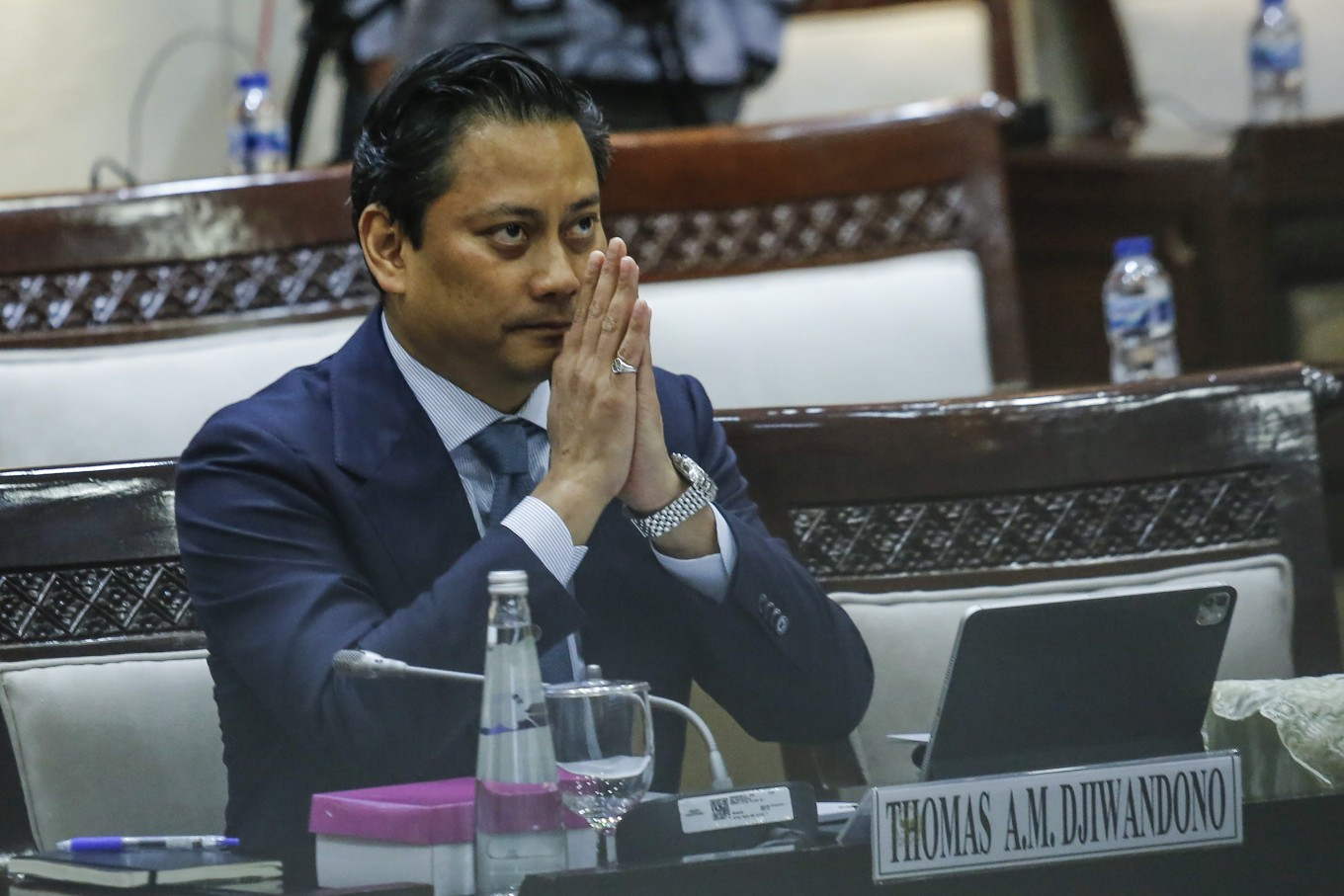 Bank Indonesia (BI) deputy governor nominee Thomas “Tommy” Djiwandono prepares to attend a confirmation hearing on Jan. 26, 2026, at House of Representatives Commission XI overseeing financial affairs at the Senayan Legislative Complex in Central Jakarta. (Antara/Apsrilla Dwi Adha)
The appointment of Thomas Djiwandono, a nephew of President Prabowo Subianto , as deputy governor of Bank Indonesia, has raised the specter of nepotism making a comeback in Indonesian politics.
With the mounting open criticism against Bank Indonesia Governor Perry Warjiyo, coming from no less than Finance Minister Purbaya Yudhi Sadewa, many speculate that Thomas is being lined up to take up the top job, a move which would undermine the central bank’s independence guaranteed by law.
Further fueling concerns about nepotism are rumors that Prabowo is about to name Thomas’ brother, Budisatrio Djiwandono, as foreign minister.
Thomas, 53, had served as deputy finance minister and is an economist by training, so he is not without the credentials to run Bank Indonesia if that is the intention.
Budisatrio, 44 years, is a member of the House of Representatives for Gerindra, the political party founded and chaired by Prabowo. He has had some exposure to international affairs as vice chair of House Commission I that deals with foreign policy.
Both are graduates of United States universities and are sons of economist Soedradjad Djiwandono, who served as Bank Indonesia governor from 1993 to 1998. He is married to Prabowo’s eldest sister Bianti.
Irrespective of their qualifications, the appointment of the president’s close relatives to strategic positions raises serious questions about potential conflicts of interest, and historically, there are moral and ethical issues.
This is a throwback to the nepotism that was widely practiced by Soeharto who ruled the country for over three decades. When he was forced to step down in 1998, the student-led movement coined the phrase “anti-KKN” (corruption, collusion and nepotism) as their rallying cry.
Laws have since been enacted to prevent corruption, including the establishment of the Corruption Eradication Commission (KPK), but curtailing collusion and nepotism has relied largely on moral and ethical guidance combined with public pressure.
Nearly three decades later, the anti-KKN demand seems all but forgotten. Corruption is still rampant in spite of the KPK sending people to jail. Collusion underpins Indonesia’s largely transactional politics. And nepotism is back, with a vengeance.
Prabowo’s predecessor Joko “Jokowi” Widodo, president from 2014 to 2024, set the tone for nepotism making its return. In 2023, he got the Constitutional Court to bend the electoral law age restriction that allowed his son Gibran Rakabuming Raka to contest the presidential race as running mate to Prabowo 2024 athough he was four years short of the minimum age of 40. The court at the time was chaired by Anwar Usman, who is married to Jokowi’s younger sister.
Once this is tolerated, there is no stopping nepotism, especially if it is committed by the nation’s highest office holder. And this gives a cue for others down the ranks that they too can follow the practice with little repercussions.
Prabowo’s decision in November to award the national hero status to the late Soeharto, despite widespread objection, smacked of nepotism given his connections to the former first family.
He was once married to Soeharto’s second daughter Siti Hediati “Titiek” Hariyadi. Although separated, Titiek is now an elected House member representing Gerindra.
Their 41-year son, Didit Hadiprasetyo, has kept out of politics and kept a low profile. A fashion designer by profession, he has been seen accompanying the President in some foreign trips.
Prabowo’s younger brother Hashim Djojohadikusumo has also been seen attending some Cabinet meetings. A businessman by training who bankrolled Prabowo’s four election campaigns before the 2024 victory, Hashim was appointed as the president’s special envoy for energy and the environment and led Indonesia’s delegation to the last two series of United Nations Climate Change Conferences (COPs) in Azerbaijan and Brazil.
Hashim’s appointment in the government and Titiek’s role in Gerindra did not spark much controversy, but the appointments of Thomas and Budisafrio, if rumors proved true, could open the floodgates for more widespread nepotism practices beyond the first family.
Before long, nepotism will become normal as it was during the Soeharto years.
What we've heard
President Prabowo has deliberately placed several family members in roles linked to the implementation of his political and policy agenda, according to sources. His nephew, Thomas Djiwandono, for instance, was appointed Deputy Governor of Bank Indonesia after serving as a deputy finance minister.