
News
KRL import stopgap highlights INKA’s deeper problems
Tenggara Strategics October 7, 2026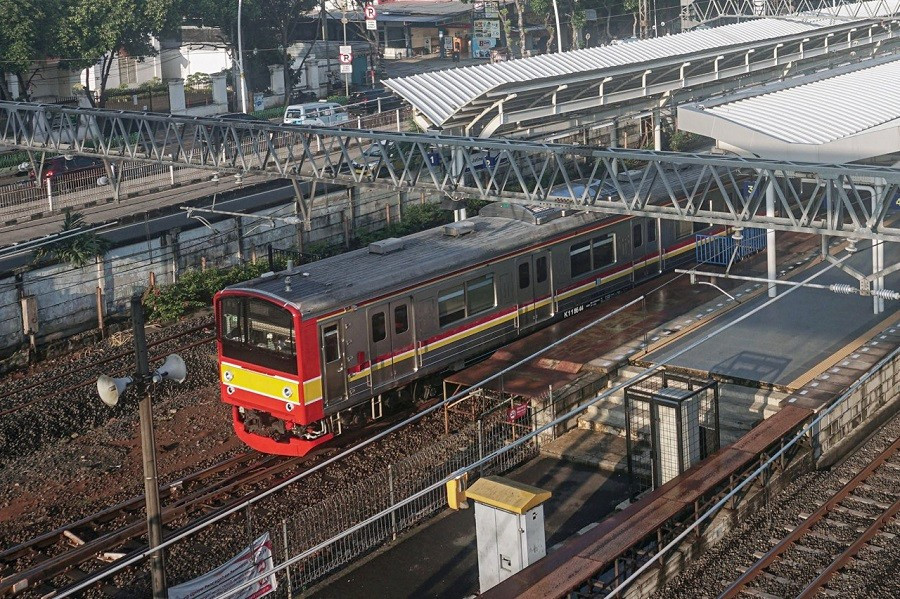 A commuter train operated by PT Kereta Commuter Indonesia, a subsidiary of state railway company PT KAI, passes Jatinegara Station on April 15 in East Jakarta. (JP/Yulianto Catur Nugroho)
The decision by PT Kereta Api Indonesia (KAI) to recall several electric trains produced by PT Industri Kereta Api (INKA) for its Commuter Line service adds to the challenges facing the state-owned rolling stock manufacturer, which is struggling with high debt and production constraints amid a planned merger with KAI. Meanwhile, government approval to import secondhand rolling stock from Japan provides a short-term solution to KAI’s train shortage. Such reliance on imports could persist unless INKA’s production capacity and the domestic rolling stock supply chain are strengthened.
A Commuter Line train derailed twice in one day in September, first at Jakarta Kota Station and then at Manggarai Station, prompting KAI subsidiary PT Kereta Commuter Indonesia (KAI Commuter) to suspend the train for maintenance. The incident led to the cancellation of 17 trips plying the Jakarta Kota-Bogor route, reducing overall daily trips in Greater Jakarta from 1,065 to 1,048. This followed an incident in late 2025 involving INKA’s iE305 electric train, or CLI 225, which began operating on Dec. 16 and drew public attention after a door malfunction. INKA technicians were subsequently dispatched to assist with the issue and address passenger complaints over resulting delays.
KAI later recalled seven electric trains manufactured by INKA after inspections identified a fracture in an undercarriage component classified as a safety critical item. Because all seven trains used components from the same batch, the state railway company conducted nondestructive testing on the affected components, which it said were locally produced and required dismantling, coating removal and retesting. Two trains have been cleared, while the remaining five are scheduled for a phased return to service through Oct. 9.
The recall came as demand for commuter rail services in Greater Jakarta continues to rise and amid INKA’s delays in fulfilling KAI’s orders. The railway operator is facing a shortage of 22 trains this year as demand grew 11.3 percent in early 2026, while average daily ridership on the Commuter Line has reached around 1.1 million passengers. Meanwhile, INKA’s production capacity has been only two to three trains per year, well below its target of eight units annually. This capacity constraint has contributed to a delay of more than a year in delivering KAI’s order for 16 trains.
To bridge the immediate gap, KAI has proposed importing 23 used trains from Japan, which are compatible with Indonesia’s rail infrastructure. The imports are intended as a short-term measure while the government works to integrate INKA with KAI and increase domestic production capacity to 15 trains annually.
House of Representatives Commission VI, which oversees state-owned enterprises (SOEs), has approved the import of used Japanese trains on condition that efforts continue on developing the domestic railway industry. Commission VI deputy chairman Andre Rosiade urged KAI to strengthen cooperation with INKA and improve its manufacturing capability to Technology Readiness Level 9. Following the House’s decision, Trade Minister Budi Santoso said the import plan would first need to be evaluated for technical compatibility by the Transportation Ministry and for potential impacts on domestic manufacturing by the Industry Ministry before the Trade Ministry could issue import permits.
INKA president director Eko Purwanto attributed the company’s failure to meet the electric train delivery deadline for KAI Commuter to constraints in the country’s railway component supply chain. The rolling stock manufacturer has reportedly been preparing to upgrade its Banyuwangi factory in East Java to expand production capacity, reduce reliance on imported components and increase local content. KAI also pointed to INKA’s dependence on irregular domestic and export orders as contributing to the delivery delay. It argued the planned merger could provide a more consistent order pipeline and address INKA’s lack of recurring revenue.
However, INKA is facing significant financial problems. State asset fund Danantara aims to merge INKA and KAI before January 2027, but the process also needs to address INKA’s financial position. Danantara COO Dony Oskaria has called for a comprehensive turnaround, highlighting the rolling stock manufacturer’s negative equity of Rp 4.7 trillion (US$263 million) in unsustainable debt and Rp 670 billion in losses. The company’s recovery is expected to involve governance strengthening, financial restructuring and operational transformation, supported by additional capital and an integrated transformation plan.
Importing secondhand trains may provide a necessary bridge as KAI faces sustained demand growth in Greater Jakarta ridership and INKA struggles with timely train deliveries. But the temporary measure also highlights a deeper constraint in the national railway industry, and expanding rolling stock production will require more than integrating INKA with KAI. INKA will need to address weaknesses across its production capacity, quality control and component supply chain, while the government may need to provide financial support and a sufficiently predictable order pipeline for the manufacturer to scale up. Without such support, the used train imports could be necessary for longer than a stopgap as initially envisaged.
What we've heard
Government sources said the damage in the seven recalled INKA electric trains was linked to production quality. Problems with the train wheels had caused the trains to derail, prompting the company to withdraw all affected trains from service, leading to temporary service disruptions.