
News
Haji Isam’s Bayan deal lands, exposing coal mining’s risks
Tenggara Strategics September 28, 2026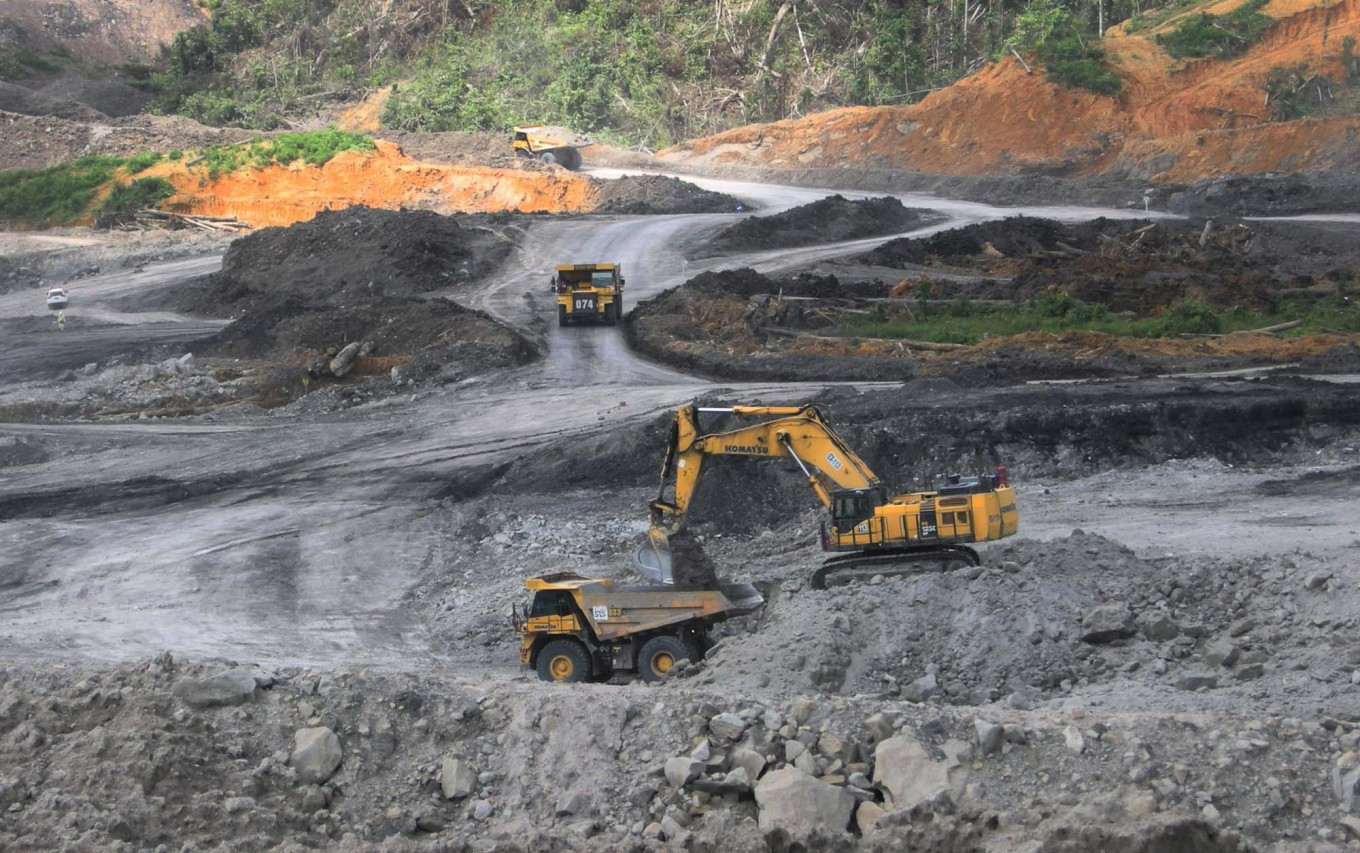 Heavy equipment owned by PT Berau Coal is used for coal mining activities at an East Kalimantan mining site, Binungan. (JP/Indra Harsaputra)
The proposed acquisition of a 30 percent stake in PT Bayan Resources (BYAN) by Jhonlin Baratama has entered a new phase after both parties signed a conditional sale and purchase agreement. The deal follows weeks of uncertainty over Bayan’s production quota, which had forced three of its subsidiaries to declare force majeure while awaiting approval of their revised 2026 mining work and budget plans (RKAB). The timing of the acquisition, Bayan’s force majeure declaration and the subsequent approval of its revised production quota raises questions about the role of regulatory intervention in corporate outcomes.
On Sept. 16, Bayan's controlling shareholders, Low Tuck Kwong and his daughter Elaine Low, signed a conditional sale and purchase of shares agreement with Jhonlin Baratama, the investment vehicle of tycoon Andi Syamsuddin Arsyad, better known as “Haji Isam”. The agreement covers 10,000,000,500 common shares, around 30 percent of Bayan's outstanding shares. The sale will be completed once the conditions precedent agreed by both parties are met. The agreement was signed just days after Bayan's subsidiaries declared force majeure on Sept. 11, and a week later on Sept. 23, the government approved additional quotas ranging between 15 million and 20 million tonnes for each subsidiary, allowing them to withdraw their force majeure declarations.
Much of the turmoil in coal mining stems from the Energy and Mineral Resources Ministry's decision to shorten the validity of RKAB approvals from three years to one. At the same time, the ministry set this year's national coal production target at around 600 million tonnes, roughly a quarter below the 2025 output. Its stated aims are to preserve reserves over the long term and to support coal prices. Approvals, however, have been slow. As of September, around 50 mining companies were still waiting for approval of their revised RKAB, including Bayan. On Sept. 11, its subsidiaries PT Tiwa Abadi, PT Tanur Jaya and PT Fajar Sakti Prima declared force majeure on their coal supply obligations as without RKAB approval, they could not legally produce coal or meet their commitments to customers.
Moody's estimated that without the revised RKAB, Bayan's 2026 production would have only reached around 39 million tonnes, roughly 43 percent below the 68 million tonnes it produced last year. Moody's also cut Bayan's outlook from stable to negative. According to a source in the financial sector, the ministry had previously reduced the Bayan Group's RKAB allocation from 85 million tonnes to less than 40 million tonnes, a cut that could lead to more than 2,000 layoffs.
Talk of Haji Isam's interest in Bayan first surfaced in August, when he was rumored to be buying a 62 percent majority stake. Although Bayan initially said it was not aware of such an offer, the reports led to a sharp rally in Bayan’s shares, which peaked at Rp 17,125 (95 US cents) on Aug. 18 before sliding to Rp 10,200 on Sept. 15, a day before the agreement was signed. On Sept. 16, the stock rebounded, soaring 19.85 percent to Rp 12,225 during the day’s first trading session.
Aside from Bayan’s shares, the stock prices of Haji Isam’s companies, such as Dana Brata Luhur, Fast Food Indonesia, Jhonlin Agro Rata and Abadi Nusantara Hijau Investama, also surged after the announcement on his planned acquisition of Bayan’s stakes, indicating that investors anticipated better synergy between the government and Bayan on Haji Isam’s entrance.
However, the deal matters beyond its effect on shareholder wealth. The sequence of events suggests how business decisions can be shaped by government intervention. These concerns are sharper in the Bayan case because of Haji Isam's proximity to power. He served as deputy campaign treasurer for Joko "Jokowi" Widodo's 2019 presidential bid. He was also reportedly a prominent financial backer of Prabowo Subianto's 2024 campaign, as indicated when Prabowo introduced him to a delegation of Japanese investors as a leading Kalimantan businessman in December 2024. Tempo also reported that the Merauke food estate began with capital provided by Haji Isam but ended up being financed by the state budget.
Although none of these proves the Bayan approval was a favor, when approval from a single ministry determines whether a company can produce, fulfill its contracts and keep its workers, the process behind that approval must be transparent and predictable for every company, not only for the well-connected.
What we've heard
According to a source, Haji Isam initially wanted to acquire a 62 percent stake in Bayan Resources, but the Jhonlin Group owner was reportedly only willing to pay half of the cost of the hostile takeover up front. The remainder would be paid from the dividends he would receive each year, a scheme that was rejected by Bayan's controlling shareholders. Haji Isam is suspected of emulating the approach taken by Indocopper Investama Corporation, established by the Bakrie Group in 1991-1992 to hold the shares resulting from the initial stage of PT Freeport Indonesia’s divestment. At the time, Indocopper paid to acquire a 9.36 percent stake in Freeport using the dividends it expected to receive.