
News
Indonesia’s customs crisis demands radical reform
Tenggara Strategics March 5, 2026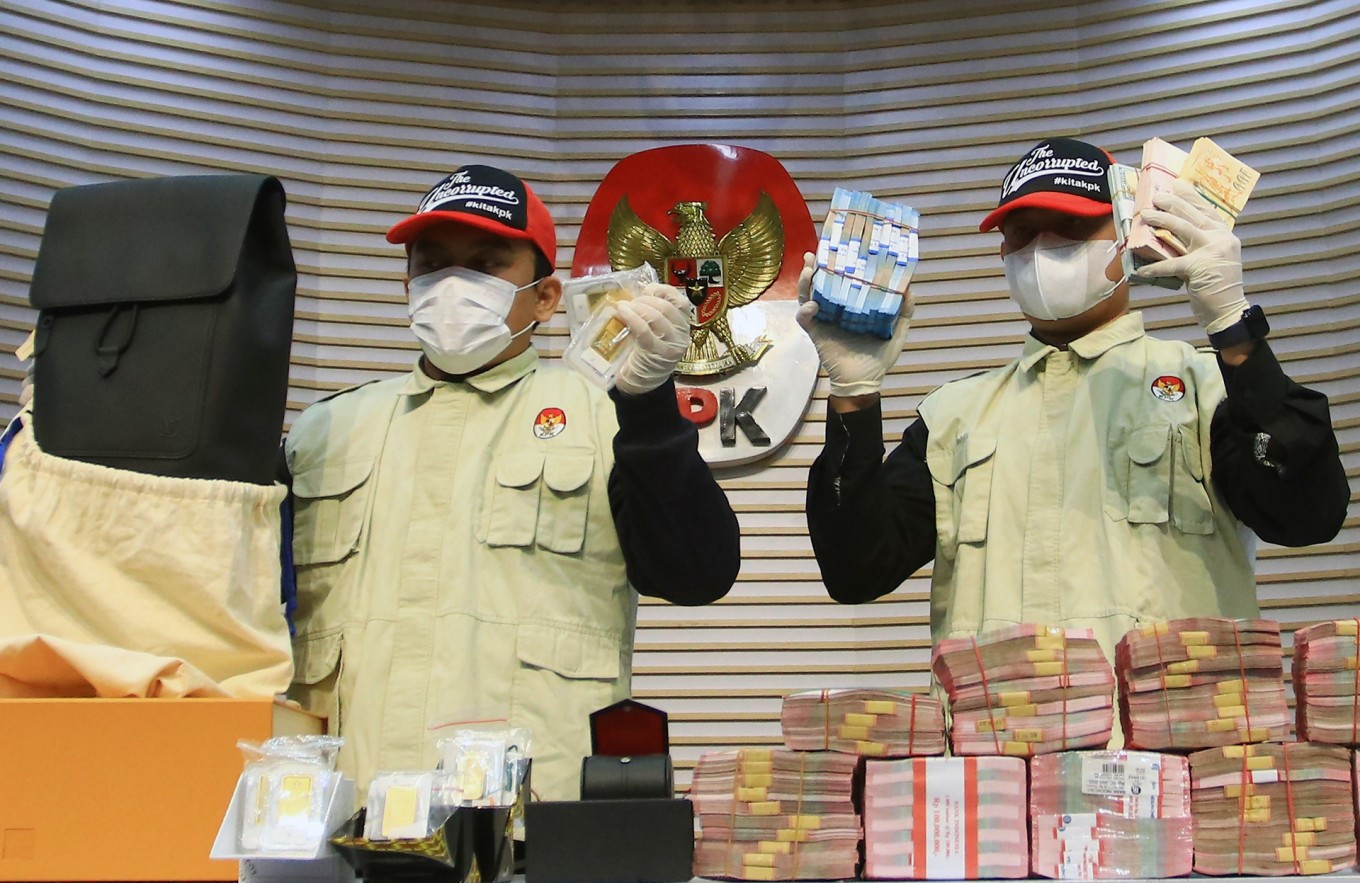 Corruption Eradication Commission (KPK) investigators hold up cash and gold bars on Feb. 5, 2026, seized during the arrest of Finance Ministry's customs and excise directorate general officials at a press briefing at the antigraft body headquarters in Jakarta. (Antara/Muhammad Iqbal)
The import bribery case implicating three customs officials has entered a new phase with the discovery of several safe houses in Jakarta, where investigators found a stash of money amounting to billions of rupiah. The emergence of what appears to be a sophisticated bribery network not only further erodes institutional credibility but also raises a deeper question: Can corruption at the Customs Office truly be eradicated?
The Corruption Eradication Commission (KPK) uncovered four apartment units in North Jakarta and a house in Ciputat, South Tangerang, Banten, that were being used as safe houses. Investigators seized gold bars and cash totaling Rp 40.5 billion (US$2.45 million) in multiple currencies including rupiah, United States dollars, Singapore dollars and Japanese from these locations, as well as from the offices of logistics firm Blueray Cargo and suspects’ residences.
During a series of sting operations on Feb. 4 in Jakarta and Lampung, the KPK arrested 17 Customs Office employees. A day later, it named six suspects including three customs officials: Rizal, who served as the enforcement and investigation director from 2024 to January 2026; Sisprian Subiaksono, head of enforcement and investigative intelligence; and Orlando Hamonangan, head of the intelligence section.
The three other suspects were Blueray Cargo executives: owner John Field, import documentation head Andri and operations manager Dedy Kurniawan. John surrendered to the KPK on Feb. 7 after initially attempting to evade arrest during the sting operations.
This graft case extends beyond a conventional bribery scheme, as it involves deliberate manipulation of the customs risk management system. Under normal procedures, imported goods are assigned to either the green channel, for low-risk shipments with minimal inspection, or the red channel, for shipments requiring detailed scrutiny.
However, investigators reportedly found that Orlando had ordered an adjustment to the scanning system’s setting by fixing a 70 percent parameter, which enabled Blueray’s shipments to be routed through the green channel regardless of their customs classification, including prohibited and restricted goods (LARTAS). As a result, various textile products marked as LARTAS, including counterfeit bags, shoes and branded clothing, were allowed entry without proper inspection.
At the same time, Blueray allegedly falsified import documentation to understate shipping volume and thereby reduce duties to around Rp 40 million per container, while it charged clients Rp 200 million in import fees.
Given that the firm reportedly handled 1,500–2,000 containers per month, the illicit customs scheme between October 2025 and January 2026 incurred enormous potential losses to the state through systemic revenue leakage. In return, customs officials involved in the scheme allegedly received monthly bribes of around Rp 7 billion between December 2025 and February 2026.
Investigators have uncovered additional violations in Blueray’s corporate structure. The company reportedly established at least 20 affiliated entities as nominal importers to mask the identities of the true importers. This violated regulations prohibiting a single entity from acting as both freight forwarder and importer, since such an arrangement would significantly complicate traceability and enforcement.
The broader economic context amplifies the seriousness of the case. Indonesia’s textile industry has been under pressure from dumping practices, particularly by Chinese firms, amid global overcapacity and weakening demand. These combined pressures have led to factory closures and layoffs, including at major firms such as textile manufacturer PT Sri Rejeki Isman (Sritex).
While Customs and Excise Director General Djaka Budi Utama has yet to make a public statement on the matter, the KPK has indicated it may summon him for questioning related to the potential involvement of senior officials.
The reoccurrence of graft cases has prompted Finance Minister Purbaya Yudhi Sadewa to issue a stark warning: The Customs Office must undergo fundamental reform within a year or face a potential institutional freeze. Alternatively, Purbaya has floated a possibility of stripping the office of its responsibilities and appointing an external operator like Société Générale de Surveillance (SGS), reviving an arrangement implemented under former president Soeharto in 1985–1997.
Given the apparent systemic corruption at the Customs Office, reintroducing external oversight through a credible organization may warrant rigorous consideration. While not a panacea, such a move could disrupt entrenched networks, restore business confidence and safeguard state revenues.
What we've heard
Finance Minister Purbaya Yudhi Sadewa has been widely mentioned as the figure behind the KPK's recent sting operation at the Directorate General of Customs and Excise. Several sources believe the operation was inseparable from Purbaya’s alleged tip-off to the KPK.