
News
Flood-linked license revocations rattle investors
Tenggara Strategics February 5, 2026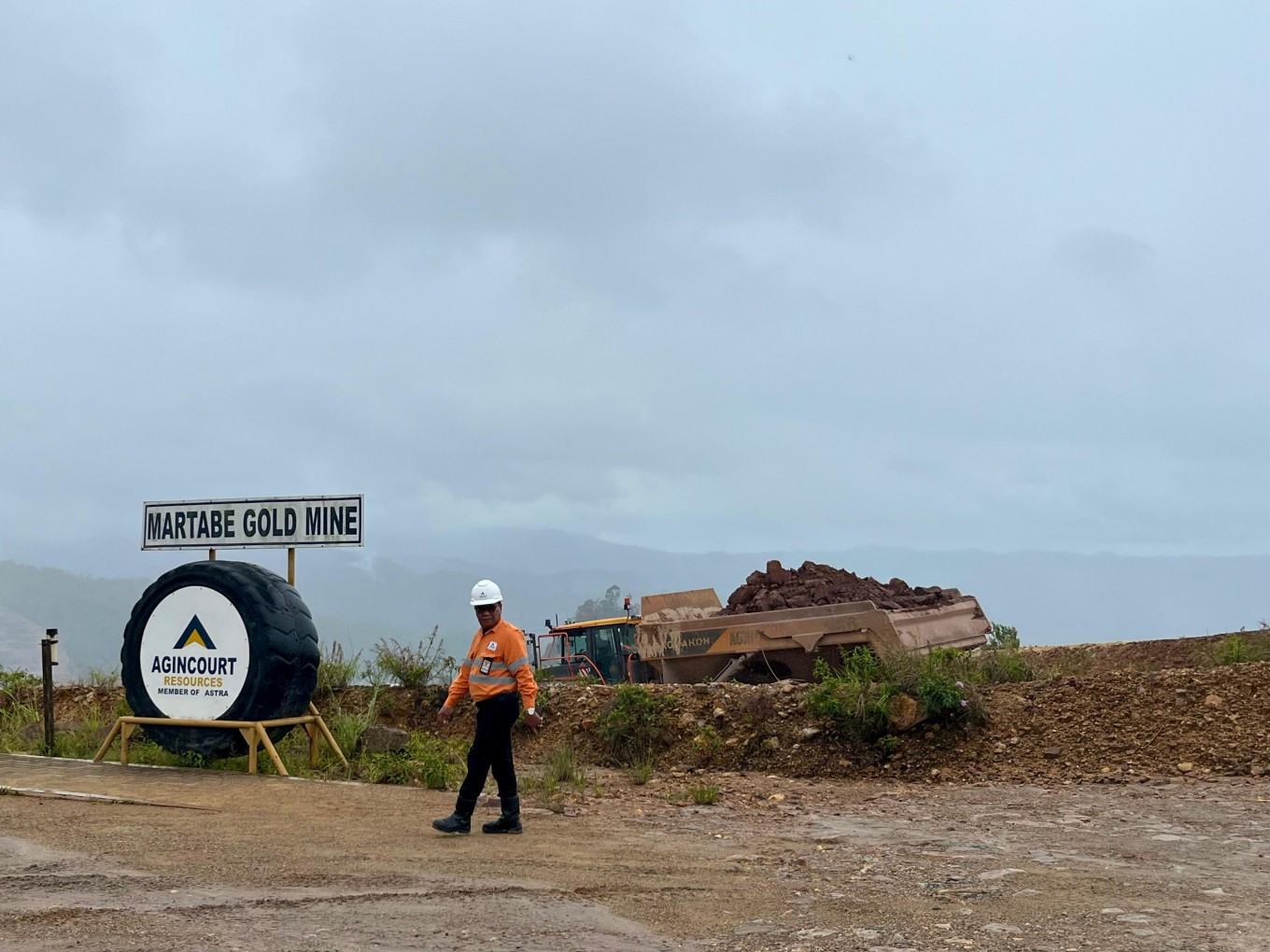 A worker walks across an operational area at the Martabe gold mine located in the Batang Toru district of South Tapanuli, North Sumatra. The mine is operated by PT Agincourt Resources, a unit of Indonesian conglomerate PT Astra International. (JP/Ruth Dea Juwita)
The government’s decision to revoke 28 natural resource licenses in the wake of the deadly December 2025 floods in Sumatra has drawn praise from environmental activists but has also unsettled the private sector by introducing new regulatory uncertainty. Among the revoked permits was a gold mining license linked to Astra International, intensifying scrutiny from investors and businesses over the state’s willingness to cancel legally issued concessions in response to environmental externalities.
Authorities announced that the revoked licenses cover more than 1 million hectares, spanning timber logging, industrial pulpwood plantations, mining and hydropower projects. The move was justified as a response to widespread forest misuse that allegedly worsened the impact of the December floods, one of the deadliest natural disasters in Sumatra’s recent history, which killed over 1,000 people and displaced tens of thousands.
However, questions have emerged over how certain operations, such as the gold mining activities located far upstream, were deemed to have materially contributed to the disaster. Industry observers and analysts have noted that the government has yet to clearly disclose the technical assessment framework used to link individual concessions to flood severity.
The lack of transparency has fueled concerns that the revocations could set a precedent in which legally obtained permits may be withdrawn retroactively, even when the triggering event is an extreme weather disaster. December’s prolonged rainfall was driven in part by tropical disturbances, including Cyclone 91S, which brought sustained precipitation over several weeks and pushed river systems beyond historical thresholds. Under such conditions, flooding may have occurred regardless of land-use violations.
This regulatory uncertainty was reflected in the market. Shares of companies linked to the revoked licenses fell sharply following the government’s announcement. United Tractors (UNTR) dropped from Rp 31,975 to Rp 27,200 on Jan. 21, while its parent company Astra International (ASII) slid from Rp 7,250 to Rp 6,300, underscoring how closely investors are watching the issue.
Beyond market reactions, the policy has also had immediate operational consequences. One notable example is the temporary freeze on development activities around the Batangtoru hydropower project in North Sumatra. Authorities have suspended work in parts of the Batangtoru river basin pending environmental audits, affecting not only mining and plantation firms but also infrastructure projects deemed environmentally sensitive. The Batangtoru plant, operated by PT North Sumatra Hydro Energy (NSHE) and backed by China’s SDIC Power Holdings, has long been controversial due to its location in a biodiversity-rich area and concerns over watershed stability. The suspension has introduced fresh uncertainty over project timelines and regional energy planning.
The government, however, has defended its actions as necessary to restore environmental balance and prevent future disasters. State Secretary Prasetyo Hadi said around 900,000 ha of the seized land would be allocated for conservation and forest restoration, including approximately 82,000 ha within Tesso Nilo National Park in Riau. He added that companies holding production forest concessions (HPH) would be instructed to curb logging activities and shift operations to other sectors.
To oversee the process, the government has formed an evaluation task force led by Danantara, tasked with reviewing compliance and managing follow-up actions related to the revoked licenses. Officials argue that the measures are corrective rather than punitive, aimed at addressing long-standing governance failures in forest-area management.
Viewed from a broader vantage point, the episode also fits a familiar pattern in recent enforcement actions. Previous high-profile environmental crackdowns, such as the seizure of large oil palm plantations that were later transferred to state-linked Agrinas Palma Nusantara under Danantara, were framed as efforts to correct governance failures and reclaim misused land. While the current revocations are primarily raising concerns over regulatory predictability and due process, they also underscore how environmental enforcement has, at times, coincided with an expansion of state involvement in the management of strategic land assets.
What we've heard
According to several sources, the Martabe gold mine in North Sumatera previously operated by PT Agincourt Resources of the Astra Group, will be transferred to Perusahaan Mineral Nasional (Perminas), formerly known as PT Varuna Tirta Prakasya (Persero), a minor state-owned enterprise. The company was originally engaged in logistics and has no experience in operating mines. Furthermore, Perminas will be staffed by personnel from Agrinas.
Related Articles