
News
Destry’s balancing act: Growth, stability, BI independence
Tenggara Strategics September 9, 2026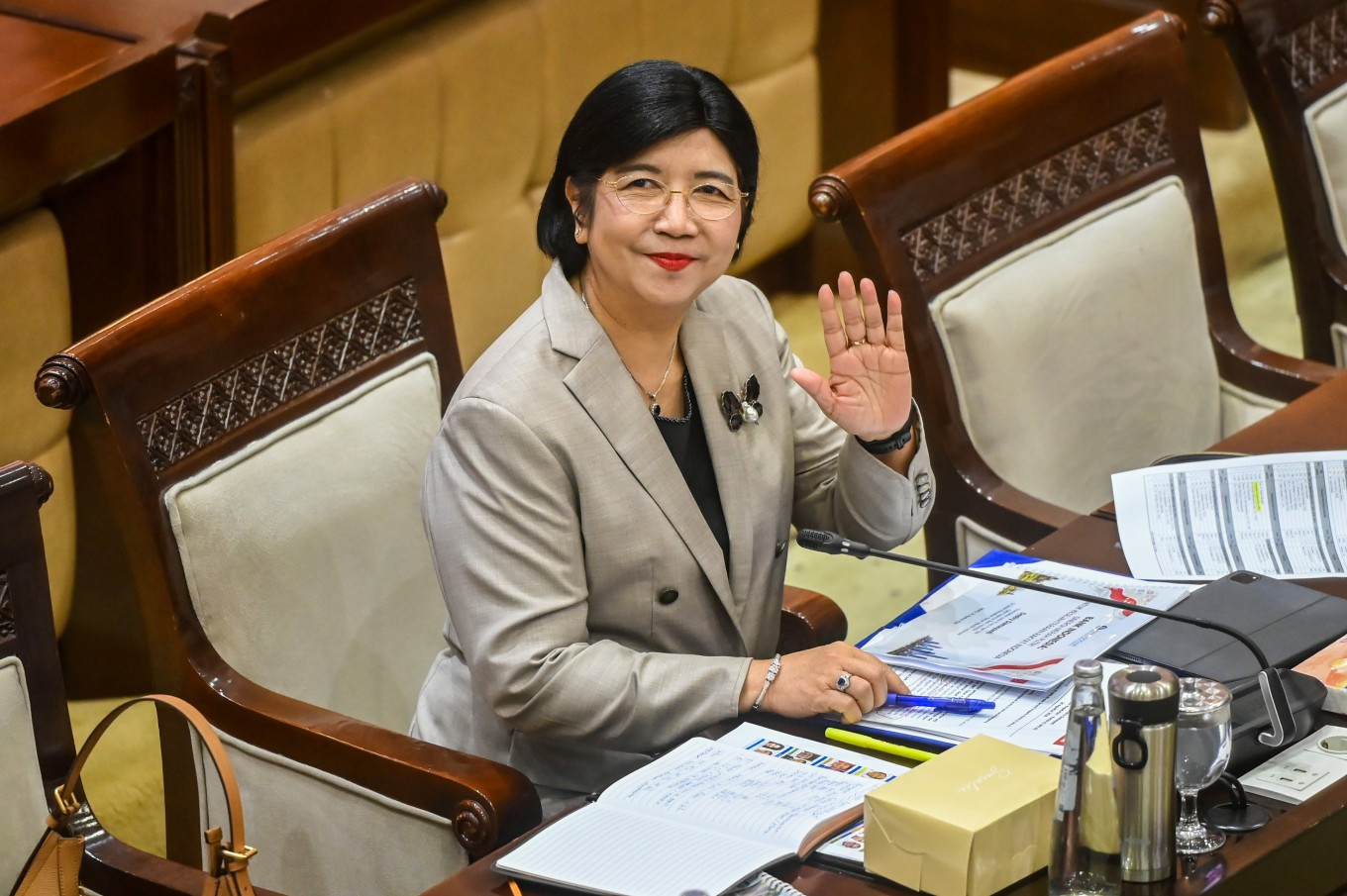 Acting Bank Indonesia (BI) governor Destry Damayanti prepares to undergo a fit and proper test with House of Representatives Commission XI on Aug. 26 at the Senayan legislative complex in Jakarta, following her nomination to become the central bank's official head. ( (Antara/Rivan Awal Lingga)
Destry Damayanti has officially been appointed as the new Bank Indonesia (BI) governor, taking on the responsibility of navigating not only monetary policy challenges stemming from global instability and domestic economic pressures, but also a growing institutional challenge under President Prabowo Subianto ’s administration. The revision of the Financial Sector Development and Strengthening Law (UU P2SK) has expanded BI’s mandate toward supporting economic growth alongside maintaining rupiah stability. This raises questions over the central bank’s autonomy as a monetary authority, as greater state influence and stronger fiscal policy priorities could constrain Destry’s ability to respond effectively to exchange rate and inflation pressures.
House of Representatives Commission XI, which oversees finance and monetary affairs, approved Destry as BI governor for the 2026–2031 term following a fit-and-proper test. The commission also approved Aida S. Budiman as Senior Deputy Governor and Solikin M. Juhro as Deputy Governor. Commission XI expects Destry’s leadership to preserve economic stability while placing greater attention on real-sector growth, in line with the revised UU P2SK. The House argues that stable economic performance has yet to translate into stronger conditions for the middle class or domestic industries. As a result, BI is expected to pay greater attention to micro, small, and medium enterprises (MSMEs), the informal sector, and job creation.
Destry plans to support growth by optimizing BI’s policy mix and strengthening coordination with the government and other stakeholders. One key priority is improving banking intermediation, including encouraging borrowers to draw down approved but undisbursed loans and expanding credit access for MSMEs. She expects stronger financing to stimulate real-sector activity, sustain purchasing power, and create jobs. These measures are intended to help BI contribute to the government’s target of achieving 8 percent economic growth without relying solely on conventional monetary easing.
Destry was nominated as the sole candidate for BI governor by President Prabowo following Perry Warjiyo’s resignation in July 2026. She had been serving as Senior Deputy Governor and subsequently became Acting Governor. Destry brings extensive experience across BI, the Finance Ministry, the Indonesia Deposit Insurance Corporation (LPS), banking, and financial markets. Her career includes positions at Citibank, Mandiri Sekuritas, Bank Mandiri, and government institutions, as well as chairing the Corruption Eradication Commission (KPK) leadership selection committee.
Yet Destry takes over BI at a time when concerns over the central bank’s autonomy have intensified. Perry’s resignation came amid questions over rising government influence and competing policy priorities, including pressure over rupiah weakness, disagreements over government deposits, the appointment of politically connected officials, and the House’s expanded oversight powers. The revised P2SK Law, Law No. 4/2026, has added another layer to these concerns by giving BI a broader mandate to support economic growth alongside price stability. The resulting tension between these objectives could further blur the hierarchy of policy priorities. (See also: Perry's resignation revives questions over central bank independence)
Against this institutional backdrop, economists argue that the new BI leadership must move from a reactive approach toward building greater resilience against external shocks. These pressures are already becoming more pronounced: the current account deficit reached 3.3 percent of GDP in the first half of 2026, well above BI’s 0.4–0.8 percent target range; 10-year government bond yields rose from 6.9 percent to 7.2 percent; oil prices reached US$95 per barrel; and the rupiah depreciated 6.25 percent year-on-year to Rp 17,770 per US$1 as of September 2, 2026. Together, these shocks could weigh on the oil and gas trade balance, fuel imported inflation, raise fiscal costs, and tighten credit conditions.
Other economists similarly emphasize the need for BI to keep the rupiah resilient to contain imported inflation and preserve foreign investor confidence, while managing inflation risks from volatile food and energy prices. Although the P2SK Law gives BI a broader mandate to support growth, the room for monetary easing remains narrow. Premature interest-rate cuts could trigger capital outflows and further weaken the rupiah, while the recent rise in inflation is already narrowing the room for monetary easing. Alongside these concerns, they recommend using macroprudential measures and deepening financial markets to encourage credit growth without compromising monetary and financial stability.
The challenges facing incoming BI Governor Destry Damayanti are therefore considerable. Her planned approach of optimizing BI’s policy mix, strengthening banking intermediation, and expanding MSME credit access aligns with calls to avoid blunt interest-rate cuts and rely more on targeted tools to support growth. But her ability to balance rupiah stability, economic growth, market confidence, and institutional independence will be tested by heightened political and fiscal expectations. The key unresolved question is how BI should balance its expanded growth mandate with its core responsibility for monetary stability, and, crucially, who ultimately determines which objective takes priority when the two come into conflict.
What we've heard
According to a former BI official, the election of Destry Damayanti as the new BI governor was already predictable after Perry Warjiyo was forced to resign. In the view of several former Bank Indonesia officials, Destry is the only member of the board of governors who is flexible in communication compared to other board members.