News
Agriculture Ministry targets integrated cattle industry in Central Kalimantan
WINDONESIA March 17, 2026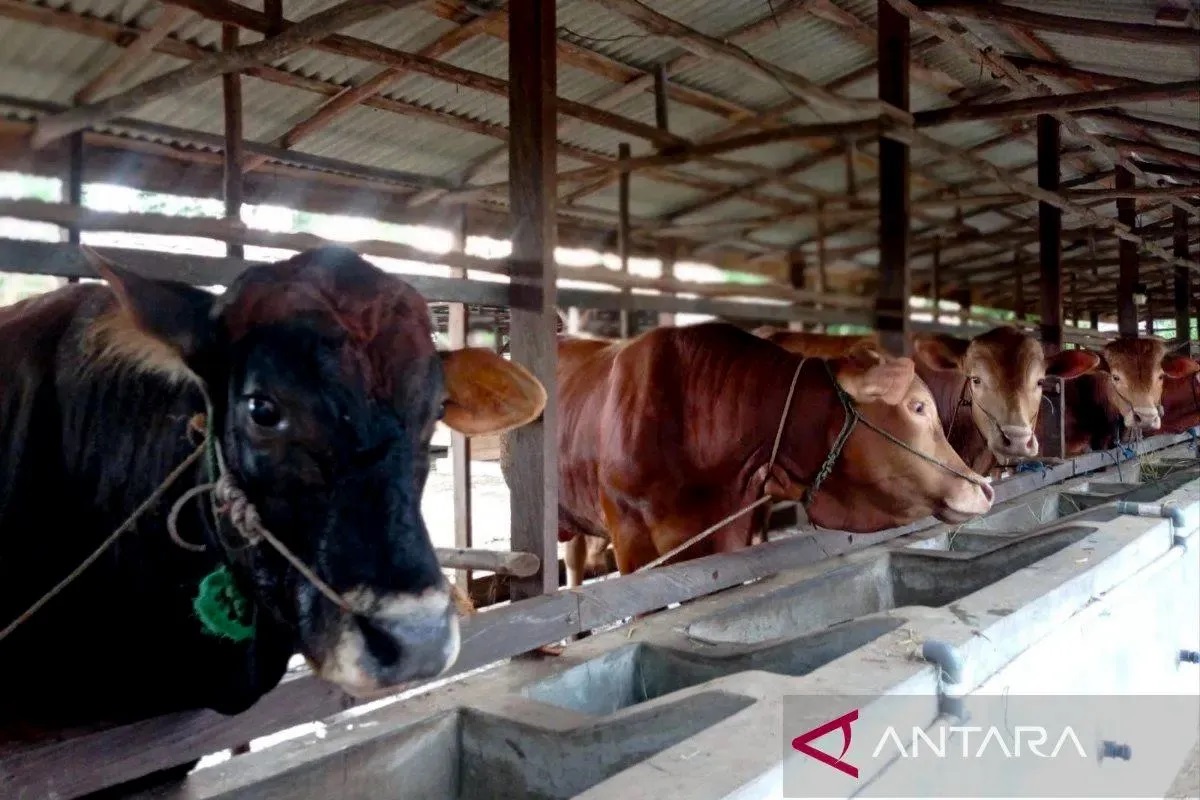 A cattle fattening farm in Pandih Batu District, Pulang Pisau Regency, Central Kalimantan Province on Feb. 5, 2025. (Antara/Arief Suseno)
The Agriculture Ministry is targeting investment in large-scale cattle farms with a population of up to 200,000 heads of cattle in Central Kalimantan Province, which would bedeveloped within an integrated business ecosystem to strengthen the national meat supply sustainably.
"This is part of the national strategy to accelerate self-sufficiency in meat and milk while also developing modern, partnership-based livestock centers," stated Agriculture Minister and National Food Agency Head Andi Amran Sulaiman in Jakarta on Feb. 18, 2025.
He explained that the program is part of the government's long-term agenda to strengthen animal protein sovereignty toward the Indonesia Gold 2045. The development is focused on integrated livestock farms in Sukamara Regency, Central Kalimantan, as a large-scale integrated cattle farming cente that would span about 40,006 hectares (ha) of land with an initial population of less than 1,000 head.
"And the target is to develop up to 200,000 productive breeding stock," Amran added.
The Integrated Cattle Industry concept is implemented by combining beef cattle, dairy cattle, and the relevant industrial processing facilities in one area. This model would be reinforced by integrated cattle-oil palm farming, where grazing is carried out in plantation areas to ensure feed efficiency while simultaneously producing organic fertilizer, thereby increasing added value and business sustainability.
The development would be carried out using a modern grazing system based on research on grasses adapted to marginal land, supported by processing facilities for products such as processed meat and dairy products, as well as regional infrastructure designed to ensure efficient and sustainable operations.
Amran emphasized that as an agricultural country with extensive natural resources, Indonesia must be able to optimize the potential of livestock farming independently and sustainably.
"Indonesia is an agricultural country. The land is vast, the grass grows [verdant], and the resources are there. The important thing is how we manage it well and make it comfortable for investors to act quickly. I expect 100,000 [heads] will be allocated for development [by the nucleus estate], plus an additional 100,000 for smallholders, bringing the total to 200,000," he said.
Amran noted that the key to the program's acceleration lies in simplifying regulations and ensuring business certainty. The government is committed to creating a welcominginvestment climate so that businesses can focus on building industry, expanding livestock populations, and strengthening product downstreaming.
"Indonesia is a large agricultural country. The land is fertile, and the natural resources are vast. But we tend to slow things down by overcomplicating something which could be simplified. Raising cattle is simple, [just] plant the grass, the cows drink and live, and it's done. Sometimes, what makes it complicated is the permits," he continued.
Amran also encouraged the development of large-scale, integrated livestock businesses to significantly impact the national cattle population. He believes that collaboration between the government and the private sector must be directed towards the development of modern, efficient, and long-term production areas.
"If investors are comfortable, they will invest more. But if they're not comfortable, they'll take two steps forward, two steps back. Ten years are wasted on permits. This is what we must fix," he stressed.
To expand economic benefits, the government has prepared a nucleus estate and smallholder (NES) partnership scheme. This scheme allows large companies to become the nucleus estate in partnership with smallholder livestock herders. Financing support is given through the microcredit loan program (KUR) for the agricultural sector, and insurance protection is provided to ensure business sustainability and minimize risk.
"If managed together by a strong nucleus and growing smallholders, the economy will be stimulated. The state will be there to support financing and protection. Entrepreneurs will thrive, and the community will prosper," Amran emphasized.
The development targets for the integrated cattle industry program encompass increasing the productive cattle breeding stock population, strengthening national meat and milk production, creating local jobs, as well as stimulating economic growth in the surrounding region.