
News
Ramadan inflation surges, with geopolitics adding new risks
Tenggara Strategics March 14, 2026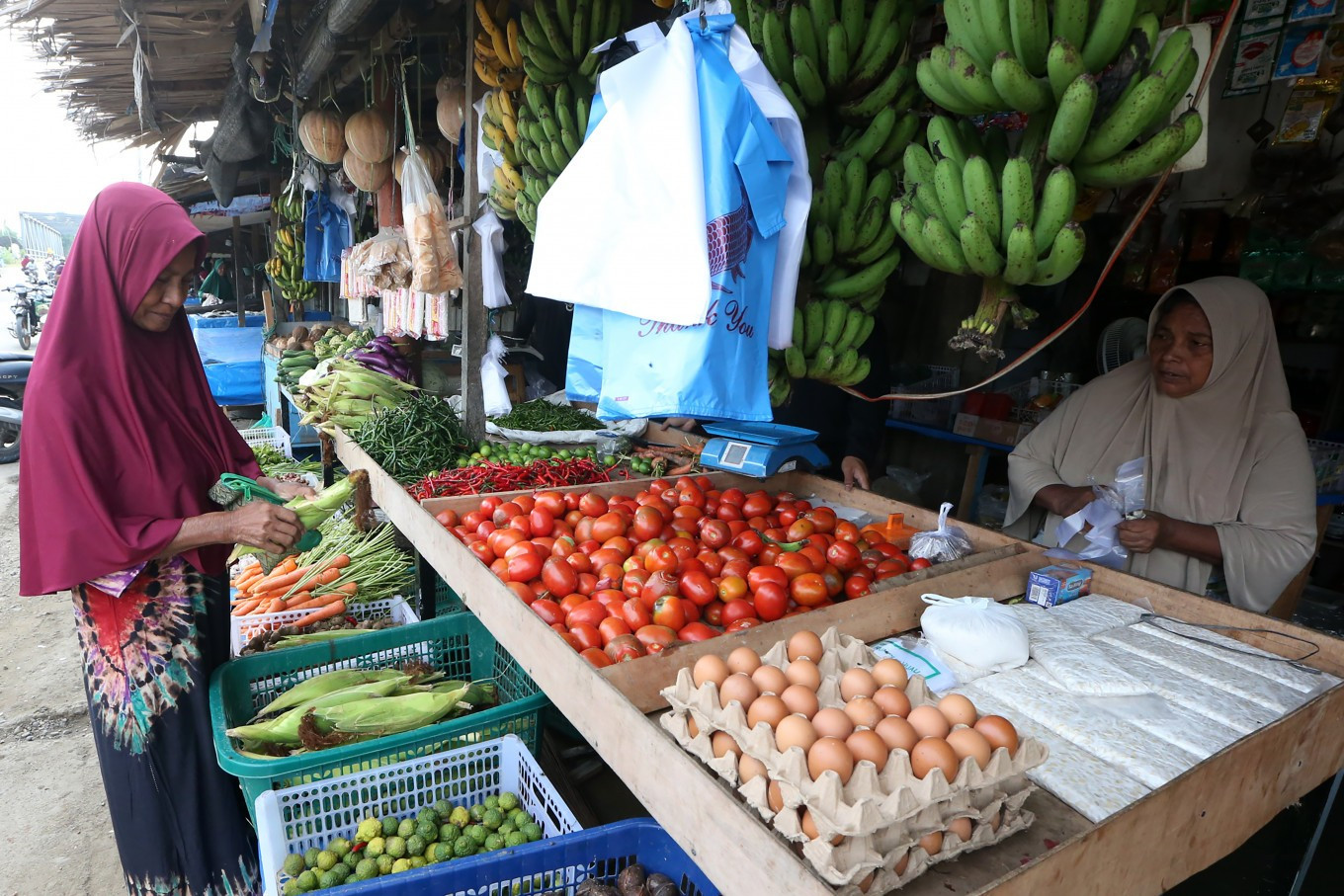 A woman selects vegetables sold by vendors on Dec. 9, 2025, at the Pangwa traditional market in Pidie Jaya, Aceh. (Antara/Irwansyah Putra)
Indonesia faces rising inflation during the Ramadan season every year, but inflationary pressures this year have been compounded by the government’s free nutritious meal program, pushing annual inflation to 4.76 percent. The situation may worsen as the ongoing United States-Israel war on Iran pushes up global commodity prices, particularly oil and gas, which could further fuel inflation in Indonesia.
Statistics Indonesia (BPS) reported that the Consumer Price Index (CPI) rose by 4.76 percent year-on-year (yoy) to 110.5 points in February 2026. Month-to-month (mtm) inflation reached 0.68 percent, while year-to-date (ytd) inflation stood at 0.53 percent. Core inflation grew by 2.63 percent yoy, 0.42 percent mtm and 0.8 percent ytd. Energy inflation contributed 2.08 percentage points (pp) to annual inflation but subtracted 0.05 pp from monthly inflation. Food inflation contributed 0.84 pp to yoy inflation and 0.42 pp to mtm inflation.
Regionally, Aceh recorded the highest provincial inflation at 6.49 percent yoy, while Central Aceh regency posted the highest inflation among cities and regencies at 8.44 percent yoy. The region continues to feel the impact of logistical disruptions caused by a natural disaster late last year. By contrast, Highland Papua recorded the lowest provincial inflation at 0.63 percent yoy, while Jayawijaya regency had the lowest inflation among cities and regencies at 0.63 percent yoy.
Gold jewelry was the commodity contributing the most to monthly inflation, adding 0.19 pp, while also contributing 1.06 pp to annual inflation. Meanwhile, electricity tariffs contributed the most to yearly inflation, accounting for 2.17 pp. Food prices have also begun to rise. Beef contributed 0.01 pp to monthly inflation. Data from the National Food Agency (Bapanas) shows that retail beef prices increased from Rp 136,533 per kilogram (kg) on Jan. 30 to Rp 137,733 per kg on Feb. 13.
Beyond seasonal Ramadan demand, rising beef prices may also reflect policy changes. The government sharply reduced the private sector’s beef import quota from 180,000 tonnes to 30,000 tonnes, while state-owned enterprises received a combined beef and buffalo meat import quota of 250,000 tonnes, causing elevated import prices. This policy may have amplified the impact of Tropical Cyclone Koji, which killed around 100,000 cattle in Australia, thereby affecting Indonesia’s beef supply.
The Indonesian Beef Traders Association (APDI) noted that Indonesia relies on imports to meet around 60 percent of its beef demand, leaving the domestic market vulnerable to global supply disruptions and exchange rate fluctuations. While Ramadan’s culture of celebratory feasts naturally increases food demand, analysts note that high logistics costs and weak connectivity infrastructure, especially outside Java, further exacerbate price increases.
The 4.76 percent yoy inflation rate in February exceeded the government’s and Bank Indonesia’s target range of 1.5–3.5 percent. BPS explained that electricity tariffs contributed the most to annual inflation due to a low base effect, as prices normalized after a 50 percent electricity discount for households using 450–2,200 volt ampere (VA) connections during January–February under the Prabowo Subianto administration.
Global geopolitical tensions are also set to intensify inflationary pressures. The war involving the US and its ally Israel against Iran threatens global energy supply after Iran responded to airstrikes by restricting naval transportation through the Strait of Hormuz, a critical shipping lane through which around 20 percent of global oil and 20–25 percent of global liquefied natural gas (LNG) passes. Alas, oil prices have already reacted. Brent crude futures rose 4.7 percent to US$81.4 per barrel at the close of trading on Mar. 3, while US West Texas Intermediate (WTI) crude increased by 4.7 percent to US$74.56 per barrel. Overall, Brent prices have climbed 12 percent since the conflict began.
The US–Iran conflict could also affect financial markets. The rupiah is expected to weaken to around Rp16,800–Rp17,800 per US dollar. Meanwhile, Supply Chain Indonesia estimates that a 20 percent increase in diesel prices would raise truck transportation costs by 7–8 percent, assuming fuel accounts for 35–40 percent of operating costs. Logistics costs in Indonesia already account for roughly 40 percent of product prices. A 7–8 percent increase in trucking costs could therefore push the average price of goods up by around 0.5 percent.
Faced with a potential oil and gas shock, the Indonesian government may need to introduce additional austerity measures, alongside market operations, to contain inflation. In the short term, policymakers should consider rationalizing programs that risk worsening inflationary pressures, including the free meals program. Over the longer term, the government must address structural problems in the agriculture and logistics sectors that contribute to persistent inflation. At the same time, Indonesia should accelerate its energy transition to reduce its vulnerability to global fossil fuel price shocks.