News
Chasing the godfather: Oil corruption iceberg far from melted
Tenggara Strategics March 12, 2026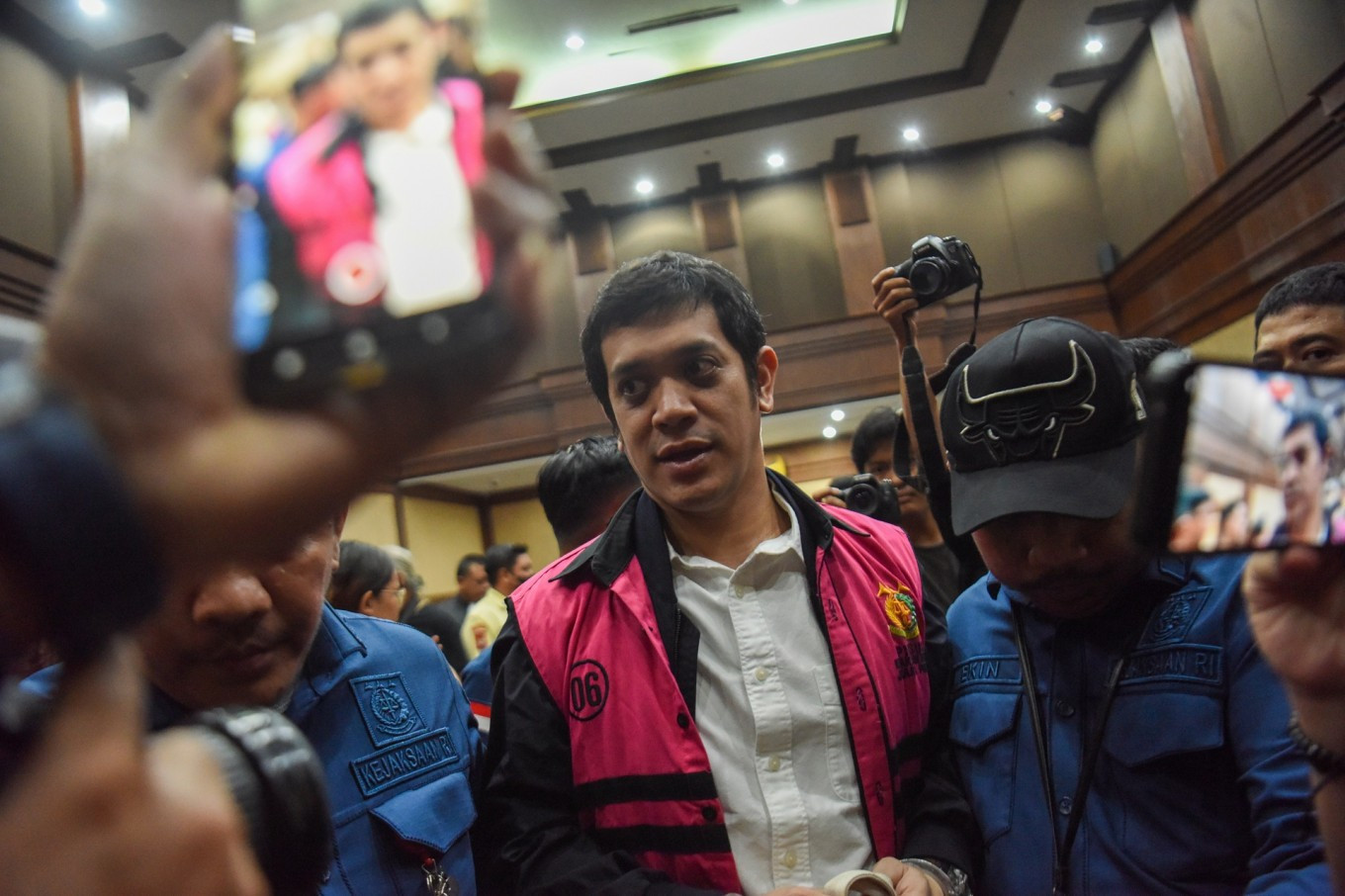 Muhammad Kerry Adrianto Riza (center), owner of fuel terminal company PT Orbit Terminal Merak and son of oil tycoon Riza Chalid, is escorted out of the courtroom on Feb. 27 at the Jakarta Corruption Court in Jakarta. Judges sentenced Kerry to 15 years in prison after finding him guilty in a corruption case pertaining to the lease of an oil terminal to state energy firm Pertamina. (Antara/Indrianto Eko Suwarso)
The progress in the corruption case involving crude oil procurement at state oil and gas company Pertamina for the 2018–2023 period deserves appreciation. Yet this development may represent only the tip of the iceberg in Indonesia’s law enforcement efforts. The sentences handed down to the suspects are considered mild and lack deterrence effect, while the main actor behind the scheme remains elusive amid the recurring scandals surrounding Pertamina.
Investigators with the Attorney General’s Office (AGO) began probing the case in October 2024. After questioning 96 witnesses and two experts, and seizing 969 documents and 45 pieces of electronic evidence, prosecutors named nine suspects in February 2025.
Six suspects were drawn from the high-level ranks of Pertamina’s subsidiaries. These were PT Pertamina Patra Niaga president director Riva Siahaan, vice president of trading and other business Maya Kusmaya and VP of trading product Edward Corne; PT Kilang Pertamina Internasional VP of feedstock management Agus Purwono and VP of product optimization Sani Dinar Saifuddin; and PT Pertamina International Shipping president director Yoki Firnandi.
Also standing trial were suspects representing the private sector: Muhammad Kerry Adrianto Riza, the beneficial owner of PT Navigator Khatulistiwa; Dimas Werhaspati, a commissioner of PT Navigator Khatulistiwa and PT Jenggala Maritim; and Gading Ramadhan Joedo, a commissioner of PT Jenggala Maritim and president director of PT Orbit Terminal Merak.
According to the AGO, the alleged corruption caused Rp 25.4 trillion (US$1.5 billion) in direct state losses. Furthermore, it triggered an estimated Rp 171.9 trillion in broader economic damage stemming from inflated fuel prices, which placed a massive burden on the national economy and public purchasing power.
After more than a year of legal proceedings, the Jakarta Corruption Court handed down verdicts against the nine defendants on Feb. 26. However, all sentences were lighter than the penalties sought by the state prosecutors. For instance, Kerry was sentenced to 15 years in prison and ordered to pay a Rp 1 billion fine plus Rp 2.9 trillion in restitution. This fell short of the 18-year sentence and Rp 10.4 trillion in restitution sought by prosecutors.
On March 2, the AGO announced it would appeal the verdicts. Prosecutors argue that the court failed to adequately consider the staggering broader economic losses and the limited restitution obligations imposed on the defendants.
Beyond the lenient sentencing, the puzzle remains incomplete because the alleged mastermind behind the scheme is still at large: oil trader Mohammad Riza Chalid, who is Kerry’s father.
Investigators allege that as early as 2012, Riza pressured Pertamina to lease the Merak fuel terminal, operated by Orbit Terminal Merak, in Banten, without a competitive tender process. This lobbying reportedly spanned from 2012 to 2014.
Riza was officially named a suspect on July 10, 2025, and placed on the AGO’s wanted list a month later. Following international coordination, Interpol issued a Red Notice for him on Jan. 23. His current whereabouts are believed to be in Malaysia.
Riza is no ordinary figure in the country’s oil and gas landscape. Known for years as the "gasoline godfather", he was widely believed to wield immense influence over Pertamina Energy Trading Ltd (Petral), the company’s former trading arm. With a long history of connections to political elites, he was previously linked to the 2015 “papa minta saham” scandal that shook the foundations of Indonesian politics, evident in the arrest of then-House of Representatives speaker Setya Novanto.
Bringing Riza to justice is crucial to uncovering the modus operandi behind his alleged intervention in Pertamina’s governance. More broadly, prosecuting figures who operate behind the scenes remains the ultimate challenge for Indonesian law enforcement.
This is not an isolated case. Pertamina has been infested with corruption since the oil boom of the 1970s, when it served as both regulator and player in a lucrative industry. While several former president directors have been sentenced for graft, cases like that of Karen Agustiawan remain controversial for blurring the line between criminal corruption and legitimate business decisions.
Law enforcers continue to pursue multiple fronts, including the investigation into liquefied natural gas (LNG) procurement (2013–2020), which caused an estimated Rp 2.1 trillion in losses, and the mismanagement of pension funds at Pertamina, totaling roughly Rp 1.4 trillion.
The recent verdict is a milestone, but it also underscores a systemic problem. Without stronger accountability, total transparency and the political will to pursue the power players behind the curtain, corruption risks remaining a recurring feature of Indonesia’s energy sector.
What we've heard
A source involved in the probe into the Pertamina corruption case said the indictment and the court’s verdict differed from the narrative that emerged when the case first came to light. According to the source, Riza Chalid is not formally listed in the corporate structure of the private company implicated in the scandal. “He only provided guarantees,” the source said.