
News
Raids and revenue woes: the leaky tax and customs system
Tenggara Strategics February 12, 2026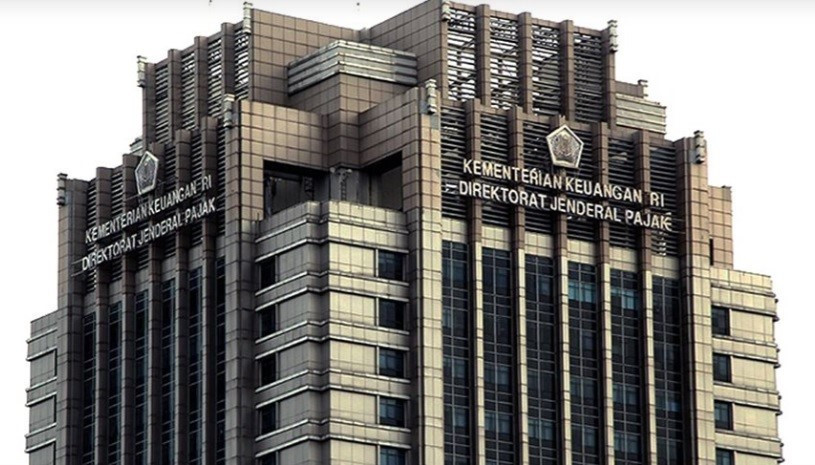 (Courtesy of Finance Ministry's KLI Bureau)
As the government scrambles to shore up tax and excise revenues, a wave of corruption arrests targeting tax and customs officials has exposed deep governance problems within Indonesia’s revenue-collecting agencies. The Corruption Eradication Commission’s (KPK) recent raids have prompted Finance Minister Purbaya Yudhi Sadewa to carry out large-scale bureaucratic rotations at both the tax and customs offices. Yet questions remain over whether these measures can deliver lasting reform or meaningfully improve revenue collection.
Over the past weeks, the KPK has conducted a series of operations across multiple regions. On Wednesday last week, investigators arrested three officials in Banjarmasin, South Kalimantan, including the head of the medium tax office (KPP Madya), on suspicion of bribery and gratification. The alleged payments were intended to facilitate the approval of multibillion-rupiah tax restitution claims submitted by palm oil plantation companies.
On the same day, the KPK also arrested customs and excise officials in Jakarta and Lampung over alleged irregularities in import inspection activities. Investigators seized evidence including 3 kilograms of gold and Rp 8.19 billion (US$496,000) in cash. Among those detained was the head of the West Sumatra customs and excise office, a former director of customs investigation and enforcement.
The latest cases follow earlier arrests this year involving eight officials from the North Jakarta regional tax office. The officials were accused of accepting bribes worth Rp 6 billion in exchange for allowing PT Wanatiara Persada to pay only Rp 15.7 billion in taxes and Rp 4 billion in fees, far below its original tax obligation of Rp 75 billion.
In response to the string of scandals, Purbaya has pledged sweeping internal reforms to restore credibility within the Finance Ministry. He recently rotated 50 high-ranking officials at the Directorate General of Taxes (DJP) and reassigned 30 officers at the Directorate General of Customs and Excise (DJBC), a move aimed at tightening governance and boosting revenue performance.
The large-scale reshuffle, according to Purbaya, was unavoidable. Under existing regulations, he said, officials implicated in misconduct cannot be immediately dismissed before legal proceedings are concluded, leaving reassignment to lower-risk positions the only short-term option to limit further damage.
The renewed reform push comes at a critical fiscal juncture. In 2025, tax revenue reached only 87.6 percent of its target, amounting to Rp 1,917.6 trillion out of Rp 2,189.3 trillion target. As a result of weaker-than-expected revenue, the budget deficit widened to Rp695 trillion, or 2.92 percent of gross domestic product, close to the legal ceiling of 3 percent. Despite this shortfall, the 2026 state budget sets an ambitious tax revenue target of Rp 2,357.7 trillion, a 22.9 percent increase from last year’s realization.
With global geopolitical uncertainty intensifying and Indonesia’s economic growth stuck at around 5 percent for much of the past decade, meeting this year’s revenue target will be a formidable challenge. Purbaya has sought to reassure markets and the public that governance reforms at the tax and customs offices will gradually strengthen revenue performance, expressing confidence that the deficit will remain below the 3 percent threshold. Many economists and investors, however, remain cautious.
What we've heard
A Finance Ministry official familiar with the recent reshuffle explained that Purbaya wanted to ensure that leaders in each unit are held accountable for the actions of their subordinates. If violations occur at lower levels, supervisors deemed to have failed in their oversight would also be subject to rotation. “There is a mechanism of accountability,” the official said.
Related Articles