
News
Indonesia, Singapore’s ties hit another diplomatic rough patch
Tenggara Strategics November 11, 2026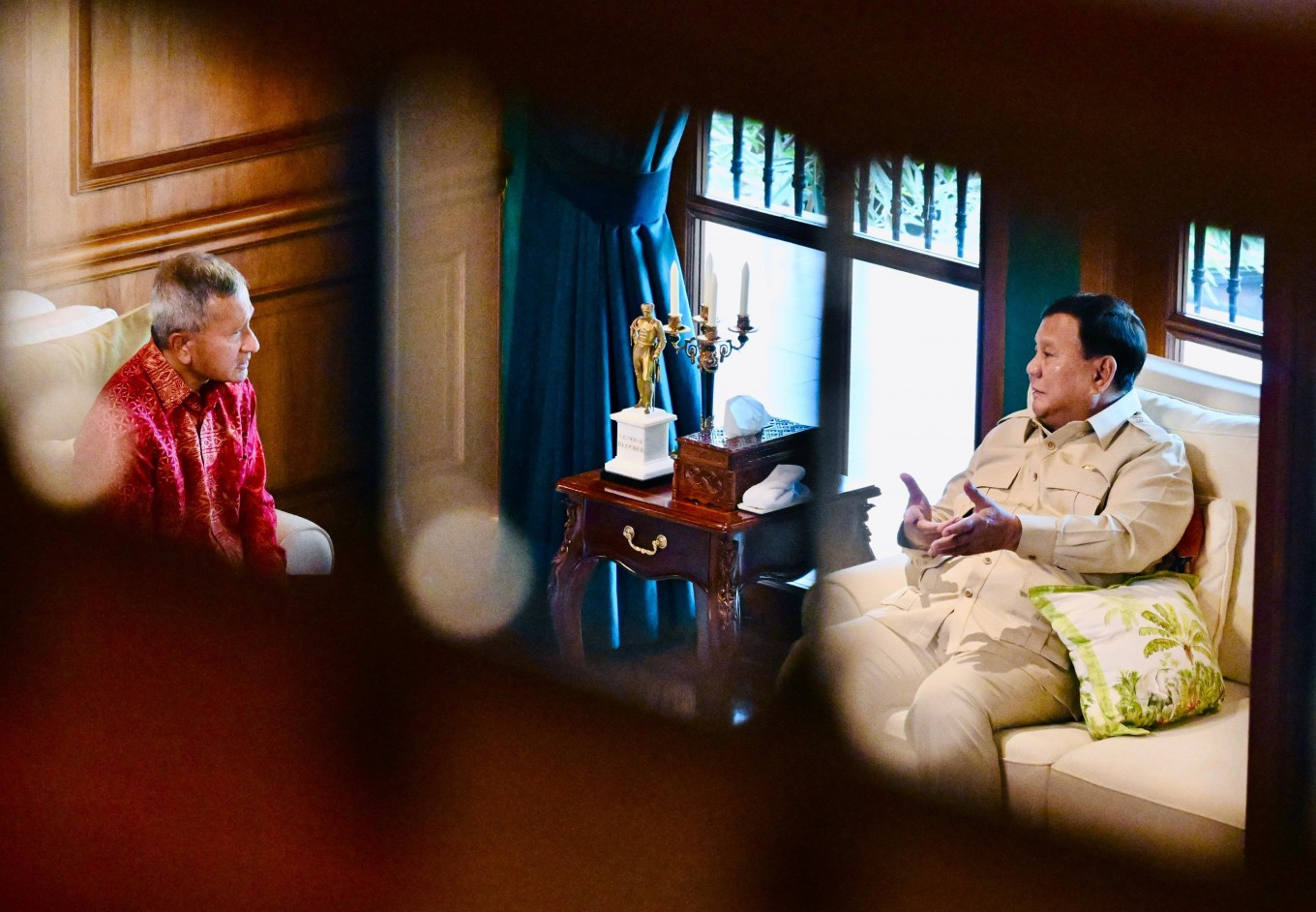 President Prabowo Subianto (right) speaks with Singaporean Foreign Minister Vivian Balakrishnan on Wednesday during a closed-door meeting at the President's private residence in Hambalang, Bogor regency, West Java. (Courtey of Presidential Secretariat/Laily Rachev/Laily Rachev)
Indonesia and Singapore maintain a relationship best compared to that of siblings: deeply interdependent with shared strategic interests, yet periodically strained by sharp divergences in perspective.
When Singapore’s extraterritorial investigations into companies linked to Indonesian forest fires and transboundary haze provoked fierce indignation in Jakarta, a critical question resurfaced: How far is the Indonesian government willing to push back before national pride compromises a partnership that transcends any single dispute?
The friction escalated rapidly after Singapore’s National Environment Agency (NEA) issued legal notices to 10 firms operating in Indonesia suspected of involvement in land-clearing fires. Rather than treating the inquiry as an environmental or technical issue, several Indonesian cabinet officials framed the initiative as an affront to sovereign authority, channeling a resurgent wave of resource nationalism to signal Jakarta’s refusal to be policed by its smaller but wealthier neighbor.
This nationalist fervor spilled over into strategic energy policy. Following a plenary cabinet meeting on Oct. 21, Coordinating Energy Transition Minister Bahlil Lahadalia announced that Indonesia would curtail natural gas exports to Singapore by 31 billion British thermal units per day (BBTUD), approximately 8 percent of its pipeline supply to the city-state. While Bahlil framed the policy as a constitutional mandate to prioritize domestic energy sovereignty within contractual thresholds, the timing was unmistakable.
Adopting a combative stance, Bahlil demanded "mutual respect" from Singapore and pointedly declared that Jakarta would review all bilateral energy contracts, leveraging Indonesia's vital natural endowments as an instrument of geopolitical leverage.
This assertion of economic independence quickly permeated other portfolios. Deputy Haj and Umrah Minister Dahnil Anzar Simanjuntak, known as a hardline supporter of President Prabowo Subianto , urged Indonesian pilgrims to bypass regional transit hubs like Singapore and Malaysia in favor of direct flights on domestic carriers such as Garuda Indonesia and Lion Air.
Framed as a patriotic imperative to retain capital and bolster national aviation, the move reflected an administration eager to flex its domestic muscle. The rhetoric peaked when Communications and Digital Minister Meutya Hafid clashed publicly with former Singaporean lawmaker Calvin Cheng.
Countering Cheng's assertion that Indonesia relies heavily on Singapore for routing international data traffic, Meutya warned that 80 percent of Singapore’s connectivity could be severed if subsea internet cables traversing Indonesian waters were disrupted, a blunt reminder of the archipelago’s geographic leverage.
Jakarta’s barrage of political posturing prompted Singaporean Foreign Minister Vivian Balakrishnan to travel to Jakarta on Oct. 27 to contain the fallout. Meeting with Indonesian counterpart Arrmanatha Nasir, Balakrishnan secured a baseline consensus: the establishment of a joint task force to combat wildfires and coordinate legal proceedings against errant concessionaires, backed by cross-border data sharing. However, both sides maintained a deliberate silence on the gas export cuts. Balakrishnan also met with President Prabowo, a meeting arranged at Singapore's behest, underscoring the city-state's anxiety over Jakarta's increasingly assertive domestic messaging.
These diplomatic overtures highlight how segments of the Indonesian establishment have prioritized domestic political signaling over long-term strategic coherence. The aggressive rhetoric deployed by Bahlil, Dahnil and Meutya caters directly to populist expectations at home, presenting Indonesia as the dominant regional partner while casting Singapore as vulnerable and structurally dependent.
Yet this posture risks obscuring the deep, structural symbiosis underpinning bilateral ties. As former Indonesian ambassador to Singapore Suryopratomo observed, the partnership functions best when both nations complement rather than confront each other. Indonesia offers vast natural endowments, labor and a burgeoning consumer market, while Singapore has stood as Indonesia’s largest source of foreign direct investment for over a decade, serving as its primary gateway to global capital and corporate networks.
With the two neighbors celebrating the 60th anniversary of formal diplomatic relations next year, cooler heads must prevail over theatrical patriotism. Deescalating nationalist posturing and reaffirming institutional cooperation will be essential to ensuring that short-term domestic grandstanding does not fracture one of Southeast Asia's most consequential partnerships.
Related Articles