
News
DHE policy revised again, but gains to foreign reserves remain elusive
Tenggara Strategics December 23, 2025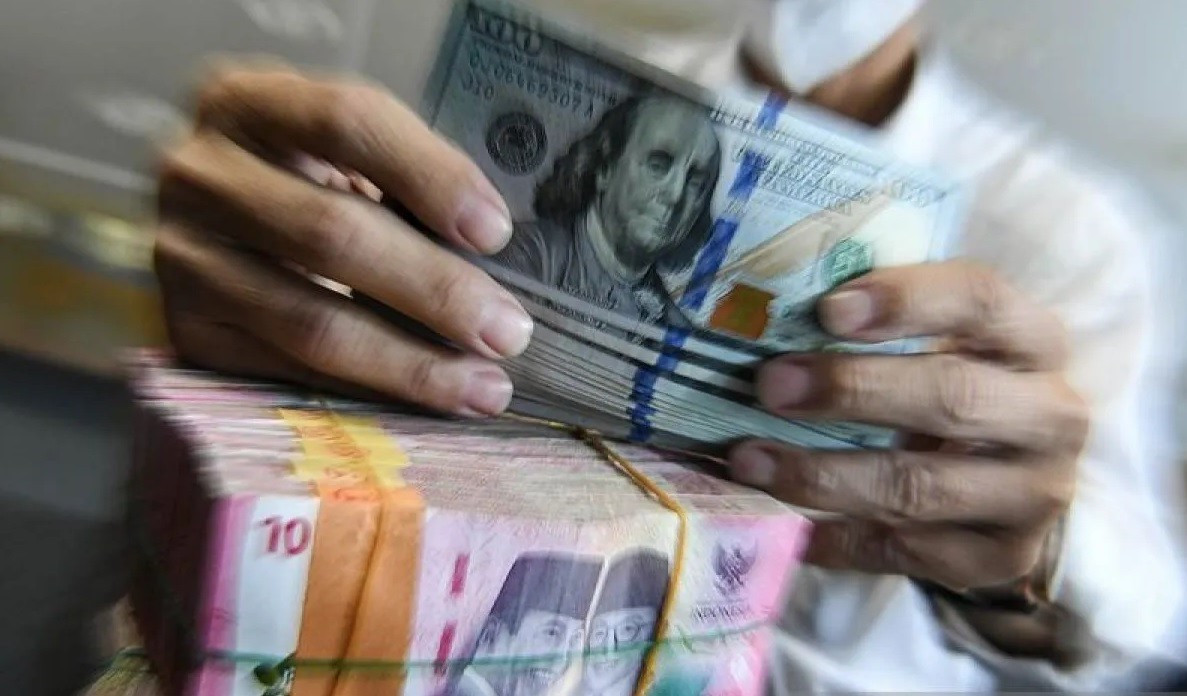 A teller holds a quantity of 100 United States dollar bills atop a bundle of 100,000 Indonesian rupiah banknotes on May 15, 2025, at a money changer in Jakarta. (Antara/Muhammad Adimaja)
The national policy on export proceeds (DHE) from natural resources has been revised for a third time after repeated attempts failed to significantly bolster foreign exchange (forex) reserves or deepen onshore foreign currency liquidity. The latest revision relaxes the mandatory rupiah conversion requirement from 100 percent to 50 percent and requires the placement of DHE in Association of State-Owned Banks (Himbara) members. While this is intended to ease pressure on exporters, it raises questions about whether locking DHE onshore can be effective in the long run without undermining export competitiveness.
The third revision to the DHE policy has reached its final stage and is scheduled to take effect on Jan. 1, 2026. The government aims to increase domestic forex liquidity by easing DHE requirements and providing exporters with greater operational flexibility. Under the new framework, exporters are also allowed to invest excess forex in domestically issued foreign currency-denominated government securities (SBN), which are expected to absorb surplus DHE liquidity in the domestic financial system.
Policy challenges became evident early this year following the issuance of Government Regulation (PP) No. 8/2025, the second revision to the DHE policy. Implemented in March 2025, the regulation required non-oil and gas exporters to place DHE in the domestic financial system for 12 months through Indonesia Eximbank (LPEI) or banks involved in the forex market. It also obligated exporters to convert 100 percent of their foreign currency earnings into rupiah. To support compliance, Bank Indonesia (BI) introduced instruments such as BI Foreign Exchange Securities (SVBI) and BI Foreign Exchange Sukuk (SUVBI) to accommodate exporters' DHE placement for up to 12 months.
Although this stricter regulation achieved a compliance rate of around 95 percent, it failed to deliver a meaningful increase in forex reserves, its primary objective. As a result, Indonesia's reserves declined this year from US$156.1 billion in January to US$150.1 billion in November, falling short of the government's ambition to grow its forex reserves by almost US$80 billion this year, followed by more than Us$100 billion in 2026.
At the same time, pressure on the rupiah intensified. The national currency has continued to depreciate since September, prompting the central bank to maintain its policy rate at 4.75 percent this month despite rising inflation since March. On Dec. 17, the rupiah weakened to Rp 16,698 per US dollar, down 1.39 percent from Rp 16,463 per US dollar on Sept. 1.
The decision of Finance Minister Purbaya Yudhi Sadewa to mandate exclusive DHE placement in Himbara banks is intended to strengthen oversight of capital flows. However, this approach has drawn criticism for discriminating against private banks, many of which are better equipped to offer hedging instruments and competitive treasury services. In contrast, Himbara banks often provide a narrower range of products and impose higher transaction costs than multinational and private banks.
To ensure the effectiveness of the latest revised policy, precautionary measures are needed. Clear and consistent communication with exporters is essential to prevent misinterpretations that could disrupt cash flow planning. Meanwhile, poor implementation risks raising borrowing costs for working capital and capital expenditure, ultimately undermining business performance and hampering export growth.
In the long term, multiple layers of regulatory barriers could undermine industry productivity and competitiveness. Measures that reduce profitability limit firms' capacity to expand while discouraging new entrants to the market, thereby constraining the industry's overall potential.
These pressures not only slow growth but also weaken job creation, compounding the industry's struggle to remain viable amid weakening commodity prices.
What we've heard
Several private banking employees say the third revision to the DHE SDA policy has unsettled the sector, as private banks no longer have an opportunity to hold exporters' foreign currency earnings as third-party funds or forex reserves. These and other related grievances have even become a topic of internal discussion at the Indonesian Banks Association (Perbanas), they say.
"The supply of forex no longer depends on market dynamics and mechanisms because it is being controlled by the government," said one private banker.
Although the government intends to bolster the central bank's forex reserves, which continued to decline this year, private bankers and even BI senior analysts are concerned that the policy mandate for exporters to place their DHE in Himbara banks could backfire, putting additional pressure on the rupiah. This risk is particularly pronounced if the government instructs state-owned banks to sell the foreign currencies to BI.
According to the senior BI analyst's view, this policy mandate would tighten US dollar (USD) liquidity in the domestic forex market. In turn, companies would be burdened with USD-denominated debt as it became more difficult to secure USD supplies. Importers that rely on the greenback would face similar challenges, the analyst said.
In addition, one exporter said the new DHE requirement could affect corporate cash flow, especially for companies that needed operating funds for urgent purposes.