
News
Barely passing: Indonesia’s fiscal test after Fitch’s warning
Tenggara Strategics March 16, 2026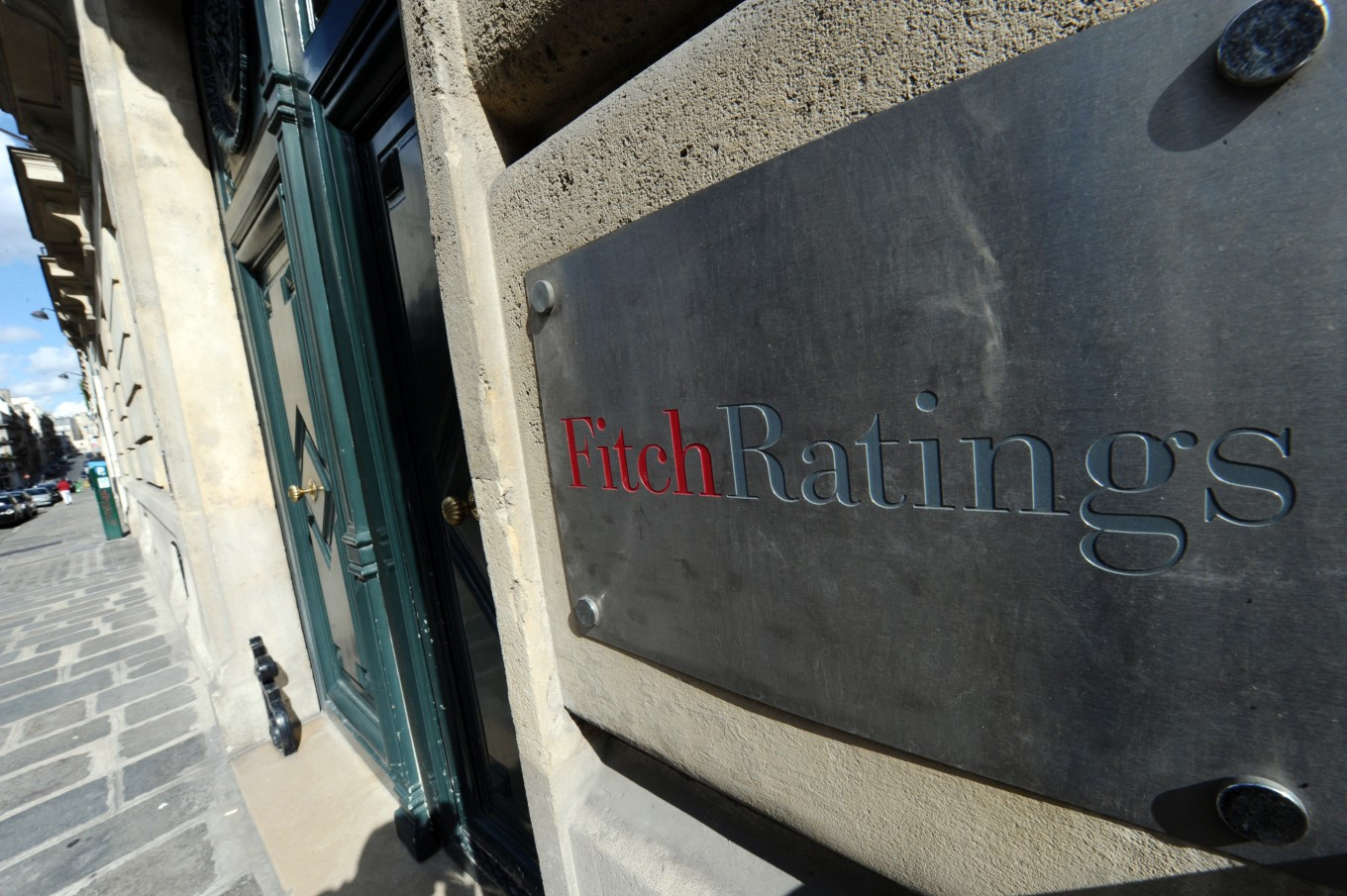 A picture shows the entrance of Fitch ratings agency on Aug. 8, 2011, in Paris. (AFP/Miguel Medina)
Fitch Ratings recently revised Indonesia’s sovereign outlook from stable to negative, although it maintained the country’s BBB investment-grade rating. Fitch highlighted global geopolitical tensions and President Prabowo Subianto ’s free nutritious meal program as potential fiscal risks. While the government insists the massive free meals budget will remain and promises to maintain fiscal discipline, questions arise over whether fiscal policy is being designed primarily for economic stability and public welfare, or whether it is driven by political considerations.
Fitch outlined several reasons for the outlook revision, particularly concerns over policy credibility and governance. While the agency still expects the government to comply with the fiscal deficit ceiling of 3 percent of GDP, it notes growing tension between this commitment and the administration’s ambitious target of achieving 8 percent economic growth.
At the same time, external risks are mounting. Conflict in the Middle East has pushed global oil and gas prices upward, potentially increasing Indonesia’s fiscal burden through higher energy costs and subsidy pressures. Finance Minister Purbaya Yudhi Sadewa estimates that the budget deficit could widen to around 3.6 percent of GDP if oil prices rise above US$90 per barrel, while the 2026 state budget assumes a price of $70 per barrel. Since the Iran war began, oil prices have been hovering around $100 per barrel.
A second concern is growing fiscal pressure. Expanding social spending and development ambitions are unfolding at a time when government revenue remains structurally low, projected at only around 13.3 percent of GDP in the coming years. This figure is far below the median among countries with a similar BBB rating. The decline in state revenues in 2025 was driven by weak tax collection, the cancellation of most planned value-added tax rate increases and the permanent transfer of 0.4 percent of GDP in state-owned enterprise dividends to Danantara.
While efforts to improve tax compliance may gradually strengthen revenue collection, the impact is unlikely to be significant in the short term, leaving fiscal space constrained. Compounding these concerns are discussions about revisiting the fiscal framework, including the possibility of relaxing the long-standing 3 percent deficit ceiling.
This tension becomes even more visible in the government’s insistence on maintaining the free meals program despite tightening fiscal space. While improving child nutrition is an important objective, a program estimated to cost Rp 355 trillion ($21.5 billion), or 1.3 percent of GDP, inevitably raises questions about prioritization and sustainability. Earlier this year, Moody’s had already warned about the fiscal implications of Indonesia’s expanding social programs, and Fitch’s latest outlook revision reinforces those concerns.
Economists have suggested reallocating spending across several large programs, including free meals, the Red and White Village Cooperative initiative and the food estate program, rather than raising subsidized fuel prices to ease fiscal pressure.
In an interview with Reuters, Finance Minister Purbaya Yudhi Sadewa said the free meals budget could be scaled back, potentially saving the country about 100 trillion rupiah ($6 billion). Not long after, however, he stated that the government would not cut the free meals program and would instead eliminate unproductive spending, citing repeated procurement proposals such as vehicle purchases as examples. Some economists argue that fiscal adjustment will require more than trimming administrative costs.
Taken together, Fitch’s warning reflects broader concerns about the balance between fiscal ambition and fiscal capacity. Indonesia continues to maintain relatively strong economic fundamentals and moderate debt levels, but fiscal space remains constrained by structurally low revenues and rising spending commitments.
At the same time, global uncertainty, from geopolitical tensions to volatile commodity prices, adds further pressure to the government’s budget management. In this context, maintaining credibility in fiscal policy becomes increasingly important for preserving investor confidence and macroeconomic stability.
What we've heard
Education funding has been eroded to finance the free nutritious meal program. The flagship program of Prabowo Subianto will consume Rp 355 trillion in the 2026 budget. Its funding will come from the state budget, allocated through BGN special allocation funds and education funds.