
News
Prabowo's sluggish response to devastating Sumatra floods
Tenggara Strategics December 8, 2025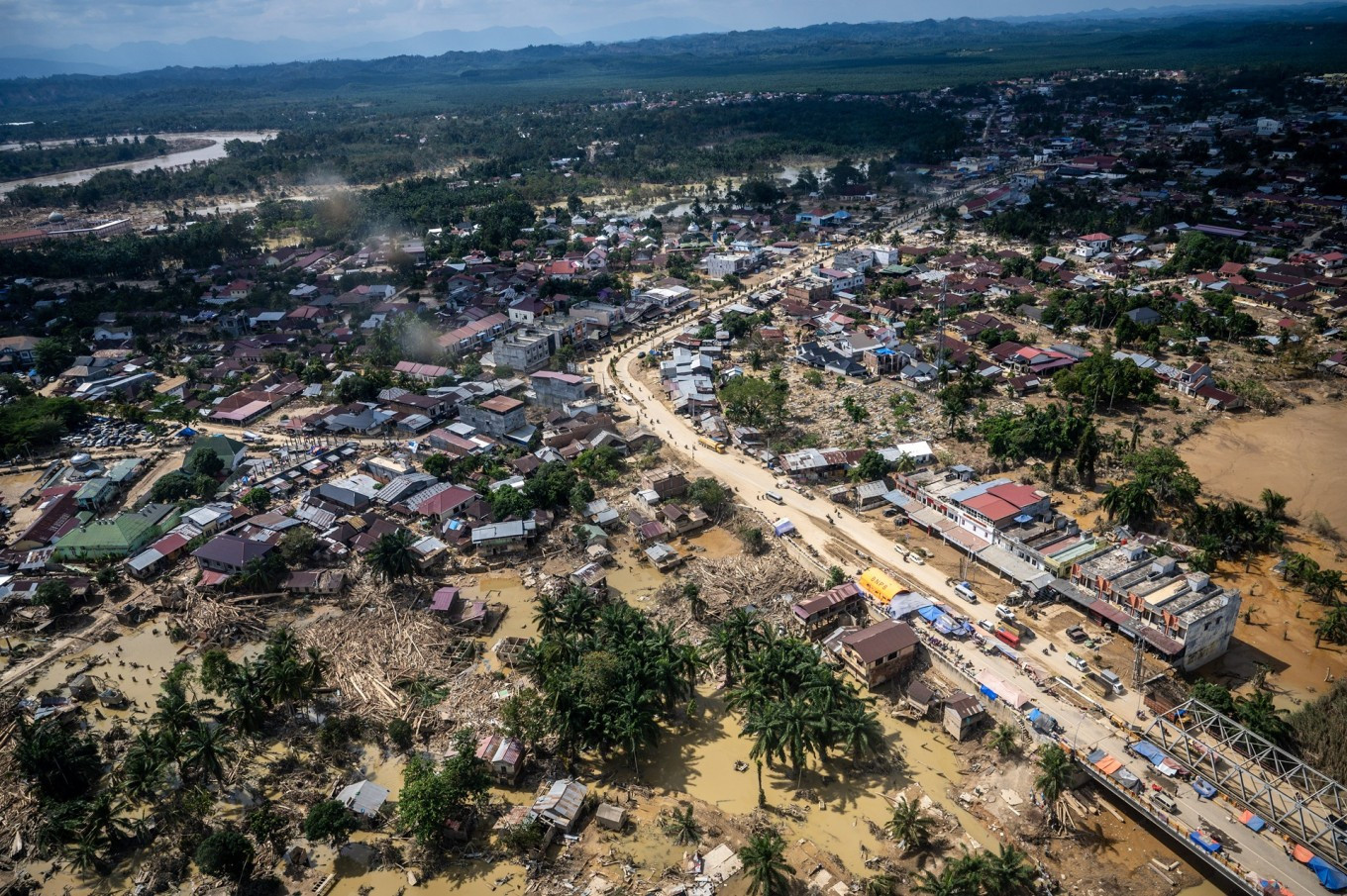 An aerial photo shows Aceh Tamiang regency in Aceh on Dec. 4, 2025, one week after floods and landslides triggered by Tropical Cyclone Senyar made landfall on the northern part of Sumatra. Nearly 1.5 million people across 3,310 villages in Aceh province are affected by the disasters, according to official estimates. (Antara/Bayu Pratama S)
On Nov. 25, flash floods triggered by Cyclone Senyar struck Sumatra, severely damaging Aceh, North Sumatra, and West Sumatra. Two weeks later, more than 3 million people had been affected, with 1 million displaced, 836 dead, 518 still missing, and some 2,700 injured as of 16.00 Western Indonesia Time (WIB) on Dec. 4.
Yet, despite the rising death toll and massive displacement, by not declaring a national emergency, President Prabowo Subianto and his administration have hesitated to acknowledge the severity of the tragedy. By comparison, when Cyclone Senyar brought intense flooding to Thailand and Sri Lanka, both governments declared national emergencies within days.
On the ground in Aceh, local administrations have reached a breaking point. Three regents in Aceh publicly raised white flags, signaling their inability to handle the crisis as government facilities were swept away along with entire communities.
Aceh Governor Muzakir Manaf held back tears as he revealed that four villages in the region had been completely decimated. He described the flash floods as Aceh's "second tsunami", recalling the 2004 tragedy that claimed over 178,000 lives, an event he witnessed firsthand as a commander of the Free Aceh Movement.
Under Law No. 24/2007 on Disaster Management, a disaster may be elevated to national status when its scale exceeds local authorities' capacity to respond. These calls should have warranted greater consideration from the central government. Yet, when questioned by reporters, Prabowo said the situation on the ground was improving and did not warrant a state of emergency.
Reluctance aside, civil society groups and environmental analysts have criticized the government's reliance on an extractive economy for facilitating this tragedy. Environmental watchdogs Indonesian Forum for Environment (WALHI) and Greenpeace argue the flash floods were as much man-made as they were natural. They point to decades of mass deforestation, the unfiltered expansion of oil palm plantations, and excessive mining on Sumatra. This has left river basins in critical condition and reduced forest cover in the three affected regions to less than 25 percent.
Analysts have also noted that state losses caused by natural disasters now outweigh the dividends received from extractive activities. The Jakarta-based think tank Center of Economic and Law Studies (CELIOS) notes that a total of Rp 68.67 trillion (US$4.1 billion) was lost to floods and other natural disasters this year alone, compared to the Rp 16.6 trillion the state received in total mining revenue levy.
To address these claims, a national press conference was finally held on Dec. 3, though Prabowo was nowhere in sight. The public address was led by the Office of the Coordinating Human Development and Culture Minister Pratikno alongside State Secretary Prasetyo Hadi, Cabinet Secretary Teddy Indra Wijaya, Home Minister Tito Karnavian, and leaders from both the National Police and the Indonesian Military (TNI).
Cabinet Secretary Teddy acknowledged that environmental degradation had worsened the floods' impact, echoing activists' concerns. National Police Chief Gen. Listyo Sigit Prabowo said detectives had begun coordinating with the Forestry Ministry to investigate illegal logging, after cut logs were seen floating during the floods.
Pratikno provided a summary of the central government's relief efforts, which include the delivery of 500,000 tonnes of aid and cross-sectoral coordination between the TNI, National Police, National Disaster Mitigation Agency (BNPB), and other bodies. The minister also apologized for the government's missteps in managing the tragedy and promised that rehabilitation and reconstruction efforts would be rolled out in the next 100 days.
Prabowo visited flood victims on Dec. 1, but his reluctance to declare a national disaster has fueled speculation about his motives. Rumors circulated that the President, not Pratikno, had been scheduled to address the press at the palace earlier in the day. The hesitation has drawn attention to political divides: Aceh and West Sumatra were among the few provinces where Prabowo lost in the 2024 presidential election, while he secured an outright majority in North Sumatra.
What we've heard
The government has not yet declared a national disaster status for Sumatra. Several politicians and senior government officials involved in handling the disaster have said that several ministries and agencies are facing budgetary difficulties. This is because Prabowo cut the budget earlier this year. "The disaster response budget was among those drastically reduced," said one official.