
News
House latest to join race to "reform" Polri
Tenggara Strategics December 2, 2025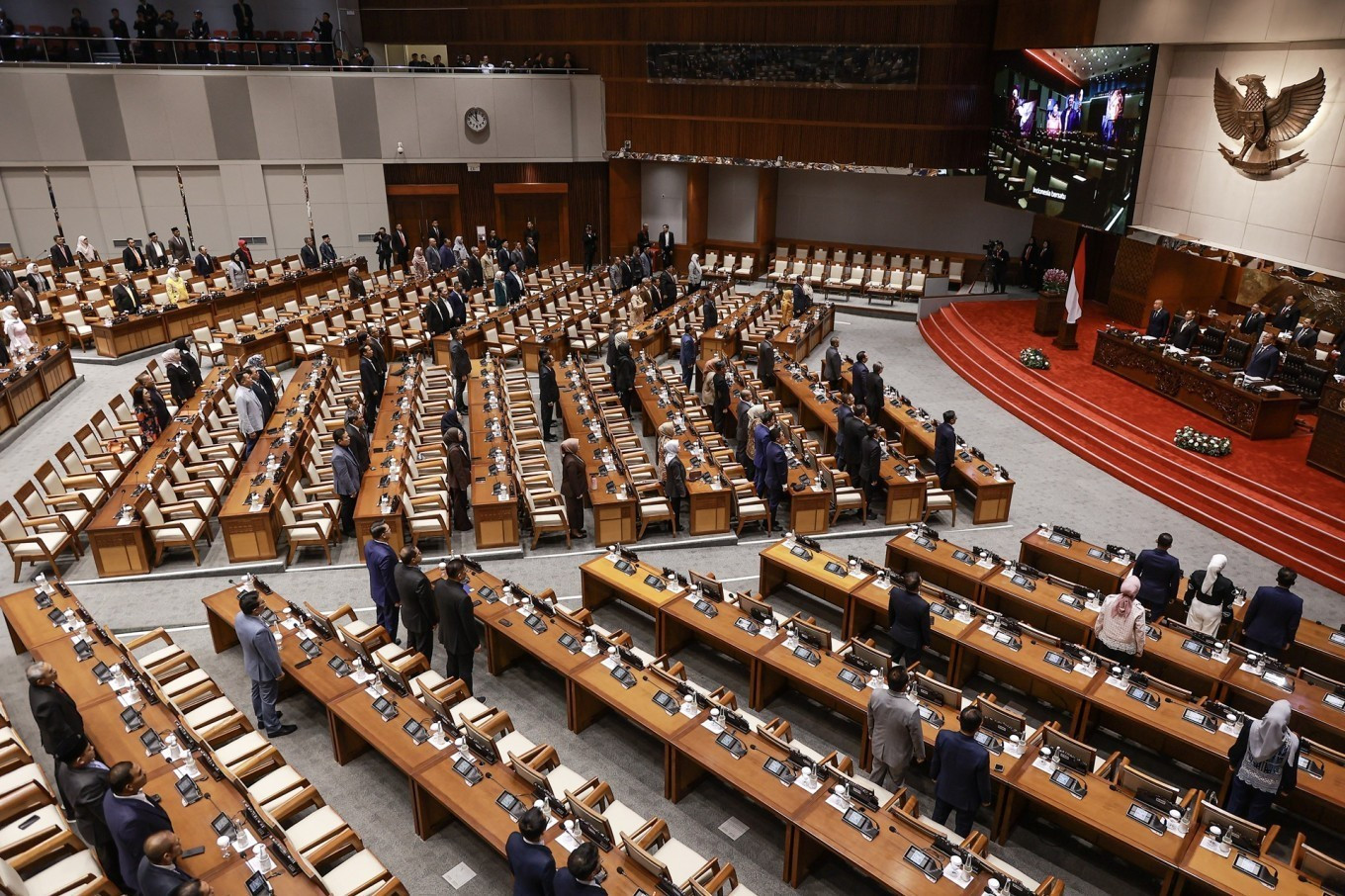 Lawmakers attend a House of Representatives plenary session on July 1 at the Senayan legislative complex in Central Jakarta. (Antara/Dhemas Reviyanto)
Moving the bill to amend the 2001 Law on the National Police (Polri) into its priority list for legislation in 2025-2026, the House of Representatives is joining the presidential office and the police itself in an unofficial race to "reform" the country's main law enforcement agency.
Police reform has become even more imperative after the widespread protests in August, triggered in part by Polri’s brutal handling of anti-government protests and the demand for their accountability, like all public institutions.
The question is which of these three “contestants” can make meaningful changes to the police so that it lives up to its slogan to serve, protect, and nurture the community. Much of what came from them are rhetorical statements to appease an angry public wanting greater police accountability.
In September, Polri Chief Gen. Listyo Sigit Prabowo established his reform team comprising 52 officers from the force, not only in response to growing public criticisms but also to preempt Prabowo's plan to launch his own team.
After much resistance from the police, Prabowo on Nov. 8 commissioned a team to “speed” up police reform, comprising 10 people and led by former Constitutional Court Chief Justice Jimly Asshiddiqie. But this looks more like a compromise with the inclusion of Gen. Listyo and two former police chiefs in the team.
Now the House joins the fray, announcing on Nov. 18 that the bill on amending the Polri Law will be given priority for deliberations that should be completed in the 2025-2026 seating period.
A draft of the bill currently circulating in limited circles has been claimed to be the House's own initiative. But looking at the content, it could easily have been written by the police.
Civil society organizations say the bill would turn the Polri into a super body with even more power for itself, and provide little to no effective oversight to ensure that it is accountable.
In the current structure, the Polri is accountable and answerable only to the president. The single chain of command in the hierarchy means the Polri chief controls the entire network down to the lowest-ranking officers.
Any notion that the President controls Polri has been challenged by powerful resistance from within the force.
Prabowo has not been able to replace Gen. Listyo, who was appointed to the job in 2021 by his predecessor Joko "Jokowi" Widodo. With the Polri bill proposing to push back the retirement age for police officers to 60 years and even 65 for those holding "functional jobs", Prabowo may be stuck with 56-year-old Listyo for the rest of his presidential term.
Despite holding constitutional power, Prabowo has been reluctant to replace officers and ministers in his Cabinet, considered to be the legacy of Jokowi.
The bill circulating in the House is further evidence of the police’s power over the legislative process. In Indonesia's democratic setting, the Polri and the Indonesian Military (TNI) are the two most powerful special interest groups in the country, using their influence to lobby for power, stature, and the protection of their interests.
The Civil Society for Reform for Police Coalition has warned that the bill would, among others, give the Polri even more power and control over the country's cyberspace, more intelligence power than other state agencies, more wiretapping powers, the power to manage civilian militias.
The bill does not provide an effective oversight mechanism. Nor does it address issues that have come up in public discourse, such as the excessive use of force, violations of human rights, abuses of power, and corruption.
However, a recent development is promising for advancing police reform. The Constitutional Court ruled in November that police officers can hold jobs outside the force only after they retire from service. The ruling affects more than 300 officers who were designated to posts apart from Polri. Police say they will comply with the law but are debating whether existing appointments are affected or whether the ruling applies to future appointments.
It also remains unclear whether the presidential commission, the police team, and the House work in collaboration or individually, since they are essentially doing the same work on police reform.
The presidential commission is the first to work, already consulting with dozens of civil society organizations. The commission hopes to meet with more than 100 groups before writing up its conclusions and recommendations to present to the president in January.
Commission chief Jimly said the report would be used as the basis for formulating a law. He did not say whether he was referring to the Polri Law, which is currently being reviewed by the House, or some other new legislation.
What we've heard
The Polri is pushing for revisions to the Polri Law to align with the recently amended Criminal Law Procedures Code (KUHAP). The revision aims to incorporate the expanded authorities granted to the police under the new code directly into their founding statute.