
News
Prabowo inaugurates long-awaited Balikpapan refinery upgrade
Tenggara Strategics January 22, 2026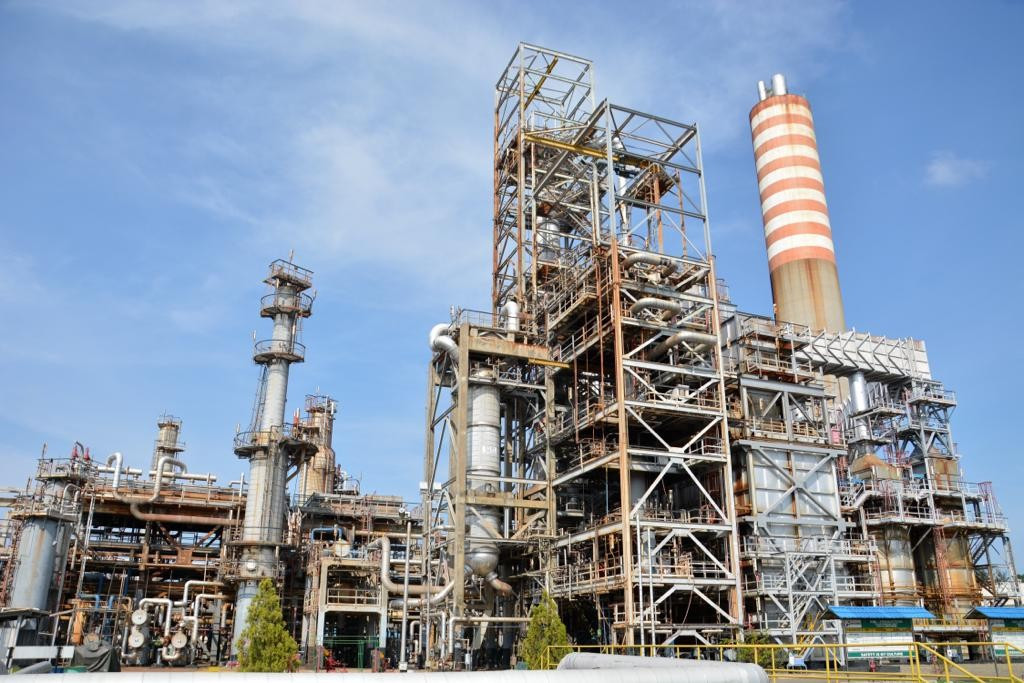 An aerial photograph of the Balikpapan refinery complex, the site of Pertamina’s Refinery Development Master Plan (RDMP) expansion project. (Courtesy of Pertamina)
President Prabowo Subianto inaugurated Pertamina’s Refinery Development Master Plan (RDMP) Balikpapan megaproject on Jan. 12, marking the completion of a long-delayed strategic oil refinery upgrade. The project, with an investment value of US$7.4 billion (Rp 123 trillion), is expected to raise production capacity to 360,000 barrels per day (bpd) from 260,000 bpd and enable Indonesia to stop importing diesel fuel as early as the second quarter of this year.
When first announced, the RDMP Balikpapan project was targeted for completion by late 2025, with timelines ranging from July to September 2025 and even phased operations planned by November 2025. As of early 2025, official reports indicated that construction progress had reached 92.42 percent. However, by September the project had missed its completion targets, and commissioning, testing and operational readiness activities ultimately pushed full completion into 2026.
Several interlocking factors explain why the RDMP Balikpapan project slipped beyond its original schedule. The most significant cause was that the RDMP Balikpapan project took place inside an operating refinery, also known as a brownfield upgrade. As the Refinery Unit (RU) V Balikpapan is one of Indonesia’s oldest oil refineries and Pertamina’s largest refining complex, it had to remain operational to support domestic fuel supply.
As a result, construction work had to be carefully sequenced around live processing units, with activities limited to tight safety windows and coordinated with scheduled unit shutdown and turnaround cycles. Large sections of the refinery could not be taken offline simultaneously without risking supply disruptions, significantly constraining the pace of construction. This trade-off was considered unavoidable, as maintaining uninterrupted fuel supply to Kalimantan and eastern Indonesia remained a strategic priority, even at the cost of extending the overall project timeline.
The challenges inherent in the brownfield approach were amplified by the refinery’s long operational history. The refinery was first commissioned in the 1920s and continued to expand throughout the years as Indonesia’s demand for fuel increased. While incremental upgrades allowed the facility to keep pace with rising fuel demand, much of its core infrastructure remained aging, reflecting design standards and configurations that predated modern safety standards.
These legacy issues became increasingly visible through a series of high-profile fires, explosions and operational incidents over the past decade, some of which resulted in casualties and temporary production disruptions. Each incident intensified scrutiny over the refinery’s safety margins and underscored the risks of relying on aging infrastructure that was frequently operated near capacity. They also helped solidify a broader policy consensus that incremental repairs were no longer sufficient, and that comprehensive modernization was necessary to prevent further deterioration in reliability and safety.
Once fully operational, RDMP Balikpapan is expected to deliver a substantial upgrade in Indonesia’s downstream capabilities. Processing capacity is set to increase from around 260,000 bpd to 360,000 bpd, supported by the installation of deep conversion units, including residual fluid catalytic cracking (RFCC). This expansion is expected to materially reduce dependence on imported refined products and support the goal of ending diesel imports as early as the second quarter of this year.
The upgraded refinery will also be able to process heavier and higher-sulfur crude oils, produce fuels that comply with Euro IV and Euro V standards. At the same time, the integration of enhanced safety and environmental systems is intended to address long-standing concerns associated with aging infrastructure, repositioning Balikpapan as a more resilient and efficient cornerstone of Indonesia’s energy security strategy.
Related Articles