
News
How many political parties does Indonesia need? House decides
Tenggara Strategics February 19, 2026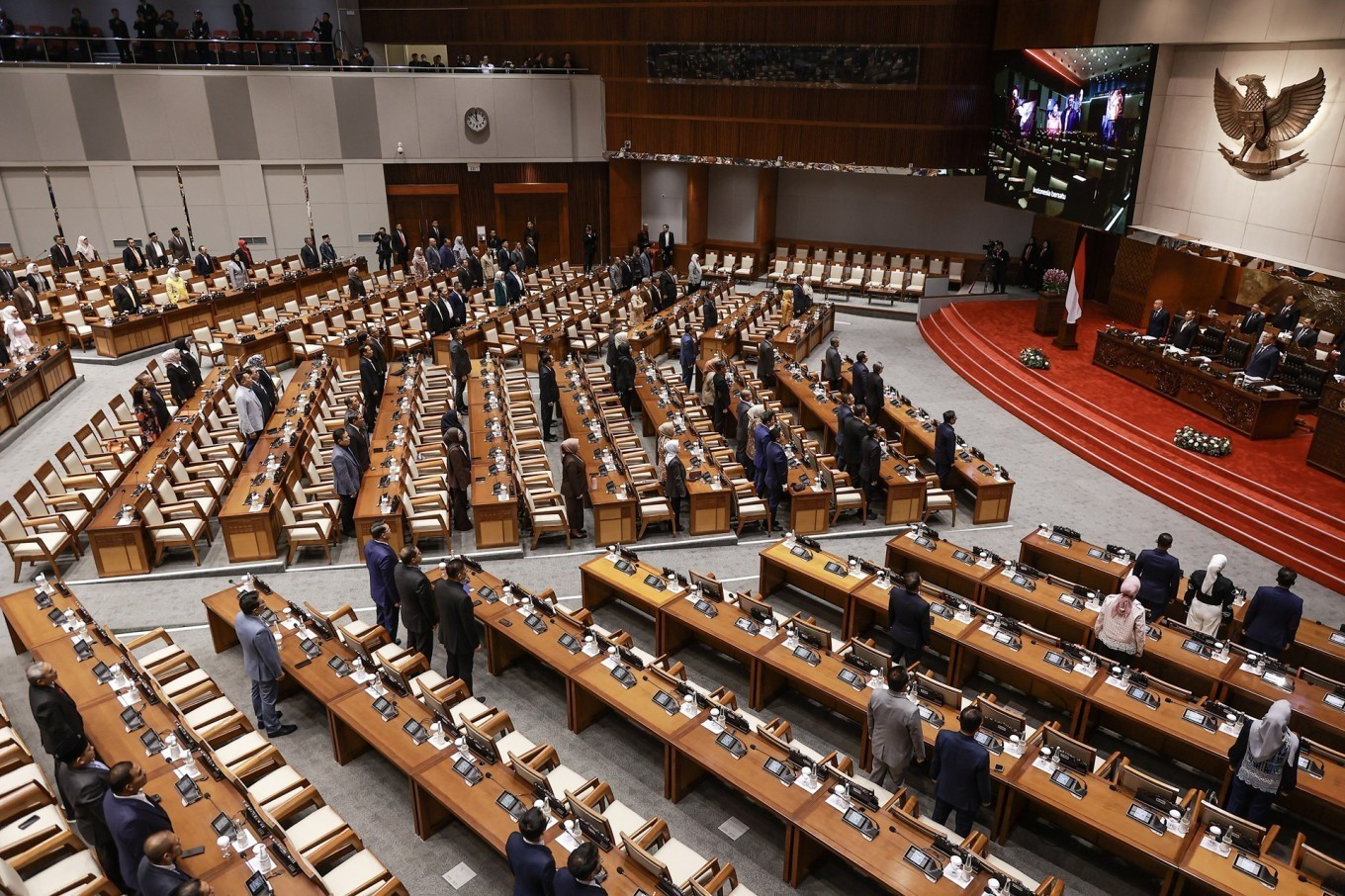 Lawmakers attend a House of Representatives plenary session on July 1, 2025, at the Senayan legislative complex in Central Jakarta. (Antara/Dhemas Reviyanto)
While Indonesia has a multiparty democracy, the General Elections Law limits the number of political parties that can serve in the House of Representatives through an electoral threshold, which sets the minimum number of votes a party must win to gain a seat in the House of Representatives. In the 2024 general election, eight of the 18 contesting political parties met this threshold, one party fewer than the previous polls.
Now major and minor political parties, whether they are part of the legislature or not, are debating once again whether to change the current threshold of 4 percent, with proposals ranging from zero to 8 percent for the next election in 2029.
Typically, big parties opt for either maintaining the status quo or imposing a higher threshold, which will likely lead to more parties being disqualified. Smaller parties including those without House seats, of which there are dozens, are meanwhile lobbying for a reduced threshold.
This is one of the most contentious points whenever the House reviews the elections law, which usually happens following the five-year electoral cycle. Since the issue is determined by the House, major parties will prevail, as they always do.
In the past, big parties have been cautious in setting the threshold, if only to help preserve multiparty representation in the House.
Parties with nationalist ideologies (as well as secular, although none would claim to be one) dominate the House, led by the Indonesian Democratic Party of Struggle (PDI-P), followed by the Golkar Party and the Gerindra Party.
A higher threshold could eliminate some Islamist parties. Last year, the United Development Party (PPP), one of the country’s oldest parties that has used an Islamic banner, failed to make it into the House for the first time, earning only 3.87 percent of national votes. Two other Islamist parties, the National Mandate Party (PAN) and the Prosperous Justice Party (PKS), struggled to win more than 7 percent of votes. The National Awakening Party (PKB) was the only Islamist party to garner over 10 percent.
Several labor parties tried but never made it into the House.
Two candidates for the Indonesian Solidarity Party (PSI), whose campaigns targeted millennial and first-time voters, won House seats based on their polling results in Jakarta. However, because the PSI only won 2.81 percent of national votes, they had to forfeit their seats, which were then reallocated to other parties that met the threshold.
Proponents of reducing the threshold, some even to zero, have argued that the 17.3 million votes that went to the 10 parties that didn’t make the threshold were “wasted votes”. But doing away with the threshold, as some small parties are demanding, could be impractical, since a party in the House needs to have enough elected representatives who can be appointed across the legislature’s 13 commissions and six committees/bodies.
So the question remains whether the threshold will be increased or decreased.
The law allows the formation of political parties but stipulates strict qualification criteria for contesting the general elections. It also sets the electoral threshold to serve in the House, which was 4 percent for the 2024 and 2019 elections, 3.5 percent in 2014 and 2.5 percent in 2009, when the rule was first introduced.
While some parties have only said they want to keep the threshold, most have not committed to any number. The NasDem Party wants to raise it to between 5 and 7 percent.
All eyes are on Gerindra, founded and chaired by President Prabowo Subianto. Although it came third in the 2024 elections, it holds sway because all parties in the House, with the exception of PDI-P, are part of the coalition government.
Gerindra secretary-general Sugiono said the party was still studying the matter, though he added that it was aiming for a “more efficient political process”. Many interpret this to mean a higher threshold than the current 4 percent.
What we've heard
A politician said the Indonesian Solidarity Party (PSI) had set an ambitious target of 6 to 7 percent of the total vote in the 2029 general election. This goal represents a significant leap from the party’s 2.8 percent share in 2024, which fell short of the legislative threshold. According to a party official, the leadership expects to more than double the party's previous performance to guarantee a presence in the House of Representatives.