
News
Civil society experiments in shadow opposition
Tenggara Strategics August 26, 2026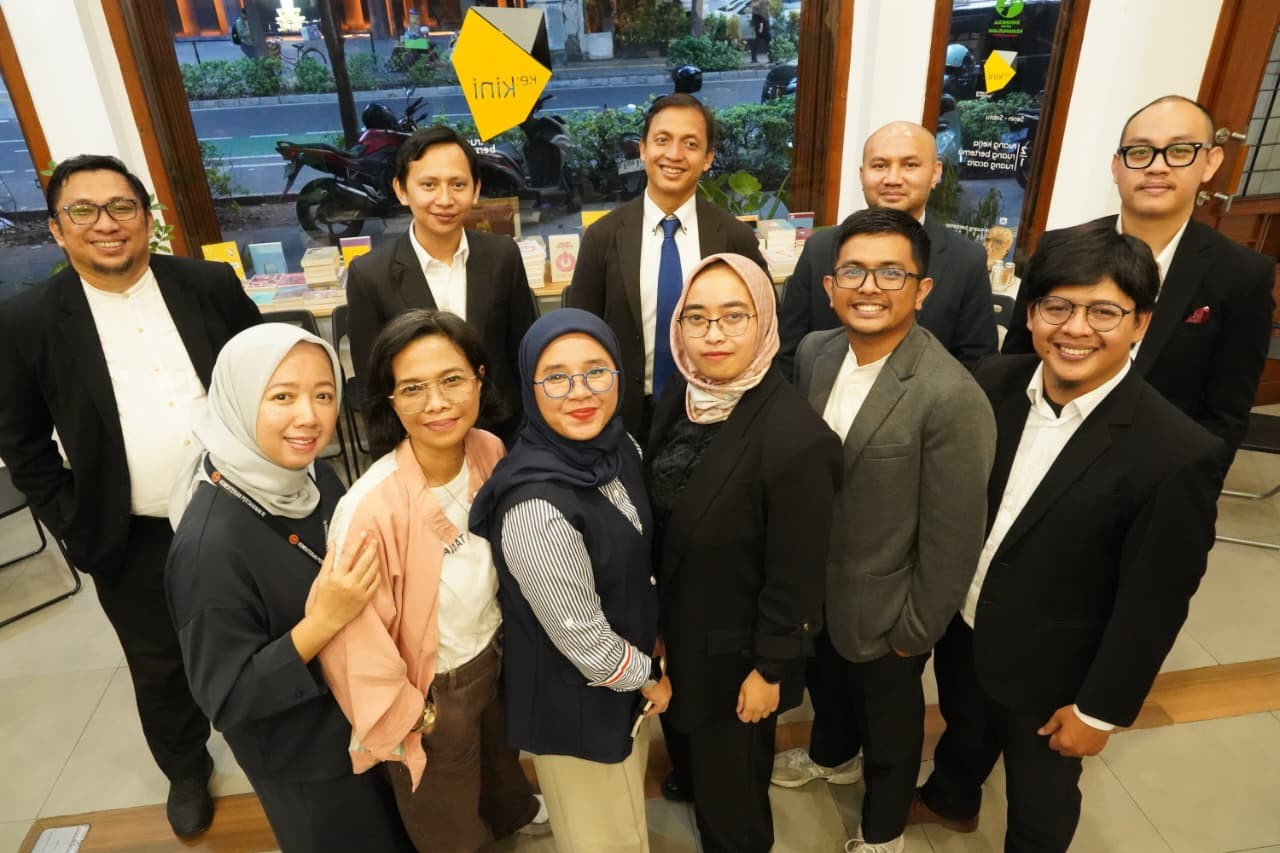 Eleven of the shadow cabinet's 15 members gather for their first working meeting in Jakarta on Monday following the launch of the self-styled watchdog initiative. (Courtesy of/The Shadow Cabinet))
Earlier this month a coalition of academics, activists and professionals did something no civil society group in the country's post-authoritarian history has attempted: they appointed their own cabinet.
Fifteen "shadow ministers," selected from 121 applicants over two months of vetting, were unveiled as a citizen-run counterpart to President Prabowo Subianto 's official "Red and White Cabinet." The group calls itself the Kabinet Bayangan, or "Zaken Kabinet dari Rakyat" (People's Cabinet of Experts). It has no office in the state bureaucracy, no budget and no constitutional standing. Its emergence nonetheless says something about the state of Indonesian democracy: when formal channels of accountability close, civil society builds an unofficial one rather than accept the silence.
The project is led by Feri Amsari, a constitutional law lecturer at Andalas University, who chaired the selection committee and serves as shadow "state secretary," alongside co-initiator Ahmad Jilul Qur'ani Farid of Masyarakat Transparansi Indonesia.
The roster includes economist Bhima Yudhistira Adhinegara as shadow finance minister, health activist Irma Hidayana in the health post, Armand Suparman in home affairs, Shofwan Al-Banna Choiruzzad in foreign affairs, Curie Maharani in defense, Khoirunnisa Nur Agustyati in women's rights and others across research, social affairs and agriculture. Candidates were screened for integrity, competence, being under 50, a willingness to be critical, a pro-people orientation and no party affiliation.
Feri's explanation cuts to the heart of it: "The formation of the ‘shadow cabinet’ is our response to the loss of checks and balances against the executive. Nearly all political forces today stand in the government's supporting ranks."
He insists that the group is not trying to seize power, describing it instead as "a monitoring platform and evidence-based policy alternative-drafter, working pro bono and non-partisan."
Hurriyah, director of the University of Indonesia's Center for Political Studies (Puskapol), frames it as a response to the structural paradox in which elections still run on schedule, but accountability has been hollowed out underneath them, shifting the burden of opposition onto ordinary citizens. Its real achievement, in her view, is upgrading criticism from scattered social-media complaints into structured, sector-by-sector oversight.
That diagnosis fits the facts. President Prabowo Subianto's coalition spans nearly every party in the House of Representatives, plus business, labor and religious blocs, along with ingrained representation from police and military figures throughout the cabinet and presidential staff. The Indonesian Democratic Party of Struggle (PDI-P), the only sizeable party formally outside the coalition, has not behaved as an opposition, leaving the House without any institutionalized counterweight.
Into that vacuum has stepped a narrowing circle of critics, some civil society organizations, academics and students, who are themselves under pressure. Feri was reported to police earlier this year over his criticism of the government's food self-sufficiency program, and academic Ubaedillah Badrun faced a similar report for calling Prabowo and Vice President Gibran Rakabuming Raka a "burden on the nation."
Structurally, the so-called shadow cabinet will run on "man-to-man marking": each shadow minister tracking a direct counterpart in the real cabinet, so that "every policy issued by the government will be assessed alongside proposals from the corresponding shadow minister, rather than merely receiving general criticism without a clear alternative."
All “ministers” will work from one shared frame, siding with ordinary people, so the public recognizes a consistent position regardless of who is speaking. In practice this means research, tracking government promises and formal responses to major planning documents, rather than reactive commentary. “Shadow finance minister” Bhima Yudhistira has already pushed specific critiques of the state budget, including freezing the free nutritious meal program pending evaluation and adopting more progressive taxation.
The group accepts no money from parties, foreign donors or corporations; it currently runs on internal member contributions, with public crowdfunding planned.
The government's first response was silence, Cabinet Secretary Teddy Indra Wijaya and State Secretary Prasetyo Hadi initially declined to comment. When Prasetyo finally spoke, on July 20, his tone was light: "We'll study it. Anything intended well, anyone who wants to provide good input, we of course accept and are always grateful for."
That mildness is in itself revealing, the Presidential Palace does not regard the shadow cabinet as a serious institutional threat, which is exactly the problem with an opposition outside any formal structure. It can be absorbed as manageable noise rather than confronted as real leverage. That is the project's central limitation: no seat in the legislature, no budgetary power, no ability to compel anything beyond public argument.
Whether it can sustain momentum once the novelty fades is genuinely uncertain. But dismissing it on those grounds misses what it is actually doing. With the PDI-P declining to oppose and no institutionalized checks left in the formal system, what remains is civil society, a group facing real pressure through police reports over ordinary criticism.
The shadow cabinet's real innovation may be structural rather than substantive: it binds individually exposed critics into one coordinated institution with named portfolios and message discipline, making them harder to isolate and dismiss than any lone academic. It is best understood not as a government-in-waiting but as a coordination mechanism for dissent, raising the cost of ignoring criticism at a moment when Indonesia's formal institutions have largely stopped performing that role.
What we've heard
According to a source directly involved in the project, the nonpartisan initiative operates on a pro bono basis and aims to strengthen accountability while improving public governance.