
News
Appointment of Prabowo’s nephew tests BI independence
Tenggara Strategics January 28, 2026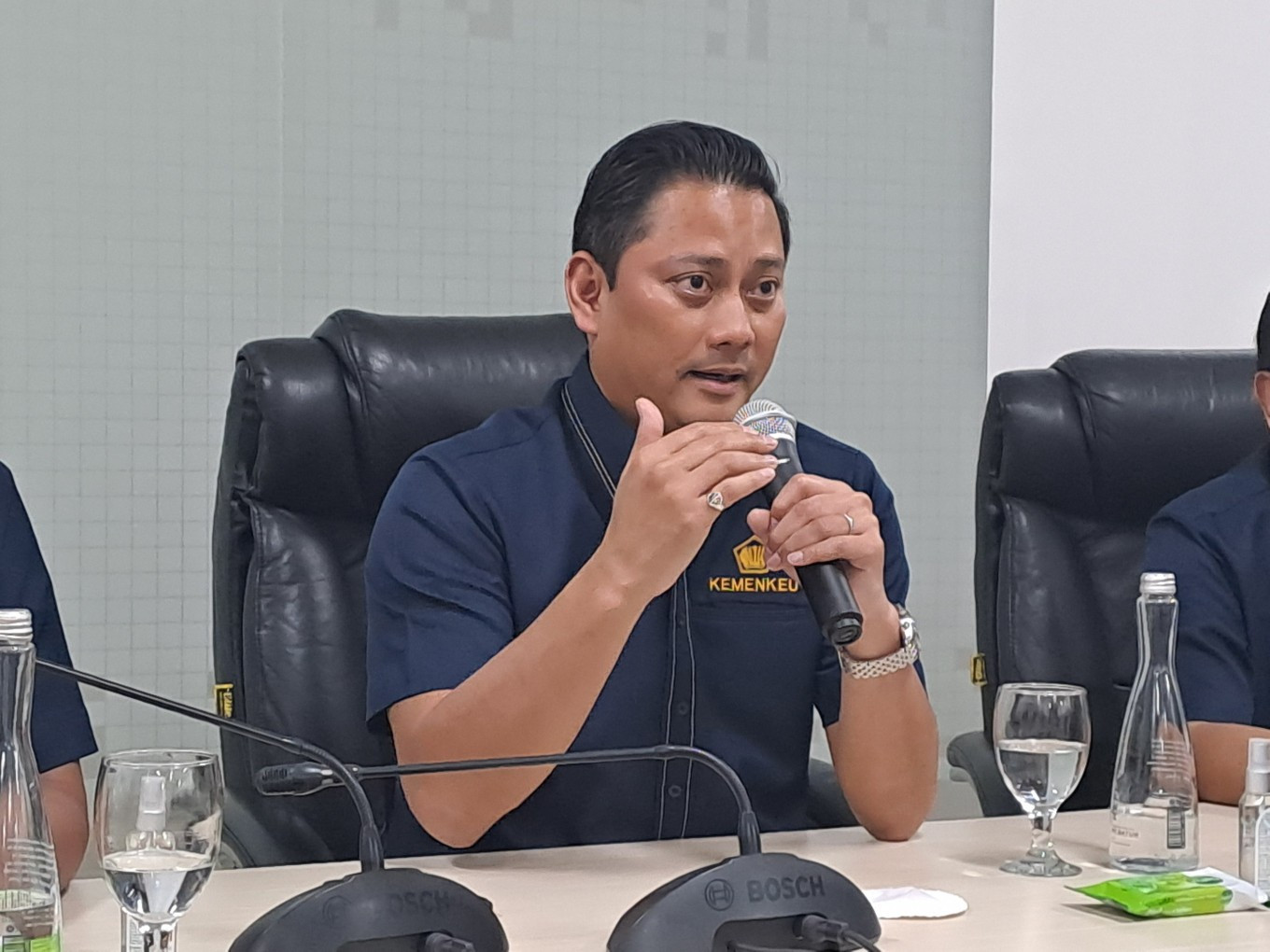 Deputy Finance Minister Thomas Djiwandono speaks before the press in the ministry's Jakarta headquarters on Sep. 11, 2024. (JP/Deni Ghifari)
The House of Representatives decision to select Thomas “Tommy” Djiwandono as a deputy governor of Bank Indonesia (BI) has reignited long-standing concerns over the central bank’s independence. His background as nephew of President Prabowo Subianto and a senior Gerindra Party official has contributed to negative market sentiment. While Tommy ensured the market that he would maintain BI’s independence, the controversy surrounding his nomination and swift confirmation risks undermining the central bank’s credibility and could adversely affect macroeconomic stability.
Tommy’s appointment followed the unexpected resignation of BI Deputy Governor Juda Agung on Jan. 13, two years before the end of his term. To fill the vacancy, the government nominated three candidates to serve the remainder of his term: Tommy, alongside two senior BI officials, Solikhun Juhro and Dicky Kartikoyono. Solikhun currently serves as assistant governor and head of the Macroprudential Policy Department, while Dicky is head of the Payment System Policy Department.
Concerns over BI’s independence have persisted even after Tommy formally resigned from the Gerindra Party. They were further amplified by earlier remarks from Finance Minister Purbaya Yudhi Sadewa confirming the existence of a position exchange arrangement between BI and the Finance Ministry. Deputy House Speaker Sufmi Dasco Ahmad rejected claims that Tommy was proposed by Prabowo, asserting instead that the nomination originated from BI Governor Perry Warjiyo. Nonetheless, Tommy’s entry into BI was not entirely unexpected. On Nov. 18–19, he attended BI’s Board of Governors meeting (RDG), an appearance that raised further concerns about potential government influence over monetary policy deliberations.
Scrutiny over BI’s independence has been mounting over the past year, after Perry was questioned by the Corruption Eradication Commission (KPK) in connection with a corruption case involving BI’s corporate social responsibility funds, BI announced a commitment to purchase Rp 150 trillion (US$8.9 billion) in government bonds (SBN) on the secondary market to stabilize the exchange rate. This sequence of events fueled speculation that the investigation was being used as pressure to align BI more closely with government interests.
As of Dec. 16, BI had purchased Rp 327.45 trillion worth of SBN, more than double its earlier commitment. In addition, BI had purchased Rp 23.69 trillion in SBN as of Jan. 20 this year, indicating continued aggressive intervention. These purchases are not unexpected, given the government’s commitment to burden sharing to support Prabowo’s priority programs under the Asta Cita agenda, including the free nutritious meal program, the Red and White Village Cooperative program, and the 3 million homes program, beginning in 2025 and continuing thereafter.
Any weakening of BI’s independence should not be taken lightly. At a time when the rupiah has depreciated sharply, reaching a low of Rp 16,981 per dollar on Jan. 20, policy credibility is critical. Governor Perry has attributed the currency’s weakness to global factors, including rising trade tensions between the United States and Europe linked to tension over Greenland, which have pushed up 10-year US Treasury yields. He has also pointed to shifting expectations over the US Federal Funds Rate, which have contributed to capital outflows from emerging markets, including Indonesia, reflected in a net outflow of $1.6 billion as of Jan. 19.
While global geopolitical and macroeconomic conditions may partly explain the rupiah’s depreciation, concerns surrounding Tommy’s candidacy should not be dismissed. BI’s credibility is a cornerstone of financial stability, and any erosion of its independence risks undermining macroeconomic stability as a whole.
What we've heard
An internal source at BI said signs that Tommy would become a BI deputy governor begun to emerge when he attended the RDG in November 2025. At the time, he justified his presence as an effort to align monetary and fiscal policy. In fact, the source said, the administration had already asked Tommy to sit in on the meetings to learn and familiarize himself with how decision-making at the central bank works.