
News
Energy subsidy reform set in motion as govt eyes budget efficiency
Tenggara Strategics December 19, 2025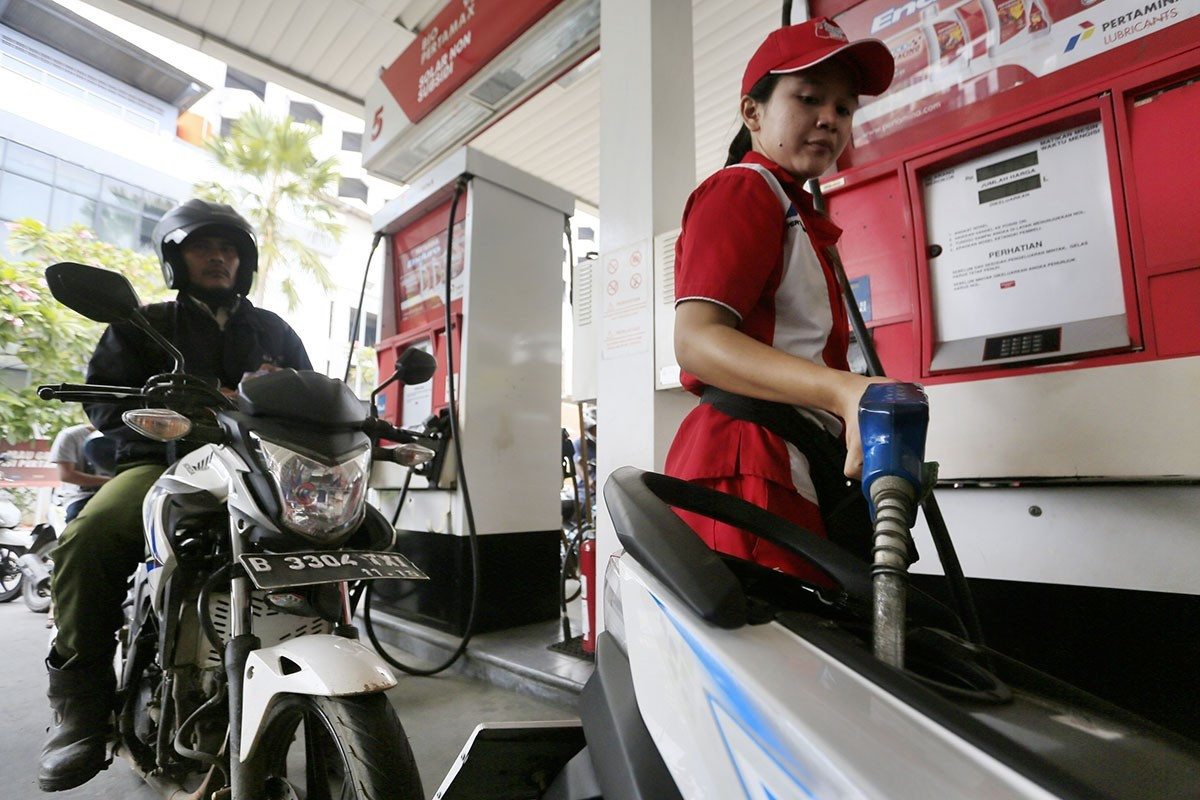 An attendant fills up a motorcycle with gasoline at a gas station owned by state-owned oil and gas company Pertamina in Jakarta. (JP/Dhoni Setiawan) (JP/Dhoni Setiawan)
The administration of Prabowo Subianto is reforming the disbursement of fuel and electricity subsidies to improve state budget efficiency. These subsidies have long been criticized for disproportionately benefiting upper-middle-class households, who consume more energy, rather than the poor and vulnerable groups they are intended to support. As a result, the government now aims to better target subsidy distribution and reduce its long-standing fiscal burden. The urgency to optimize subsidy spending has also grown amid rising expenditures for several major government programs.
Finance Minister Purbaya Yudhi Sadewa outlined the subsidy reform plan during a joint working meeting with state asset fund Daya Anagata Nusantara (Danantara) and House of Representatives Commission XI on Dec. 4. He acknowledged that the well-off, and even the ultra-wealthy, remain among the beneficiaries of energy subsidies. The reform aims to significantly reduce access for households in income deciles 8–10, redirecting support toward lower-income groups in deciles 1–4.
According to the National Integrated Social Economic Data (DTSEN), income deciles 1–5 cover individuals from extreme poverty to the middle-income bracket, while deciles 6–10 range from middle- to upper-income levels. The Finance Ministry has been given six months to finalize the subsidy distribution strategy, with the entire policy reform design expected to be completed jointly with Danantara within two years. Meanwhile, the Energy and Mineral Resources Ministry revealed that the reform will cover subsidies for liquefied petroleum gas (LPG) and electricity.
The subsidy reform will be formalized through a new presidential regulation (Perpres) that amends existing frameworks, including Perpres No. 117/2021, the third revision of Perpres No. 191/2014 on fuel provision, distribution and retail pricing, and Perpres No. 70/2023, which updates Perpres No. 104/2007 on the provision, distribution and pricing of 3-kilogram LPG cylinders.
On the financial administration side, the Finance Ministry has issued Ministerial Regulation No. 73/2025 on the provision, calculation, payment and accountability for compensation funds related to fuel pricing and electricity tariffs. Previously, compensation to Pertamina and PLN was disbursed quarterly or even semi-annually. Under articles 8 and 11 of the new regulation, Pertamina and PLN may now receive up to 70 percent of their compensation for subsidized fuel and household electricity tariffs following a monthly review by the Finance Ministry's Inspector General. The remaining portion will be disbursed after an annual audit by the Development Finance Comptroller (BPKP), as stipulated under Article 28. The initial compensation portion may also be adjusted based on overall budget conditions or previous audit findings from the Supreme Audit Agency (BPK).
Danantara CEO Rosan Perkasa Roeslani emphasized that energy subsidy reform would improve the cash flow of state-owned enterprises (SOEs) tasked with public service obligations. He noted that previous cooperation between Danantara and the Finance Ministry in shifting fertilizer subsidies toward a more market-based mechanism had progressed well.
As of October, realized government spending on subsidies reached Rp 314.9 trillion (US$18.91 billion), or 66.3 percent of the 2025 state budget allocation. This includes Rp 194.9 trillion in subsidies and Rp 120 trillion in compensation payments. Distribution of subsidized fuel reached 13,915 kiloliters (kL), or 72 percent of the 19,410 kL target; subsidized 3-kg LPG distribution reached 6.35 million kg (78 percent of the target); and electricity subsidies reached 42.5 million consumers, exceeding the target of 41.3 million.
Energy subsidy reform is necessary given the fiscal burden it imposes and the resulting constraints on priority government programs. However, overly aggressive cuts, an inherent risk amid current austerity, could have negative social impacts, weaken consumer spending and dampen economic growth. The government should explore ways to curb subsidy spending without introducing additional bureaucratic costs.