
News
Topat War, Lombok's icon of religious tolerance
WINDONESIA December 9, 2025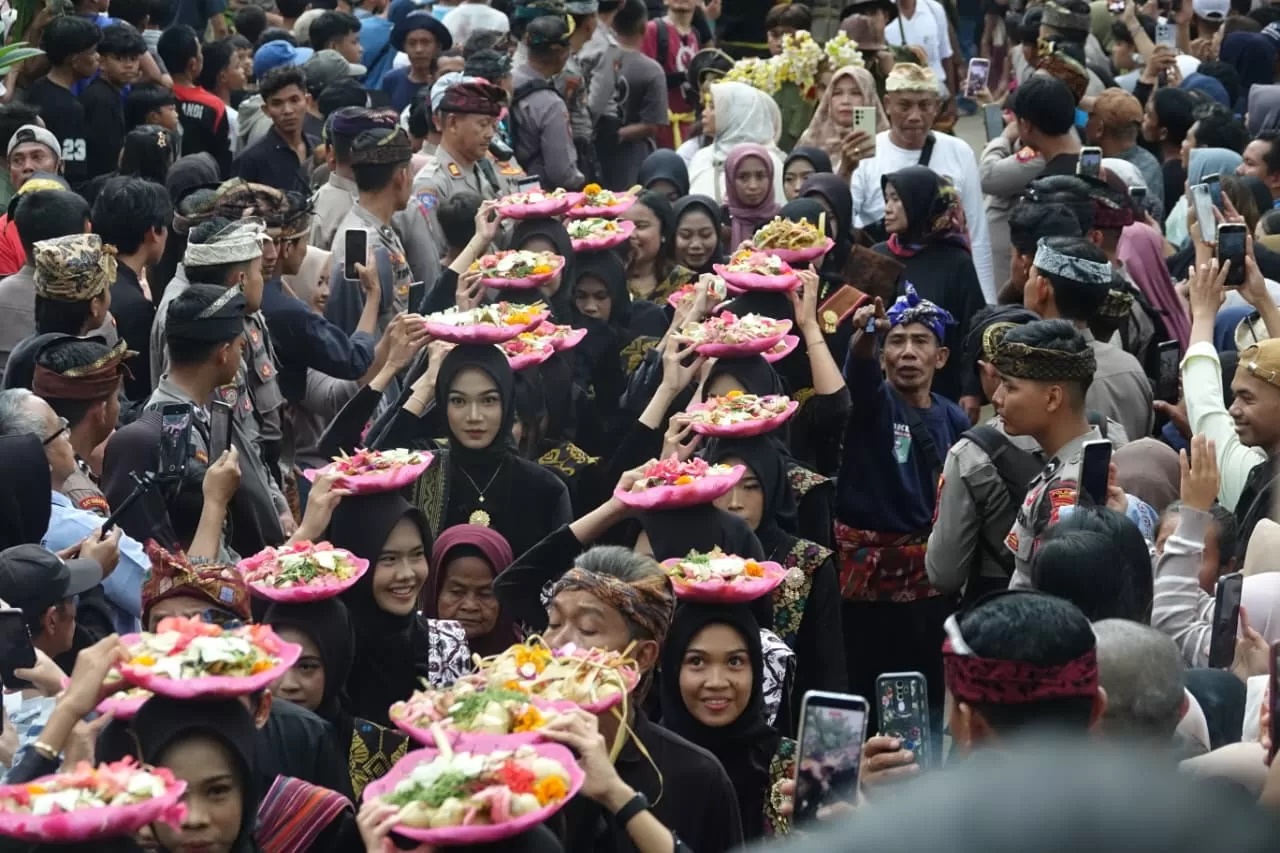 The Topat War procession at the Pura Lingsar Temple complex in West Lombok Regency, West Nusa Tenggara Province on Dec. 4, 2025. (West Lombok Regency Tourism Office)
The annual Puja Wali and Topat War celebrations at Lingsar Temple in West Lombok Regency, West Nusa Tenggara Province reaffirmed their position as noble traditions that strengthen interfaith ties.
This cultural ceremony, which has been held for hundreds of years, is a revered sacred ritual that has now been increasingly seen as a vital tourism and economic asset in the region.
"This is a heritage that we must preserve. Here, Hindus and Muslims unite," said West Lombok Regent Lalu "LAZ" Ahmad Zaini while attending the celebration on Dec. 4, 2025.
The uniqueness of this tradition lies in the involvement of two large communities in Lombok Island, namely Hindus and Muslim Sasaks, who have traditionally performed a series of rituals in one sacred area.
The Lingsar Temple complex includes Pura Gaduh, a Hindu place of worship, and Kemaliq, a spiritual space for the Muslim Sasak community. These two sacred sites being located in the same area has made Lingsar Temple a timeless symbol of harmony.
The most anticipated highlight of the event is the Topat War, a tradition where its participants throw prayed-for ketupat (rice cakes) at each other. Although it is called a "war," the atmosphere of the procession is filled with laughter, joy, and expressions of gratitude. The Topat War is usually held on the afternoon of the seventh full moon according to the Sasak calendar.
Regent LAZ emphasized that the essence of the Topat War is the value of unity passed down from ancestors. He considered this tradition as both an expression of local culture and a concrete example of interfaith tolerance in Indonesia.
On top of being a symbol of harmony, the ketupat used in the procession are thought to bring blessings, safety, and even fertilize crops for the farmers who are members of the Subak agricultural community organization.
"This belief demonstrates the strong connection between spirituality, culture, and the local economy," LAZ explained.
Topat War 2025 is part of a long series of rituals that lasts up to ten days. These include Roah Gubug, a prayer led by religious leaders; Negelingan Kaoq, a buffalo herding procession as a symbol of shared respect; and Pujawali, a major Hindu prayer event that takes place on the same day as Perang Topat which is accompanied by traditional arts such as Gendang Beleq.
The uniqueness of the Topat War tradition has received national attention through its inclusion in the Karisma Event Nusantara (KEN) 2025 calendar of cultural festivals, the Tourism Ministry's flagship program. LAZ views this recognition as a significant opportunity to boost the local economy.
"Every event in West Lombok must be able to generate economic activity for the people and increase locally-generated revenue (PAD)," he emphasized.
To maximize its benefits, a more thorough promotional strategy for Topat War 2026 developed well in advance of the event. The local government is targeting tourists to stay at least several days so that their spending and consumption directly benefit local micro, small, and medium enterprises (MSMEs).
Beyond focusing on national promotion, the West Lombok Regency Government is also preparing steps to elevate Topat War to the international level as a global icon of tolerance. The local government plans to invite religious figures at the national level, including the Religious Affairs Ministry and the Indonesian Ulema Council (MUI), for next year's Topat War to directly witness the practice of harmony that has been maintained for generations in the regency.
Related Articles